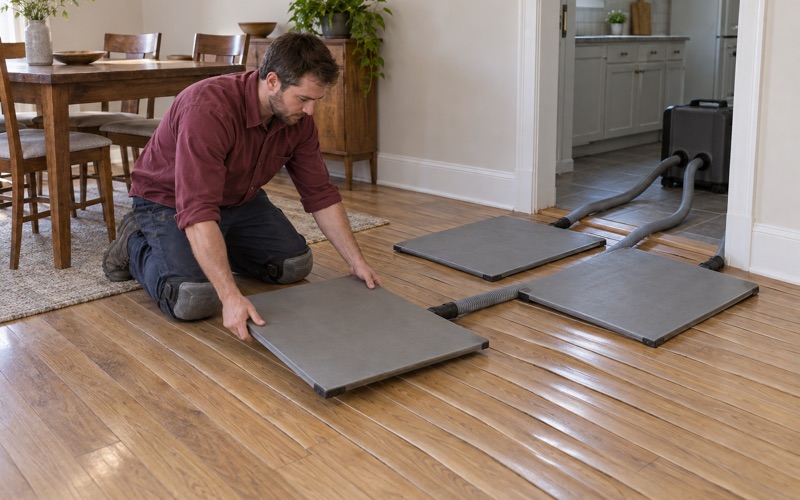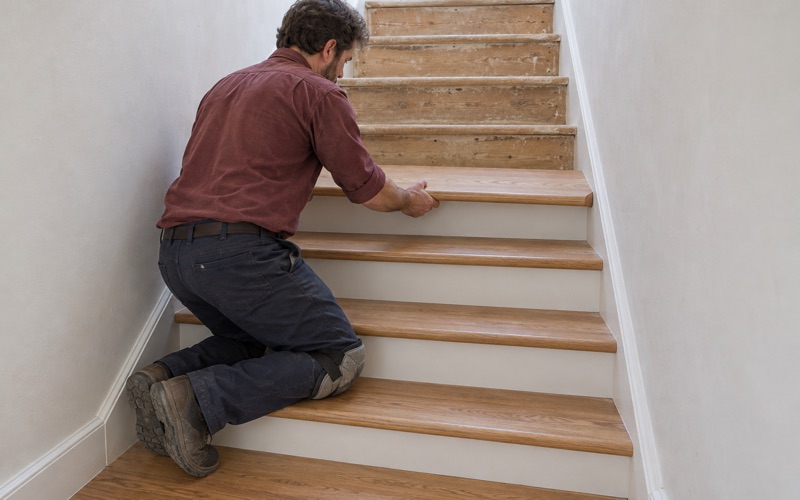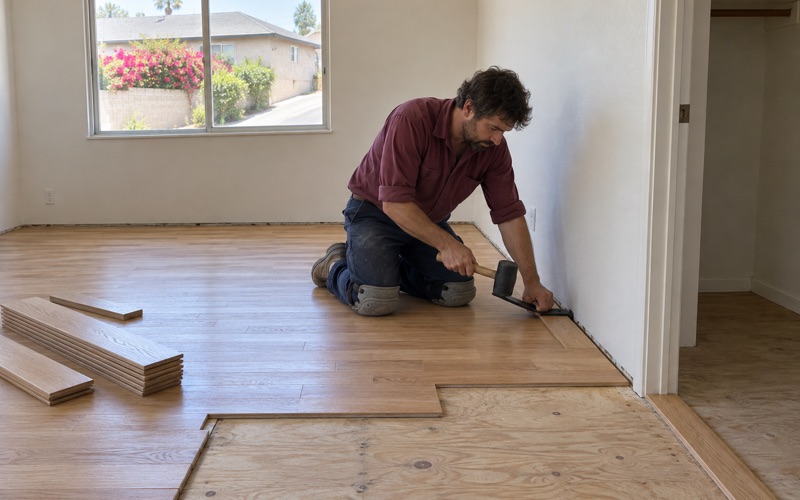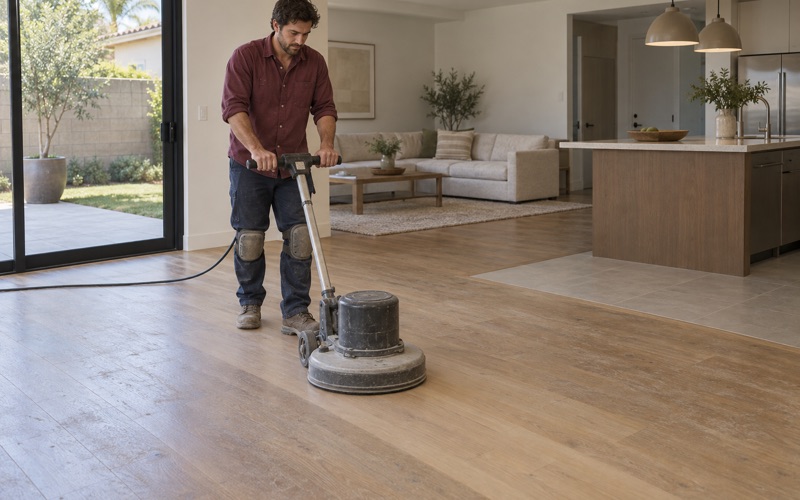
Monterey Park Wood Flooring has spent more than 20 years on wood flooring in Alhambra, and the first question we ask on any job here is not what the boards look like but when the house was built and which tract it sits in. That answer shapes whether we are sanding original strip flooring, repairing a patched hallway, or installing new engineered hardwood over something a previous owner laid down.
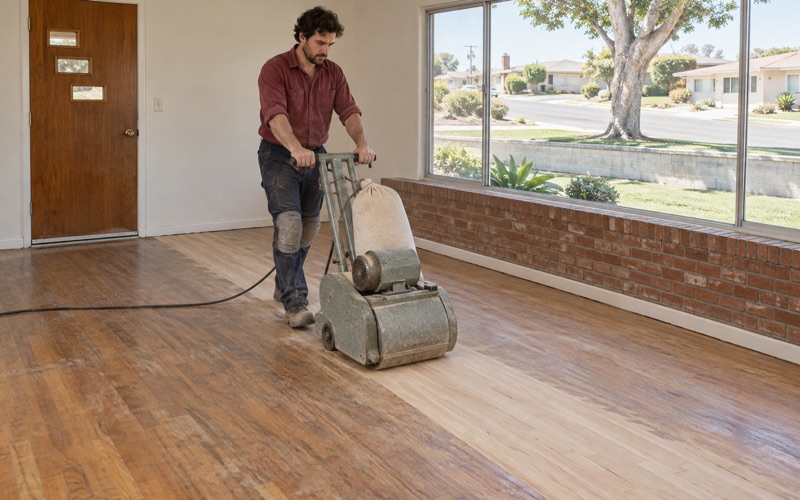
We confirm the build year before a sander ever comes off the truck. Anything from before 1978 can carry paint and finish layers that fall under the EPA Renovation, Repair and Painting Rule, so the date changes how we contain dust and clean up, not just how we quote. On engineered floors we measure the wear layer first, because a thin veneer can take a screen and recoat but not a full sand.
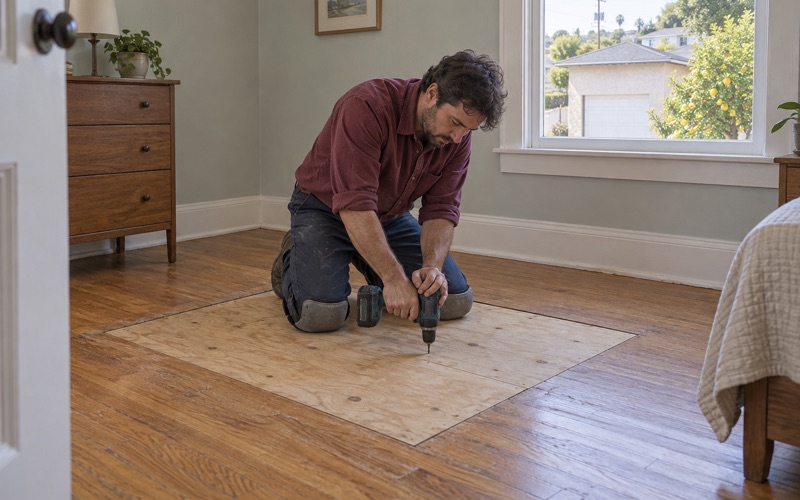
From there the work is familiar: refinishing, board replacement and weave-in repair, stairs quoted by the tread, riser and nosing, and new installation from solid white oak to wide plank engineered hardwood. Every finish we apply is chosen from products legal in the South Coast air district, and every occupied home gets a written room-by-room schedule showing when furniture, rugs and people can come back.
Reading an Alhambra Floor by Its Tract
Alhambra did not grow in one building boom. The city was incorporated on July 11, 1903, promoted itself as a city of homes, and filled in tract by tract over the following decades. The Alhambra Historical Society names those tracts, and for a flooring contractor that list is the most useful map in town, because each one points to an era and an architectural style.
Ten named tracts, one working roster
The Society’s roster runs from the Alhambra Tract and Ramona Park through Wuest-Bushnell, La Marguerita-Souders, Lindaraxa, Bean, Emery Park, Midwick and Mayfair to the Airport Tract. Ramona Park carries early 1900s Arts and Crafts homes, Lindaraxa and Emery Park carry 1920s Spanish and Storybook houses, Bean, Mayfair and Midwick span the 1930s and 1940s, and the Airport Tract is postwar.
None of that tells us what species is under a given rug, and we don’t pretend it does. No source describes the original floors tract by tract, and generations of owners have replaced, covered and patched rooms in every one. What the tract gives us is a starting hypothesis about age, finish history and likely repairs, which we then confirm on site with our own eyes and a moisture meter.
What the census says about age
The census figures back up the tract story. In the American Community Survey 2024 five-year estimates, 23.0 percent of Alhambra’s housing units were built in 1939 or earlier, and 49.5 percent were built before 1960. Put simply, roughly one home in four here predates World War II and about half predate 1960. That is a lot of floors that have already been sanded more than once.
Age matters for three practical reasons. Older solid hardwood may have been sanded several times, so we check how much wood sits above the tongue before promising another full sand. Older homes carry more layers of paint and finish, which is where lead-safe work practices come in. And older floors are more likely to show cupping, squeaks, hollow spots and seasonal gapping that a refinish alone won’t cure.
Looking for wood-flooring closer to Montebello? See Wood-Flooring in Montebello.
Ramona Park and the 1920s Revival Tracts
Arts and Crafts homes in Ramona Park
The Ramona Park Tract is the oldest layer the Society describes in detail: early 1900s Arts and Crafts homes built by John and Daniel Althouse. Houses from that period have usually lived through several eras of flooring fashion, from original boards to wall-to-wall carpet and back again. When carpet comes up in a house this age, we expect tack strip holes, staple scars and the occasional painted border.
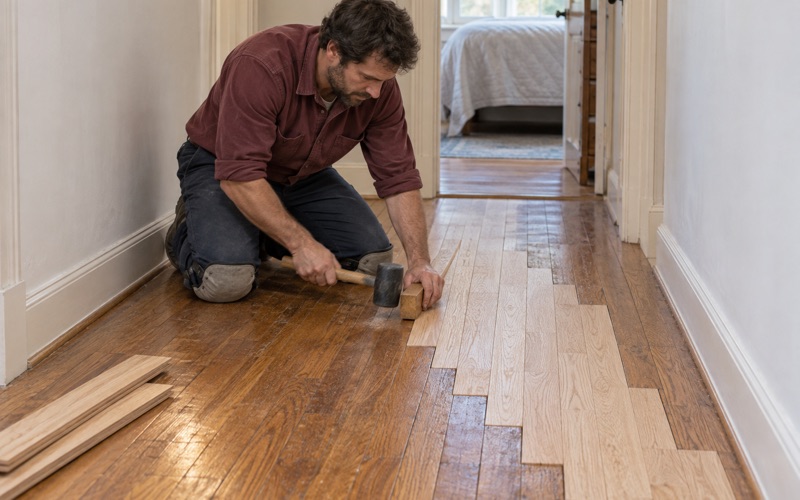
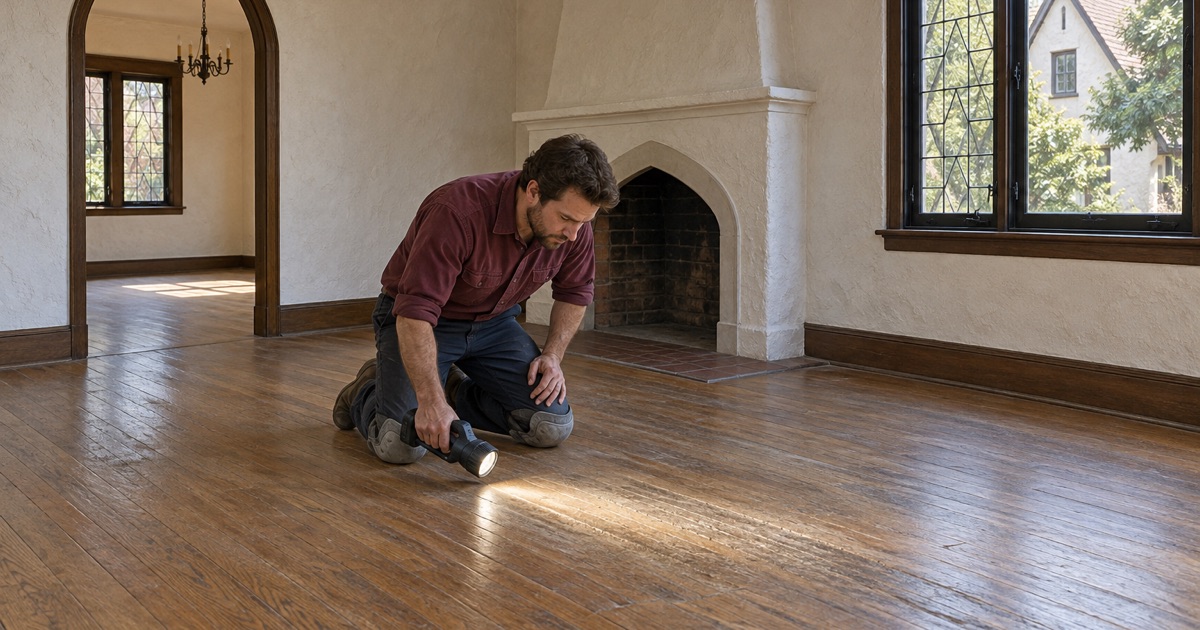
Our job in a house like that is to decide what can be saved before anything is sanded. We probe for soft spots, look for small round kick-out holes and termite frass that would point to drywood termites, and mark boards that need replacement. Where a patch is needed, we weave new boards into the field rather than cutting a square, so the repair disappears once the whole floor is finished.
Spanish, English Cottage and Storybook in Lindaraxa
The Lindaraxa Tract brings the 1920s: Spanish, English Cottage and Storybook houses, according to the Historical Society. Houses in those styles commonly have arched openings, stepped rooms and small, irregular floor plans, and each of those shapes the flooring job. A stepped room means a stair nosing or landing tread to match, and an arched doorway means a threshold that has to line up in two directions.
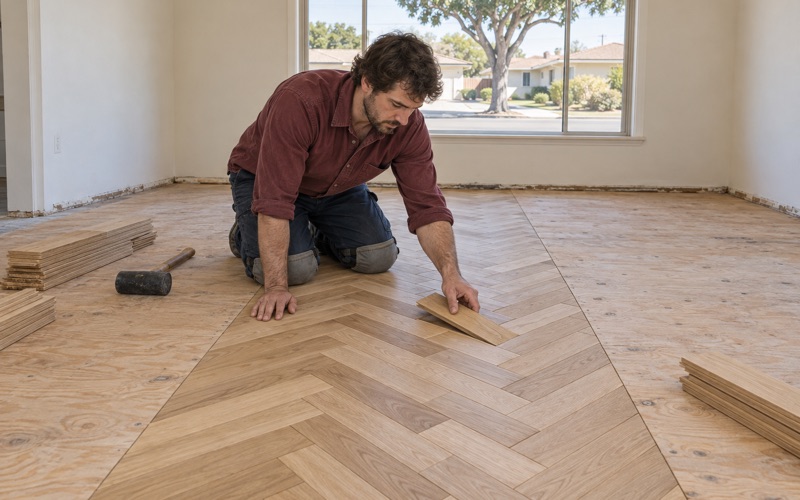
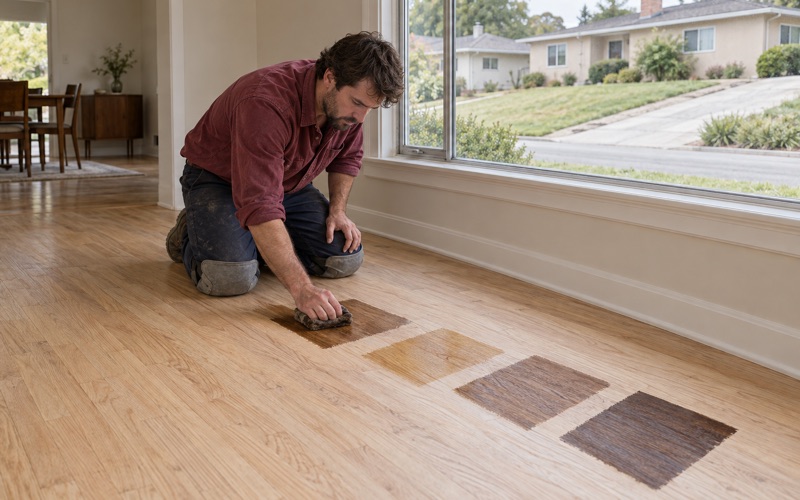
Storybook rooms rarely come square, which is why we dry-lay any herringbone or chevron pattern and center it on the room before the first slat is fastened. A layout centerline that looks right from the doorway can drift badly against an angled wall. We also test stain color on sanded boards in the room’s own light, since a deep-set window changes how a sample reads.
Emery Park’s revival mix
The Emery Park Tract is described with Spanish Colonial Revival, Pueblo Revival and Storybook houses. Revival homes of this family often pair wood floors with tile entries, kitchens and baths, so the transitions matter as much as the field. We plan every reducer, T-molding and threshold before sanding, so the finished wood sits at a height that meets the tile cleanly.
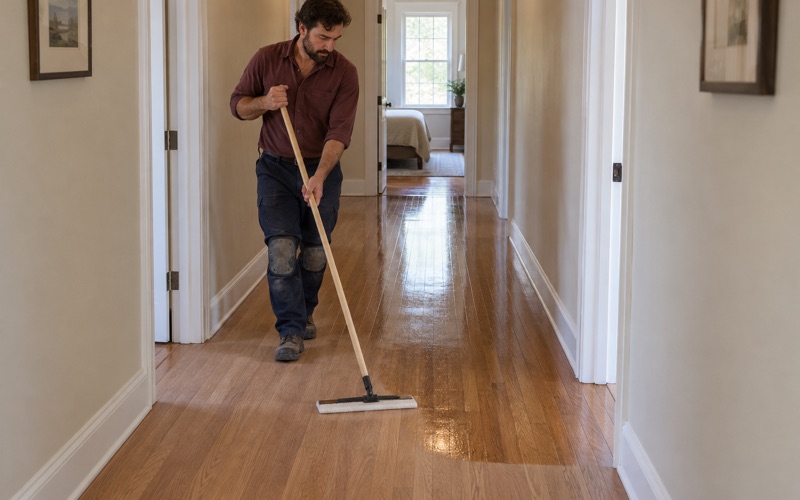
When an owner wants to bring back a warm, traditional look, we usually talk through an oil-based stain under waterborne polyurethane, or a hardwax oil where the family is comfortable with more upkeep. Either way, the product comes off a list that complies with SCAQMD Rule 1113, whose wood coatings limit is 275 grams per liter, rather than from a national catalog that may not be legal here.
Mayfair, Bean, Midwick and the Airport Tract
Tudor and Colonial Revival in Mayfair and Bean
The Mayfair Tract dates to the 1930s, with Tudor Revival and Spanish Colonial Revival houses, and the Bean Tract spans the 1930s and 1940s with Colonial Revival and Tudor Revival. In houses of this age we often find a floor that was refinished well once and then maintained badly, with finish peeling in traffic lanes and worn-through finish at the kitchen doorway.
A floor like that is sometimes a screen and recoat and sometimes a full sand, and the difference comes down to adhesion and bare wood. We test the existing finish before quoting either. If a past sanding left chatter marks or drum marks, we plan the abrasive grit sequence to take them out, and we finish with an orbital sander so the new coats don’t telegraph the old mistakes.
Midwick’s 1940s range
The Midwick Tract, named for the Midwick Country Club, is a 1940s tract with Spanish Colonial Revival, Mid-Century Modern and Minimal Traditional houses side by side. That spread is a good reminder that one tract can hold very different floors. A Mid-Century house may have been built around a different flooring plan than its Spanish neighbor, and later owners have layered on their own choices.
So in Midwick we assume nothing and inspect each room. We look for cupping or crowning that points to moisture, listen for squeaks, and sight down the room for a sloping floor line. Where a floor over a crawl space bounces or slopes, we look underneath before quoting, because the cause is often a joist, post or subfloor problem that sanding would only hide.
Postwar Minimal Traditional on the Airport Tract
The Airport Tract sits on the former airport site and holds post-World War II Minimal Traditional houses, the most recent entry on the Historical Society’s list. These are compact, practical homes, and many have been through several flooring decisions since they were built. It is common to find vinyl, laminate or carpet in one room and wood in the next.
Postwar houses are where installation questions come up most. An owner may want to replace a worn floating floor with nail-down solid hardwood, or run engineered hardwood through the whole house for one continuous look. Before old sheet goods or adhesive come up, we talk through an asbestos survey under SCAQMD Rule 1403, since black mastic from that period can be a concern, and we let new boards acclimate before installation.
Alhambra’s Survey and Its First Preservation Ordinance
What the 2023 survey found
In November 2023 the city completed a citywide survey of all 19,000-plus parcels, viewed from the public right-of-way. It identified 345 individually potentially eligible properties and eight areas potentially eligible as historic districts, with 450 contributors. Together that is about 4 percent of all properties, and the survey designated none of them. The named tracts above are a history, not a list of districts.
For most Alhambra owners, the floor is simply a household decision about budget, wear and taste. Even for the properties the survey flagged, a potentially eligible listing is not a designation. We still ask whether a house appeared in the survey, because it tells us the owner may want to keep as much original material as possible and may prefer repair over replacement.
The 2025 ordinance and the Mills Act
Alhambra adopted its first historic preservation ordinance in 2025, Ordinance No. O2M25-4848, which is now part of Title 23 of the Municipal Code and works alongside a Historic Preservation Commission. Under the city’s own FAQ, a potentially eligible property is reviewed only for a Major or Minor Alteration, starting with a historic resource assessment. Which projects fall into those categories is a question for the city, and we send owners there rather than guessing.
Designated Landmarks and contributing properties in designated districts can apply for a Mills Act contract, which in Alhambra calls for a 10-year work plan, with applications accepted once a year. When an owner is building that plan, we can write the flooring portion as a specific scope: which boards stay, which are replaced with matching stock, and what finish goes on.
Paperwork that holds up
The Building Division at 111 South First Street handles plan review and construction inspection under Title XX of the Municipal Code. Questions about permits go to them, not to us, and we tell every client the same thing. What we can provide is a clear written scope, photos of existing conditions, and itemized invoices a landlord can attach to a security deposit statement.
When a floor has suffered a water loss, the same paperwork habits help. We document the damage with photos and moisture readings an adjuster can use, and we write the repair scope as matching board and finish rather than a patch. Whether the house is a Ramona Park bungalow or an Airport Tract starter home, the goal is a floor that reads as one surface again.
- 20+ Years on Wood Floors
- Itemized Written Quotes
- Lead-Safe Checks on Pre-1978 Homes