Monterey Park Wood Flooring has spent more than 20 years on wood flooring in Artesia and this corner of southeastern Los Angeles County, and most of what we are called for here is not a brand-new floor. It is a floor that has been walked on hard for years: finish worn to bare wood in the hallway, a board that dents or squeaks by the kitchen, a gray lane where everyone turns toward the back door.
That kind of wear calls for a clear read before any machine comes out. We look at how much finish is left, whether the boards themselves are damaged, and whether the floor is solid hardwood or engineered with a wear layer we need to measure. The answer decides whether a room needs a screen and recoat, a few replacement boards woven in, or a full sand down to fresh wood.
We also plan the work around the people who live on the floor. Refinishing is a sequence of sanding, coating and cure time, and a house that cannot empty out for a week needs a room-by-room schedule showing when furniture, rugs and family can come back. We write that schedule down before the job starts, so nobody is guessing which rooms are open on which day.
Floors That Carry a Full House
Why household size matters to a wood floor
Artesia’s draft 2021-2029 Housing Element puts the city’s average household size at about 3.5 persons. Its household table, drawn from the 2014-2018 American Community Survey, counts 22 percent of the city’s households at five or more people, including 20.2 percent of owner households and 23.6 percent of renter households. Those are housing figures, not floor measurements, but they describe the conditions many floors here live under.
More people means more trips across the same few paths. A floor in a five-person home takes the kitchen-to-table route, the front door and the hall to the bedrooms many more times a day than the same floor in a two-person home. Finish wears in proportion to that traffic, so a coat that might last for years in a quiet house can thin much sooner in a busy one.
What heavy traffic looks like on the boards
The first sign is usually a dull lane where the sheen has been ground off by grit carried in on shoes. After that comes worn-through finish, where bare wood shows and starts to gray, absorb spills and take stains. Dents from dropped pans and chair legs appear in the kitchen and dining area, and a floor that sees daily wet mopping can develop white haze or finish peeling near the sink.
Traffic also finds weaknesses underneath the surface. Squeaks and hollow spots often trace back to loosened fasteners or a gap between the boards and the subfloor, and heavy use makes them louder over time. Pet urine stain and black water stain are a different problem: once moisture has reached the wood itself, sanding rarely lifts it, and board replacement becomes the honest answer.
Rooms that wear first
In the homes we see, entries, hallways and the kitchen side of an open room usually wear well ahead of the bedrooms. That uneven wear is useful information. It often means the low-traffic rooms still have enough intact finish to be screened and recoated, while the lanes need sanding, so a job can be scoped by zone rather than priced as one uniform floor.
Uneven wear also changes what the rest of the house needs. Area rugs protect the lanes but leave a sheen line when lifted, and furniture shades the boards unevenly, so a floor refinished zone by zone can show slight color differences between rooms. We walk the house with you, point out where those lines will fall, and agree on stopping points, such as a doorway or a T-molding, before work begins.
Looking for wood-flooring closer to La Palma? See Wood-Flooring in La Palma.
Older Houses and the Repairs Inspectors Flag
The 1950s and 1960s housing stock
Artesia incorporated on May 29, 1959, as its dairies moved away and residential tracts filled the land. Nearly half of the city’s homes, 48.0 percent in the 2024 five-year ACS, were built in the 1950s and 1960s. A floor of that age may carry several earlier sandings, and each one took some wood off the top of the boards.
That history matters before we sand again. On solid hardwood we check how much wood remains above the tongue, because a floor sanded too many times can expose nail heads or split along the groove. We also confirm the build year first: paint and finish layers in pre-1978 housing are handled under the EPA Renovation, Repair and Painting Rule, and the job is set up for that before any sanding is scheduled.
What the city’s inspectors estimate
The draft element reports that, based on observations by city building inspectors and code enforcement staff, about 10 percent of Artesia’s housing units need minor repairs, while 2 to 3 percent may need more substantial rehabilitation. That estimate covers housing in general, not floors specifically, and we read it that way. It does tell us that small, deferred fixes are a normal part of owning a home here.
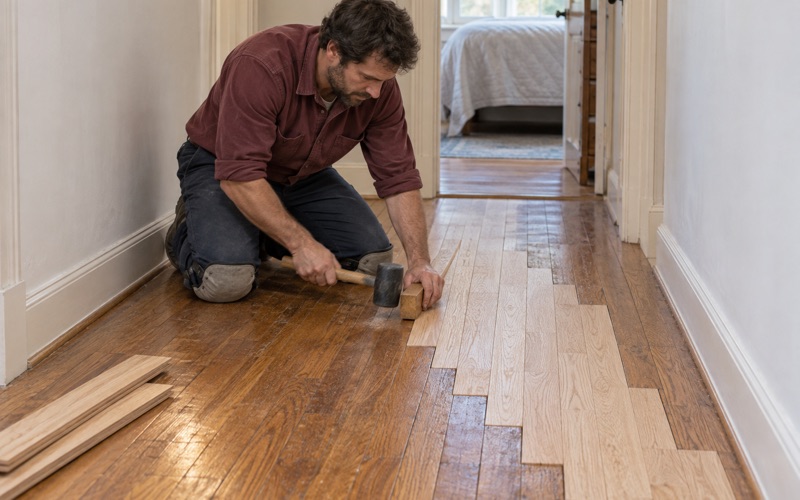
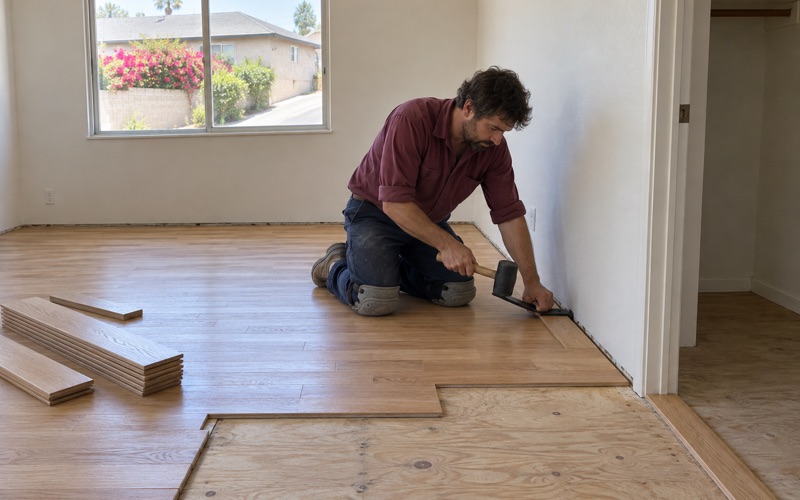
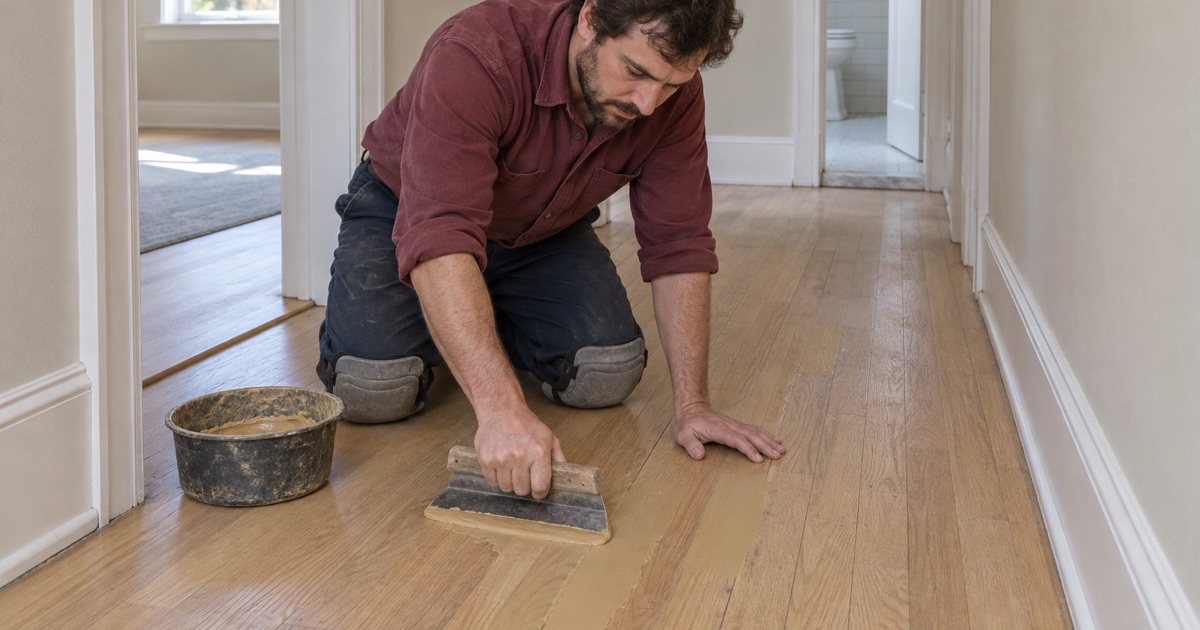
On a wood floor, a minor repair usually means a few cracked or stained boards, a loose threshold, a lifted stair nosing, or quarter round that has pulled away from the baseboard. None of that calls for a new floor. A weave-in repair, where new boards are staggered into the existing pattern so the seams don’t line up, lets the patch disappear once the room is sanded and finished together.
The northern part of the city
The same section of the element says housing in the northern portion of the city is generally more likely to require maintenance and repairs. We don’t treat that as a verdict on any particular street or floor. When we quote a home there, it simply means we budget time to look past the finish, at fasteners, subfloor movement, trim and transitions, before assuming a sand and coat will cover it.
Where a house sits over a crawl space, we check the floor from underneath before quoting. A sloping floor, sagging floor or soft spot often points to a floor joist, post or subfloor problem that sanding would only hide. We also look for small round kick-out holes and piles of termite frass, and rule drywood termite activity in or out before any board is replaced.
Repair, Recoat or Full Refinish
When a screen and recoat is enough
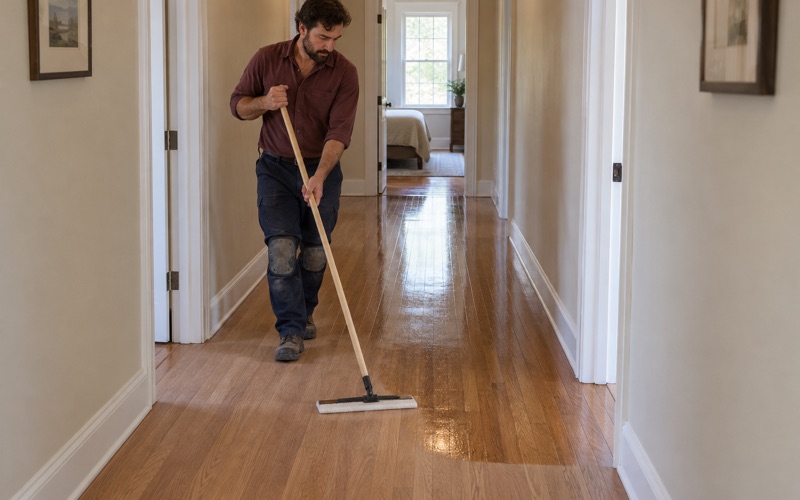
If the finish is worn but still intact, with no bare wood and no stains in the grain, a screen and recoat is the least disruptive choice. We abrade the existing coat and apply fresh polyurethane over it, which restores protection without removing wood. On a busy household floor this works best when it is done on a schedule, before the traffic lanes wear through.
A recoat will not bond over some contaminants, such as certain polishes and cleaners, so we test adhesion before committing. It also cannot fix dents, gray wood or water marks. On engineered hardwood the test matters even more, because we measure the wear layer thickness first; a thin veneer can take a screen and recoat but may not survive a full sand.
When boards need replacing
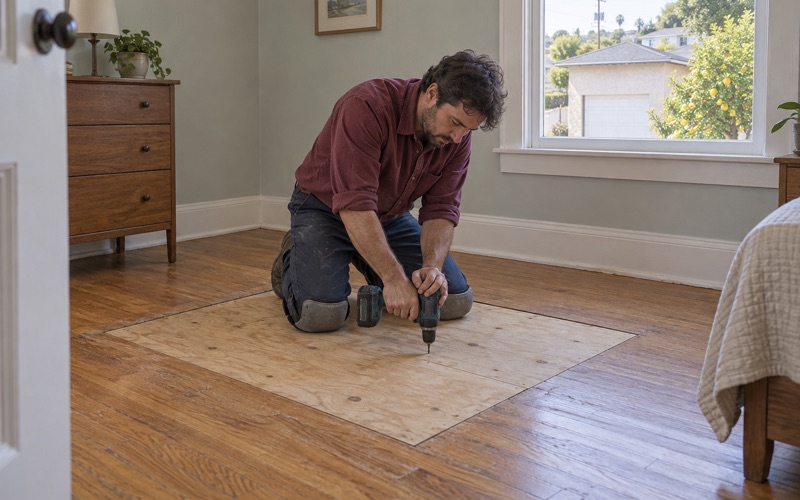
Board replacement makes sense when damage goes into the wood itself: deep pet stains, black water marks, split boards or areas lifted by old moisture. Cupping, crowning and buckling tell us moisture was involved, and we find out where it came from before replacing anything, since new boards set over an active leak will fail the same way the old ones did.
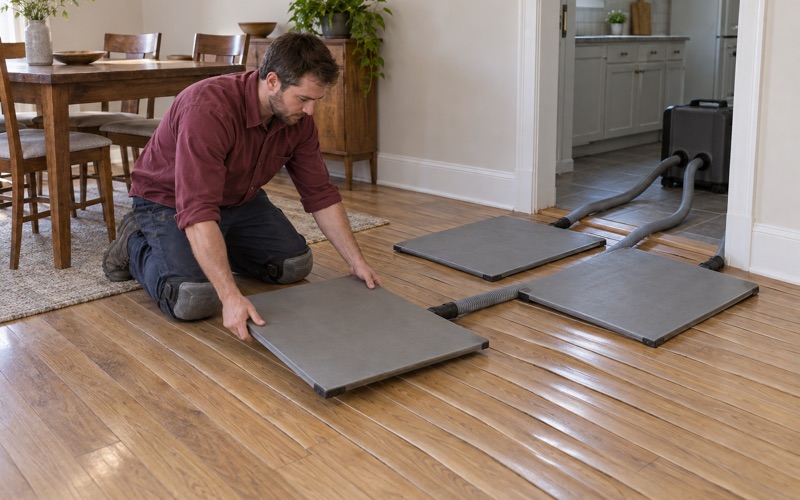
If the damage came from a plumbing leak or an appliance failure, we document it with photos and moisture meter readings an adjuster can use. The repair scope is written as matching board and finish rather than a patch, because a replaced section that doesn’t blend stays visible every day in a room this many people use.
When the whole floor needs a sand
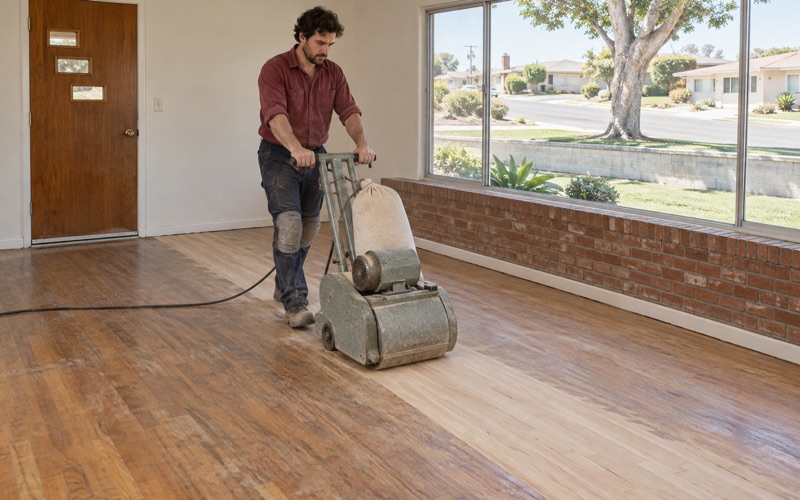
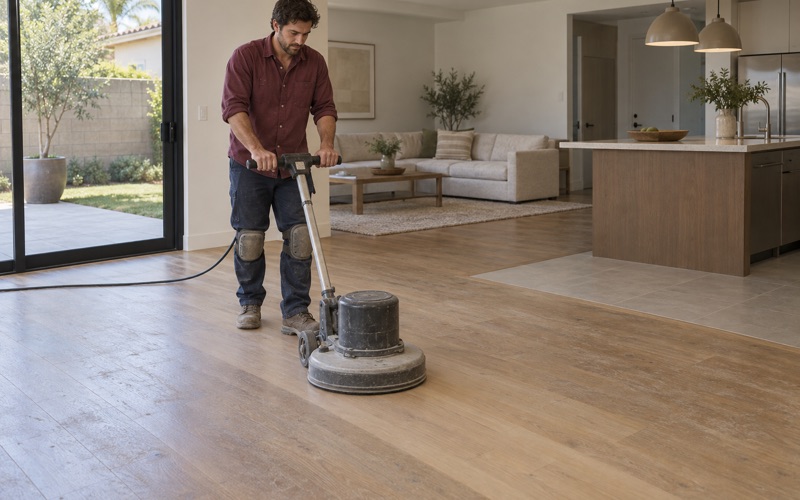
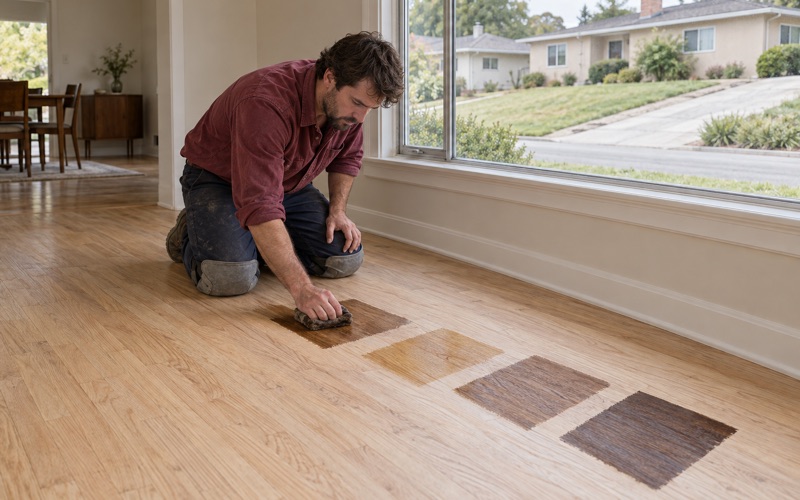
When the lanes are down to bare wood, stains are widespread, or earlier repairs never blended, a full refinish is the better value. We run a drum sander and edger through an abrasive grit sequence, watching for chatter marks and drum marks, then finish with an orbital sander. Stain color is tested on sanded boards in the room’s own light before the whole floor is committed.
For finishes, we choose from products legal to apply in the South Coast Air Quality Management District, where SCAQMD Rule 1113 sets the wood coatings VOC limit at 275 grams per liter. For a high-traffic home we usually steer toward a durable waterborne polyurethane or oil-modified polyurethane with a satin or matte sheen level that hides scuffs, rather than a high gloss that shows every scratch.
Scheduling Floor Work Around a Full House
Working room by room
About half of Artesia’s occupied homes are owned and about half are rented, and in either case the household usually has nowhere else to go during a floor job. That shapes how we stage the work. Rather than sanding the whole house at once, we can split it into zones, so the bedrooms stay usable while the living area and hall are done, then swap.
Each zone has its own cure time. A fresh coat can take light foot traffic in socks well before furniture and rugs can return, and full cure takes longer still. Our written schedule lists each room, the day it can be walked on, and the day furniture and rugs can come back, so a large family can plan meals, school mornings and sleep around the work.
Stairs, transitions and the details traffic finds
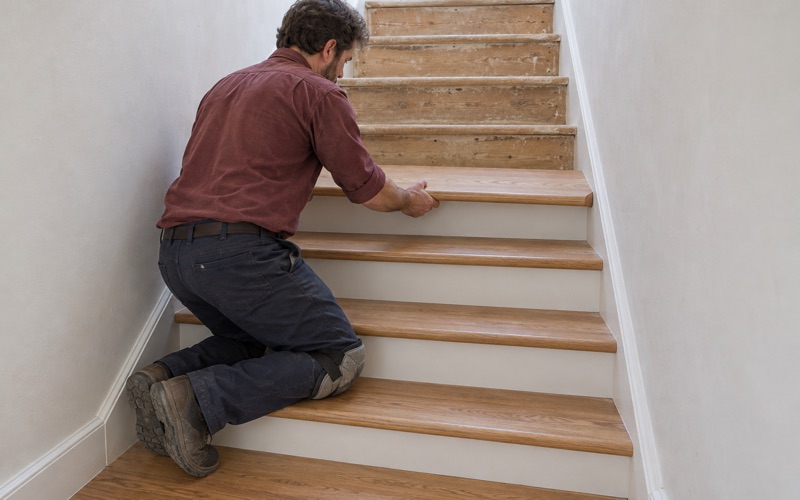
Stairs in a busy home wear fastest at the nosing, where every step lands. We quote stairs by the tread, riser and stair nosing rather than folding them into a square-foot price, because the labor is in the edges. Reducers, T-molding and thresholds at doorways take a beating too, and replacing a worn transition often does as much for a floor’s look as refinishing it.
Retrofit treads are an option when the original stair treads are too worn or too thin to sand again, and a landing tread ties the stair to the floor above. Where the stair meets the hall we match stain and sheen so the two read as one surface, since a stair that looks newer than the landing draws the eye.
Keeping the new finish going
Once the floor is done, a busy household protects it best with mats at the entries, felt pads on chair legs and a damp mop rather than a wet one. We tell each client what to watch for, so the next visit can be a recoat instead of another full sand. In a home carrying this much daily traffic, catching the lanes early is what keeps the wood itself on the floor for decades.
- 20+ Years on Wood Floors
- Itemized Written Quotes
- Lead-Safe Checks on Pre-1978 Homes