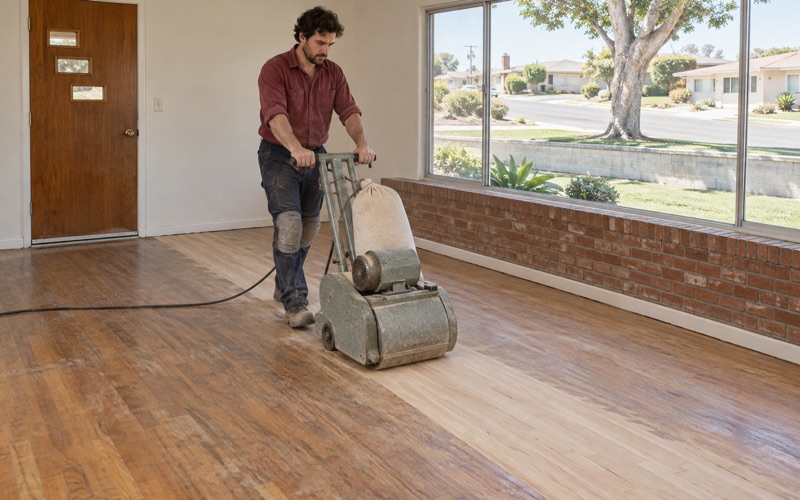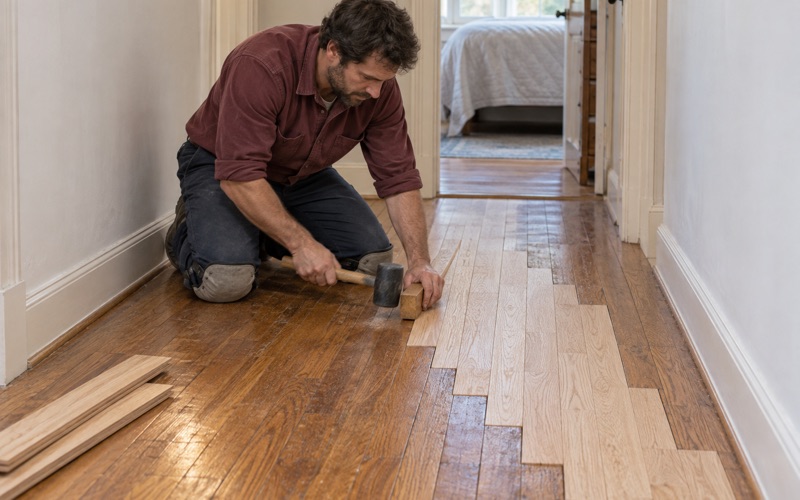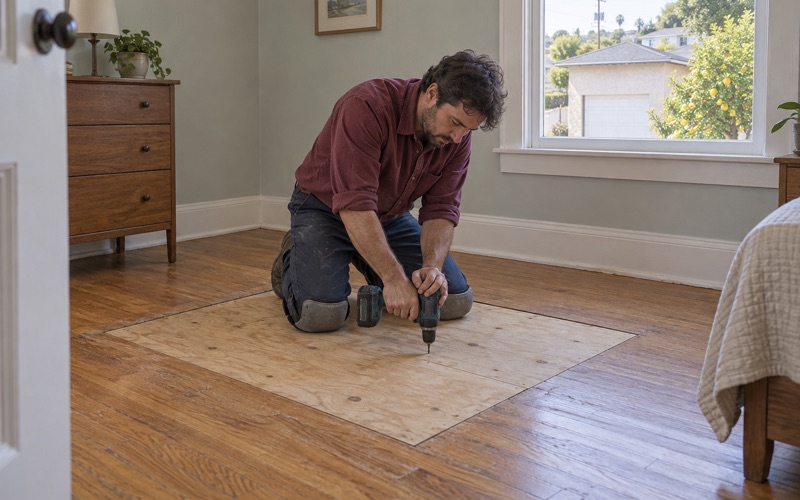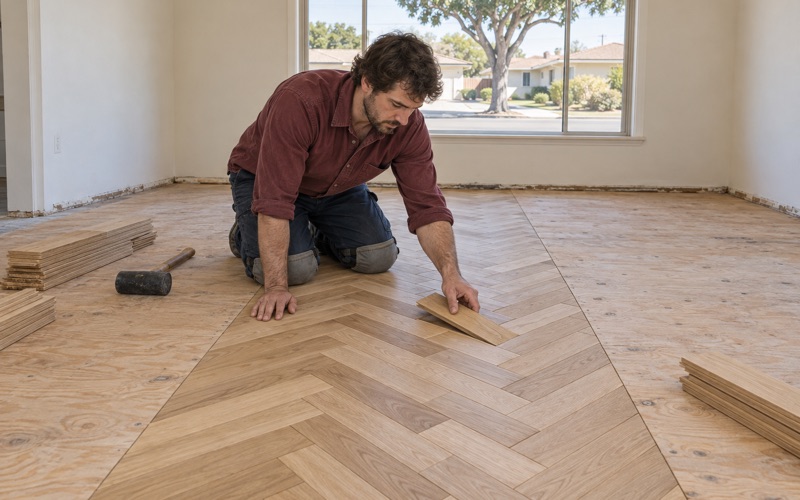
Monterey Park Wood Flooring has spent more than 20 years on wood flooring in Commerce and the communities around our shop, and the work we are asked for here is usually a floor the owner has been meaning to get to for a long while. We refinish worn oak, repair boards damaged by water or pets, install new solid and engineered hardwood, and rebuild stairs, with the same crew that measures and quotes the job.
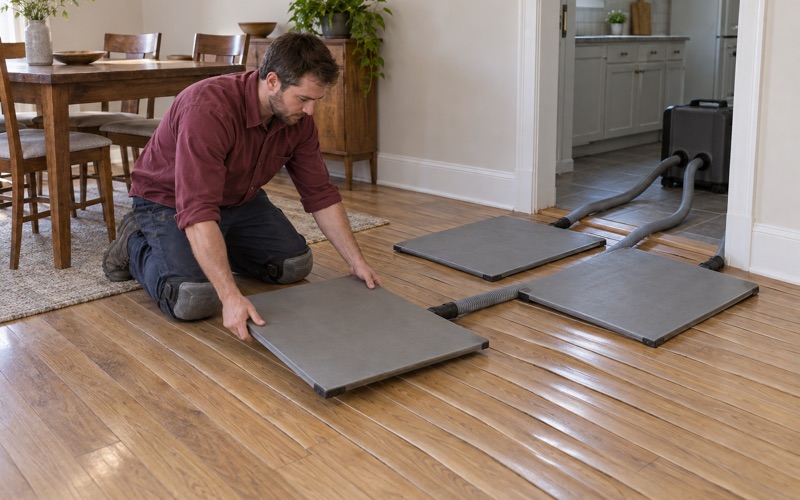
Most calls start with a floor that has been covered, patched or simply worn gray in the traffic lanes. Before we price anything, we walk the rooms with a moisture meter, look at how the boards meet at doorways and thresholds, and note every cupped edge, soft spot and squeak. That walk tells us whether the floor wants a screen and recoat, a full sanding, board replacement or attention underneath.
What follows is written for owners weighing a floor project in this city specifically: what the local home-repair grant does and does not reach, what houses of this age tend to hide under old carpet, and how we sequence the work so a family can keep living at home. It also covers who answers permit questions here, since that answer belongs to the city rather than to a flooring crew.
What the Commerce Home Beautification Grant Covers, and Where It Stops
An exterior program by design
The City of Commerce runs a Home Beautification Grant Program, paid for out of its General Fund, that helps income-eligible homeowners with exterior-only improvements to owner-occupied single- or multi-family homes. Grants go up to $10,000 per eligible household for approved rehabilitation repairs and, where necessary, asbestos or lead abatement, and they are not repaid. The program is administered by the Community Development Department’s Housing Division on Commerce Way.
Exterior-only is the phrase that matters for anyone thinking about floors. Whatever repairs the city approves, they sit on the outside of the house, and the living room, hallway and bedrooms are not part of that scope. Whether the program is taking applications at any given time is a question for the Housing Division directly, since intake has been handled on a first-come basis with a cap on preliminary submissions.
Why the floor stays the owner’s line item
That leaves interior floors as a project the owner plans and pays for separately, and in our experience that changes how people approach it. Without a program calendar setting the timing, an owner can decide whether the floor needs a full sanding this year or a screen and recoat that buys a few more, and can spread room-by-room work across whatever schedule the household budget allows.
We are not part of the grant process, we do not help anyone qualify for it, and we would never write a floor into an exterior scope. What we can do is give a clear interior estimate, so an owner sees the full picture of the house: what the city program may help with on the outside, and what the floors inside will cost as a project of their own.
Pairing exterior grant work with interior floors
Owners who do receive an exterior grant often ask whether the floor should come before or after. Our usual advice is after. Exterior crews carry dust, grit and debris through the doorways, and a freshly cured finish is the last surface anyone wants that tracked across. Letting the outside work wrap up first protects the new coat and keeps two crews from working around each other at the front door.
Timing matters for moisture as well. If exterior repairs deal with water getting in around windows or thresholds, we want those finished before we read the nearby boards with a moisture meter. A floor that cupped beside a leaking door will not settle flat until the leak is gone, and sanding a cupped floor too early leaves crowning once the boards dry back out.
Looking for wood-flooring closer to San Gabriel? See Wood-Flooring in San Gabriel.
Floors in Commerce’s 1940s and 1950s Houses
What the build era leaves underfoot
Commerce is a small city of 3,381 housing units on 6.534 square miles of land, and its houses are unusually concentrated in one period. Census estimates put 52.2 percent of the city’s homes as built between 1940 and 1959, and none are estimated as built in 2010 or later. Residents of the Bandini, Rosewood and Laguna communities joined industrial leaders in the late 1940s, and much of the housing dates from those same years.
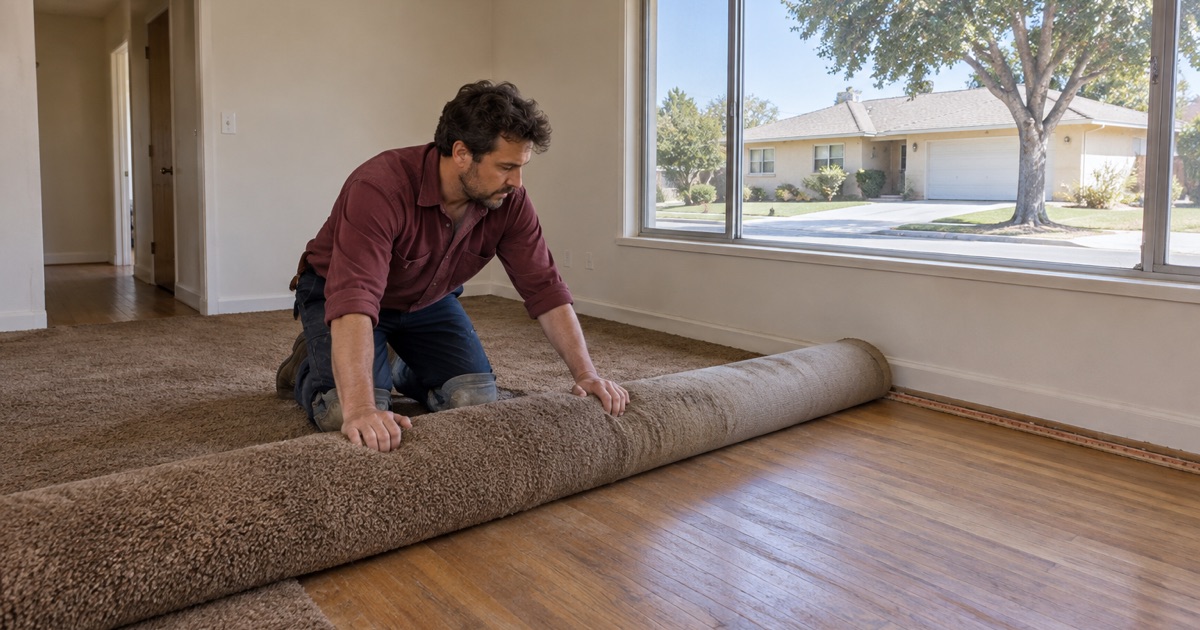
In houses of that age we commonly find narrow strip oak nailed over a board or plywood subfloor, often sanded more than once already and sometimes hidden under carpet, sheet vinyl or tile for decades. The boards can be sound while the finish is worn through, or thin from earlier sandings. We check what is left above the tongue before promising a full sand rather than assuming there is plenty to work with.
Lead-era finishes and old floor coverings
Every house built in the 1940s and 1950s is pre-1978 housing, so we confirm the build year before any sanding goes on the calendar. Old paint on baseboards and trim, along with older finish layers, is handled under the EPA Renovation, Repair and Painting Rule, which shapes how we contain dust, protect the adjoining rooms and clean up. It is one reason sanding days are planned rather than improvised.
Older resilient tile and black mastic laid over wood floors are another reason to slow down. Where a covering of that vintage sits on top of the oak, an asbestos survey comes before anyone scrapes, because removal in this air basin falls under SCAQMD Rule 1403. We would rather pause a job for a survey than disturb material nobody has identified yet.
Looking underneath before we quote
Where a house has a raised foundation and a crawl space, we look at the floor from underneath before putting a number on the job. A sloping floor or a bouncy hallway is often a floor joist, post or subfloor problem, and sanding the surface would only hide it for a while. A sister joist, a new post or fresh fasteners into the subfloor is sometimes the real repair.
The same visit is when we look for drywood termite evidence. Small round kick-out holes and piles of pellet-shaped termite frass near the baseboards mean something different from ordinary wear, and we identify or rule them out before any board is replaced. Replacing boards over an active problem only means replacing them a second time, at the owner’s expense.
Interior Floors as the Owner’s Own Project
Choosing between recoat, sanding and replacement
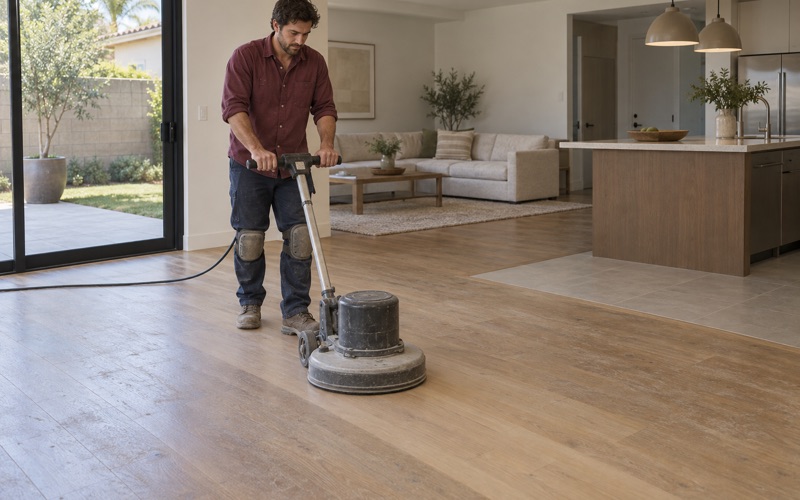
With the floor funded privately, the first decision is how much work it actually needs. A finish that is dull but intact can often take a screen and recoat. A finish that is peeling, clouded with white haze or worn through to bare wood in the lanes needs a full sanding. Boards with a black water stain or a deep pet urine stain usually call for board replacement or a weave-in repair instead.
On engineered hardwood, we measure the wear layer thickness before any sanding is offered, because a thin veneer can take a screen and recoat but not a full sand. Promising a sand on a floor that cannot survive one is how sand-through happens. When a floor has reached the end of its life, we say so plainly and price new solid or engineered hardwood instead.
Finishes and stain chosen for this air district
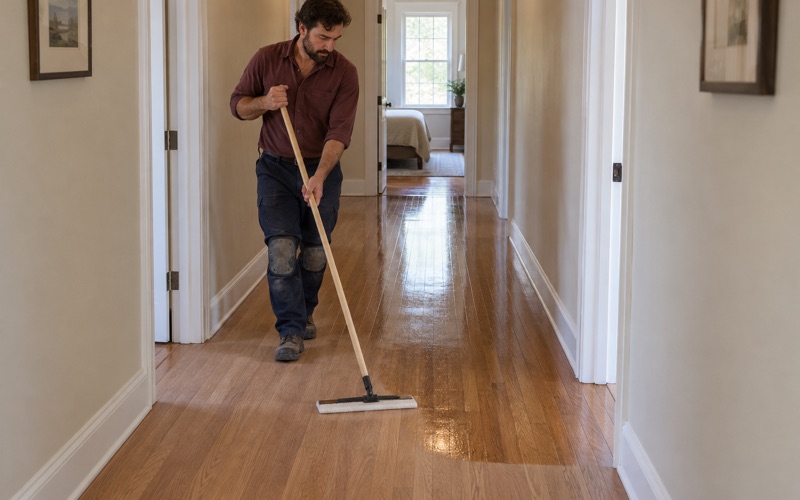
Commerce sits in the South Coast Air Quality Management District, and we choose finishes from products legal to apply here, where the wood coatings VOC limit under SCAQMD Rule 1113 is 275 grams per liter. That rules out some products sold through national catalogs. Within the legal list, owners choose among waterborne polyurethane, oil-modified polyurethane and hardwax oil, each with its own cure time, recoat window and sheen level.
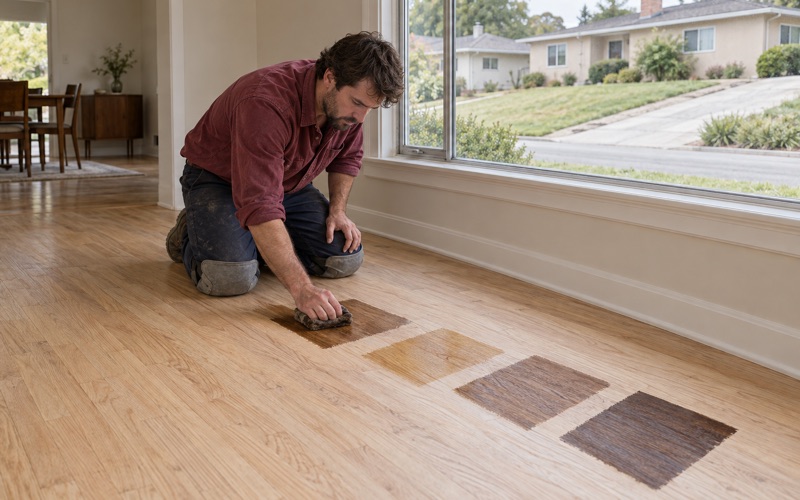
Color is chosen on the floor itself. We stain sample boards on freshly sanded wood and look at them in the room’s own light before committing the whole floor, because the same oil-based stain reads differently on red oak than on white oak, and differently again at noon than in the evening. Water popping before the stain deepens the color where an owner wants a darker tone.
Scheduling around a family living at home
Most owners we work with here stay in the house during the job. We write a room-by-room schedule showing when furniture, rugs and people can come back into each space, so the family knows which bedroom to use while the hallway cures. The schedule counts the recoat window and the full cure time, not just the days the sanders are running.
When a job follows a water loss, we document it with photos and moisture readings an insurance adjuster can use, and we write the repair scope as matching board and matching finish rather than a patch. For owners who rent out part of a property, our invoices are itemized so they can be attached to a security deposit itemized statement without rewriting.
Wood Floor Services in Bandini, Rosewood and Laguna
Detached houses and what they allow
The city’s residential streets sit in the Bandini, Rosewood and Laguna communities, surrounded by the industrial land Commerce incorporated in 1960 to keep from being annexed by neighboring cities, and near the Citadel Outlets on a former tire factory site. Of the city’s owner households, 1,581, or 86.9 percent of owners, live in detached houses, and that shapes most of the floor work we do here.
A detached house means the owner controls the whole floor system, from the subfloor to the topcoat. That makes it practical to stop a squeak from below, sister a joist or flatten a dip before sanding, rather than working around a shared structure. For the attached homes and small multi-unit buildings in the city, we talk through neighbors, noise and acoustic underlayment before recommending any floor.
Stairs, patterns and new installation
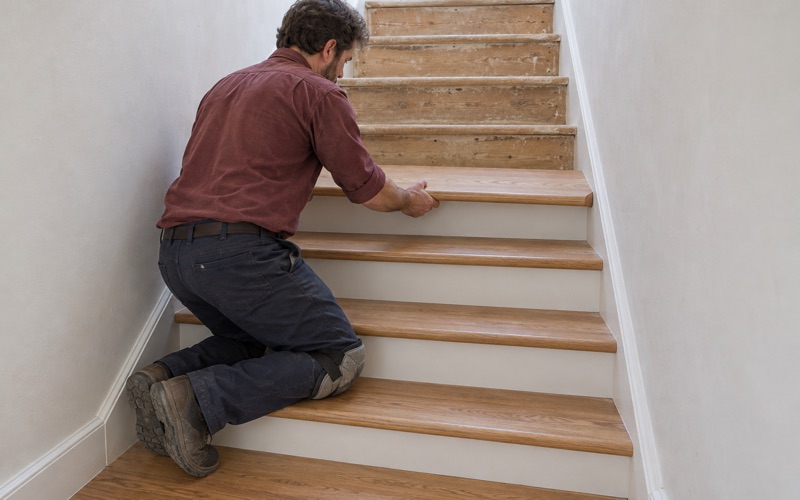
Stairs are quoted by the tread, riser and stair nosing rather than folded into a square-foot price, since a staircase takes far more hand work per foot than an open room. On older stairs we can refinish the existing treads, fit retrofit treads over badly worn ones, or rebuild a landing tread so it matches the floor it meets at the top.
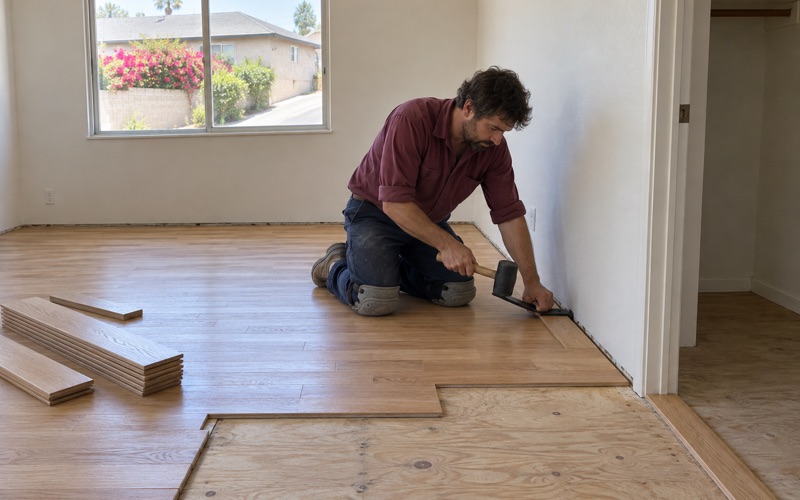
For owners replacing a floor outright, we install nail-down solid hardwood with flooring cleats or staples, glue-down engineered planks, or a floating floor where the subfloor calls for one, always after acclimation and moisture readings. Herringbone and chevron layouts are dry-laid and centered on a layout centerline before the first slat is fastened, so the pattern lands square to the main wall.
Permits and the city’s Building and Safety Division
Questions about building permits here belong to the City of Commerce Building and Safety Division, part of Economic Development and Planning, which reviews construction plans, performs building inspections and issues building permits. Beginning January 1, 2026, plans submitted for plan check are reviewed against the 2025 California Building, Residential, Electrical, Mechanical, Plumbing and Green codes.
We do not give owners a permit answer of our own for a floor project. When a scope reaches past the surface, such as structural repairs under the floor, we ask the owner to confirm the requirements with the division before the work is scheduled, and we build our calendar around what the city tells them. That keeps a job from stalling halfway through with the furniture already moved out.
- 20+ Years on Wood Floors
- Itemized Written Quotes
- Lead-Safe Checks on Pre-1978 Homes