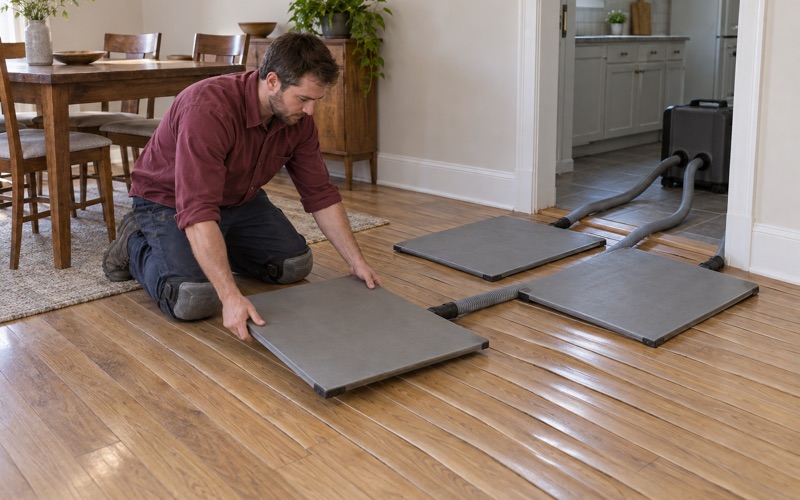
Monterey Park Wood Flooring has spent more than 20 years on wood flooring in East Los Angeles and across the Eastside, sanding, repairing, installing and refinishing hardwood for owners who live on the floor and owners who rent it out. Much of our work here happens in homes that share a wall or a lot with a neighbor, and we plan every job around that fact.
Before a quote, we look at what the floor actually is. Solid hardwood can usually take a full sand, while an engineered floor gets its wear layer measured first, because a thin veneer may only handle a screen and recoat. Cupping, crowning, squeaks and soft spots each point to a different cause, and we name the cause before we price the fix.
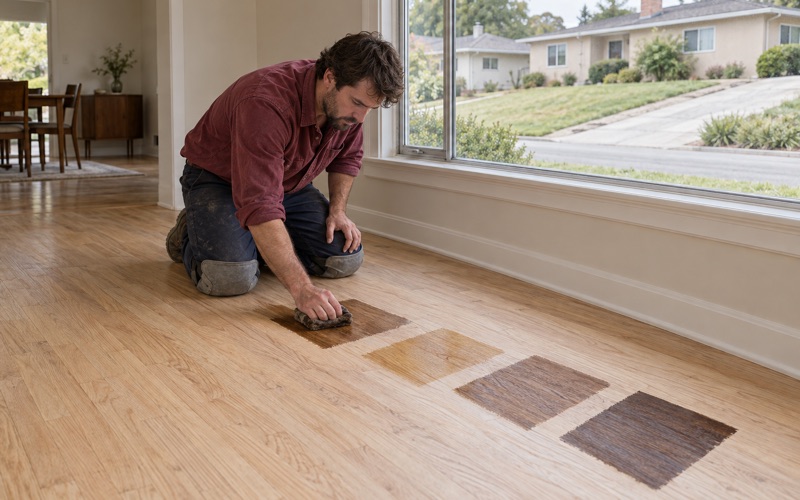
You get a written, room-by-room schedule showing when furniture, rugs and people can return, so a household, or a tenant on the other side of the wall, can plan around the cure time. Stain goes onto sanded sample boards in the room’s own light before a color is committed, and every finish we apply comes from products legal to use in the South Coast air district.
Floors in Attached Homes, Duplexes and Fourplexes
Attached One-Unit Homes
East Los Angeles is not an apartment-tower community. The 2024 five-year American Community Survey counts 5,704 one-unit attached homes here, 17.7 percent of all 32,141 housing units, while buildings of fifty or more units hold only 2.4 percent. That means most of our floor work in the community happens in homes and small buildings rather than large complexes with long corridors.
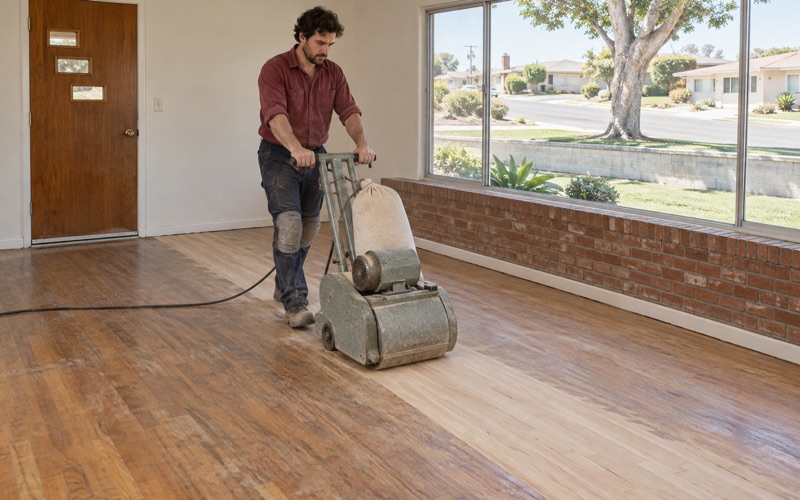
An attached home puts a floor right up against a shared wall, which changes how we sand and finish. Dust control matters more when that wall has outlets, gaps at the baseboard or a common attic above it. We use dustless sanding where the job allows, run the edger along shared walls with care, and keep the expansion gap intact instead of tightening boards against a wall that is partly someone else’s.
Two-Unit and Three-or-Four-Unit Buildings
Small plexes are a large share of the stock as well. The same survey counts 1,964 units in two-unit buildings and 2,637 in three-or-four-unit buildings. In a duplex or fourplex, the units may share an original flooring material and age, so a problem that shows up in one unit, such as seasonal gapping or finish peeling, is worth checking for next door before it becomes a second call.
That makes a building-wide look worthwhile. When we come out for one unit, we can note the condition of the others if the owner wants it: worn-through finish in traffic lanes, gray water marks near kitchens, hollow spots under a hallway. An owner planning several turnovers gets one set of findings up front instead of a new surprise each time a tenant moves out.
Who Lives on These Floors
Two-thirds of East Los Angeles households rent, 66.5 percent or 20,237 of 30,442 occupied units. Of those renter households, 4,325 rent a one-unit attached home, 1,482 live in two-unit buildings and 2,398 live in three-or-four-unit buildings. The floor under a renting family is usually owned by a small landlord, and that owner is most often the person who calls us about it.
Work in an occupied rental is a coordination job as much as a sanding job. We write the schedule so the owner can give tenants clear notice of which rooms are off-limits and for how long. Waterborne polyurethane generally allows a quicker return to light foot traffic than oil-modified polyurethane, and we explain that tradeoff before a finish is chosen, not after a tenant is already waiting.
Looking for wood-flooring closer to Alhambra? See Alhambra Wood-Flooring.
Small Landlords, the County Registry and Scheduling
Properties Under the County Ordinance
East Los Angeles is unincorporated Los Angeles County, so the rental rules here are the county’s. The Rent Stabilization and Tenant Protections Ordinance, Chapter 8.52 of Title 8 of the county code, fully covers units on properties of two or more units with a certificate of occupancy issued on or before February 1, 1995. Owners of those properties register their units in the county rent registry and pay annual fees.
We are a flooring company, not a housing office, so we do not interpret what the ordinance says about repairs, rent or tenants. The county Department of Consumer and Business Affairs administers it and answers those questions directly. What we can do is keep our side of the record clean, so whatever an owner keeps on file about a unit is backed by an accurate account of the floor work.
Invoices Built for Deposit Statements
When a tenant moves out and the floor needs attention, a landlord often has to show what was done and what it cost. Our invoices are itemized line by line, with board replacement, a weave-in repair over a pet urine stain, sanding and each coat of finish listed separately, so the owner can attach them to a security deposit itemized statement without rewriting anything.
Itemizing also separates damage from ordinary wear. A deep black water stain beside a sink and a traffic lane dulled over many years are different entries, and we describe each one plainly. Photos taken before we start go with the invoice when the owner asks for them, which helps when a former tenant wants to know how a figure on the statement was reached.
Scheduling Work Between Occupied Units
In a duplex or fourplex, the unit we are working in usually has neighbors at home on the other side of the wall. We plan the loud steps, the drum sander and edger passes, for daytime hours and tell the owner which day each will happen. Finish coats go down after sanding dust is cleared, and we keep shared entries and walkways open so other tenants can come and go.
Vacant turnovers are the easiest time to refinish, and owners with several small buildings sometimes line up floors unit by unit as leases end. Each unit gets its own written schedule, including the recoat window between coats and the point when furniture can go back, so the next tenant’s move-in date is set against real cure time rather than a hopeful guess.
Older Houses from the Belvedere Heights Era
How Old the Housing Is
Much of East Los Angeles was built early. Of the community’s housing units, 10,976 date to 1939 or earlier, which is 34.1 percent, and 83.8 percent were built before 1980. The Janss Investment Company began a 170-acre tract here in 1905 that was later renamed Belvedere Heights, and by 1922 the company advertised 6,000 lots sold.
Local business leaders gave the name East Los Angeles to Belvedere and adjacent areas in 1932, with a renaming ceremony in 1937. A floor in a house of that age may have been sanded several times already, so we check the remaining thickness at a floor register or threshold before promising another full sand. A sand-through halfway across a room is not something a second coat can hide.
Lead-Safe Planning in Pre-1978 Homes
We confirm the build year before any sanding goes on the calendar, because pre-1978 housing falls under the federal EPA Renovation, Repair and Painting Rule when painted surfaces are disturbed. Baseboards, quarter round and stair risers in an older house can carry layers of old paint, and sanding right next to them is part of the plan rather than an afterthought.
For a landlord, that planning belongs in the tenant notice as well. Work areas are contained, dust is controlled at the source, and cleanup happens before a family comes back into the room. We would rather spend a day confirming a build year than sand into a coating nobody checked, then have to explain it to the people living there.
Sloping Rooms and Termite Evidence
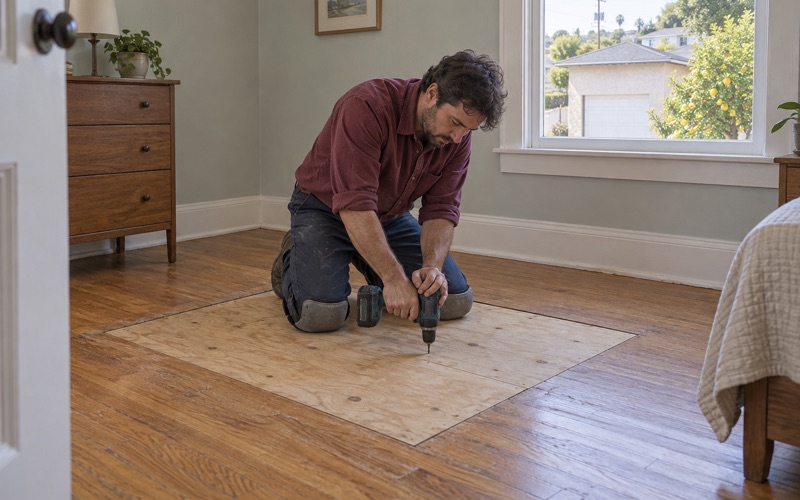
Where a house sits on a raised foundation, we look from underneath before we quote. A sloping floor, or a bouncy and sagging one over a crawl space, is often a floor joist, post or subfloor problem, and sanding the surface would only hide it. If the fix is a sister joist or new blocking, we say so first and plan the floor work around that repair.
Small round kick-out holes and little piles of pellets near a baseboard get the same attention. Termite frass from drywood termites looks different from sawdust, and powderpost beetle holes look different again. We identify that evidence or rule it out before any board is replaced, so a new board is never set into wood that is still being eaten.
Wood Floor Services Across East Los Angeles and City Terrace
Refinishing, Repairs and Installation
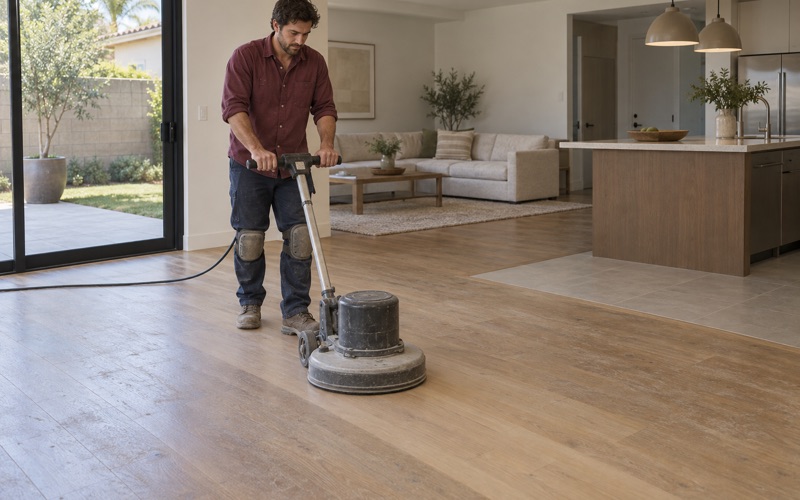
We work throughout the census-designated place, which includes City Terrace, and across the 90022 and 90063 ZIP codes. Refinishing runs from a full sand with a proper abrasive grit sequence down to a screen and recoat for a floor whose finish is dull but intact. Water popping before stain helps an oak floor take color more evenly, and we test it on sample boards first.
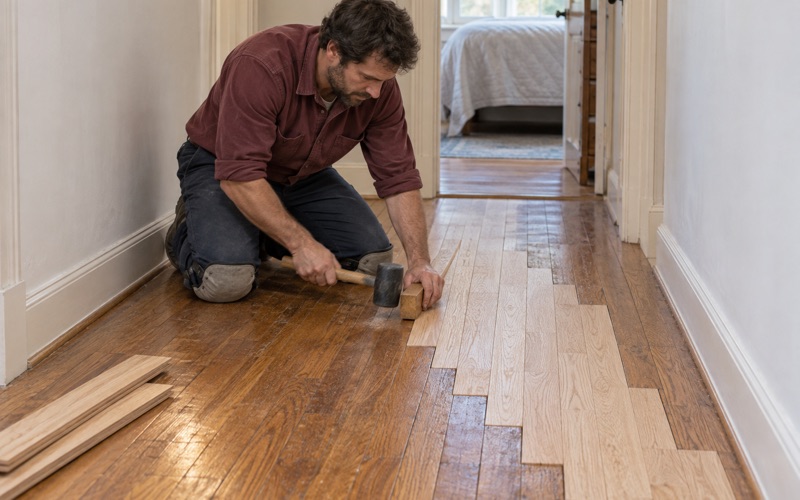
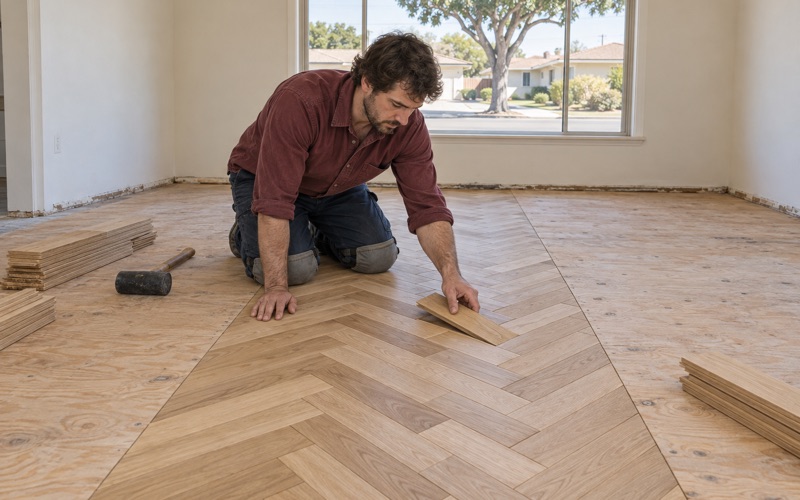
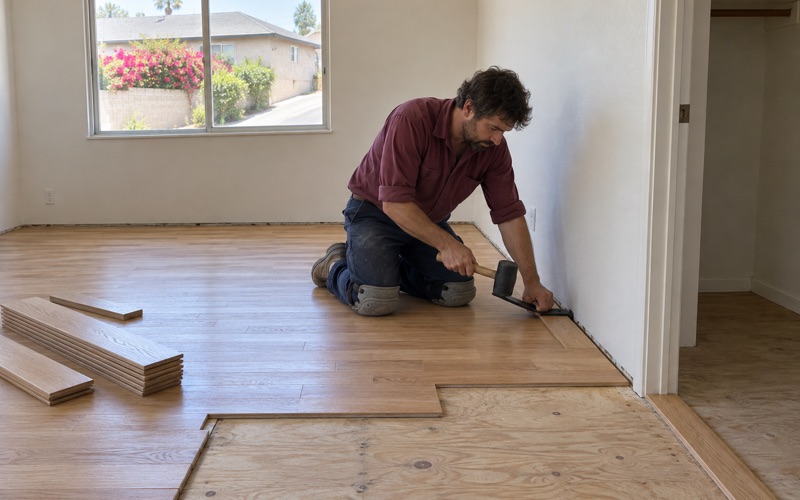
Repairs include board replacement, weave-in repair across a doorway, squeak fixes and cupping traced back to its moisture source with a moisture meter. New installations cover nail-down solid hardwood, glue-down engineered planks and floating floors, with acclimation and expansion gaps handled to suit the material. Herringbone and chevron layouts are dry-laid and centered on the room before the first slat is fastened.
Stairs and Water Losses
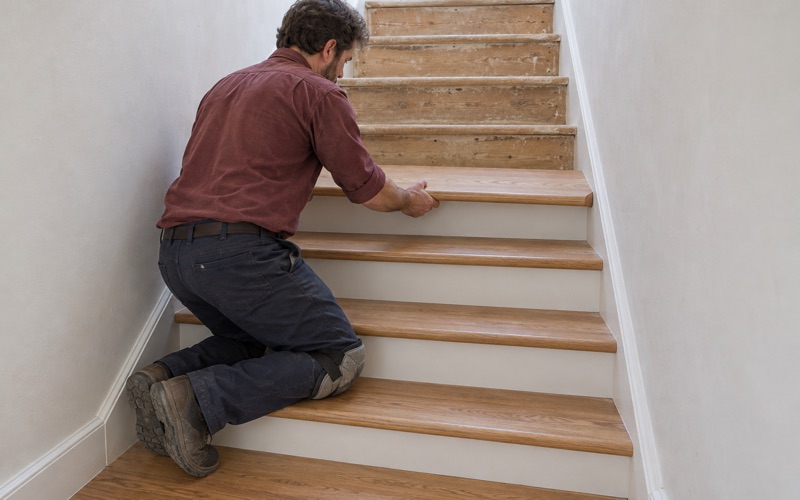
Stairs are priced by the tread, riser and nosing rather than folded into a square-foot price, because each piece takes its own time. That holds for a single flight in an attached home and for a stair several households share in a small building. Retrofit treads, landing treads and new stair nosing are quoted as separate items so an owner can see the cost of each.
After a leak, we document the loss with photos and moisture readings an adjuster can use. The repair scope is written as matching board and finish, so the goal is a floor with a reasonably uniform appearance rather than a patch that shows. That matters in a rental, where the same floor will be looked at closely again at the next move-out.
Finishes, Air Rules and Permits
East Los Angeles lies in the South Coast Air Quality Management District, whose wood coatings limit under Rule 1113 is 275 grams per liter. We choose sanding sealer, stain and polyurethane from products that meet it rather than from a national catalog, and we match sheen level to the room, since a lower sheen hides everyday wear in a busy household.
Because the community is unincorporated, any permit question on a larger floor project goes to Los Angeles County Public Works, whose East Los Angeles Building and Safety Office sits at 4801 E. 3rd St. and works under Title 26 of the county code. We point owners to that office for an answer on their own job, since the county, not a city hall, is the authority here.
- 20+ Years on Wood Floors
- Itemized Written Quotes
- Lead-Safe Checks on Pre-1978 Homes