Monterey Park Wood Flooring has handled wood flooring in El Segundo for homeowners who want an honest read on what their floor can still take, and we bring more than 20 years of sanding, repair and installation to that read. Most of our calls here start with a worn living room, a hallway gone gray at the traffic line, or a bedroom where someone lifted old carpet and found boards underneath.
We start every job by looking before we quote. That means walking the rooms with a moisture meter, checking for cupping, crowning, hollow spots and squeaks, and confirming the year the house was built. The answer to that last question changes how we sand, how we contain dust, and what finish system we can bring into the house.
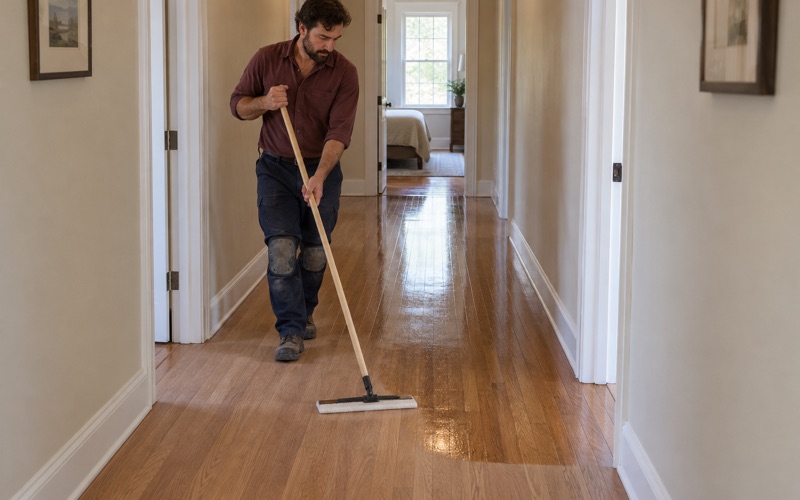
The work itself covers the full range a residential floor needs: screen and recoat on a finish that is dull but intact, full sanding and refinishing, board replacement and weave-in repair, stair treads and risers, and new solid or engineered hardwood when a floor has reached the end of its life. We write the scope in plain terms so you can compare it against any other quote you gather.
Floors in El Segundo’s owner-occupied houses
A market built around the detached house
The owner side of this city is concentrated in one kind of building. According to the Census Bureau’s 2024 five-year American Community Survey, 2,212 of El Segundo’s 3,162 owner households live in one-unit detached houses, which is 70.0 percent of owners. That is the job we see most often here: a single family deciding what to do with the floors in the house they own.
A detached house gives us room to plan the work properly. We can stage equipment in a driveway or garage, run a dust collection hose to the outside, and sequence rooms so the kitchen and one bathroom stay usable. It also means the decision rests with one owner rather than a board or a management company, so a stain sample or a repair call can be settled in a single visit.
Who else lives here
Owners are not the majority of households, though. Of 7,437 occupied homes, 57.5 percent are rented, so a good share of our El Segundo calls come from landlords turning over a unit between tenants. For those jobs we write itemized invoices by room and task, laid out so an owner can attach them to a security deposit itemized statement without rewriting anything.
Rental floors tend to show a different pattern of wear than owner floors. We see pet urine stain in corners, black water stain near a refrigerator line, and a finish worn through at the entry while the bedrooms still look fine. Separating what is normal wear from what is damage is part of the written scope we hand the owner before work begins.
Looking for wood-flooring closer to Hermosa Beach? See Hermosa Beach Wood-Flooring.
A residential district inside a refinery and aerospace town
How the city got its name
El Segundo’s history explains why its houses sit where they do. Standard Oil bought 840 acres here in 1911 for what became its second West Coast refinery, and the name means “the second” for exactly that reason. The city incorporated on January 18, 1917, and oil and aerospace have defined its economy ever since, with aerospace employers now dominating local jobs.
That industrial start is part of the city’s story rather than a fact about any particular house, and we do not assume who a house was built for or what went into it. What the history does tell us is that El Segundo has been an established place for more than a century, and its housing has been added in waves rather than all at once.
Three-quarters industrial, one residential district
Roughly three-quarters of El Segundo’s land is dedicated exclusively to industrial and commercial uses, and the Chevron refinery alone takes up more than a quarter of the city. LAX forms the northern boundary. What remains for housing is a compact residential area, with El Segundo Unified serving the western residential district and Wiseburn Unified covering eastern portions of the city.
For a flooring crew, a small residential district means short drives between neighboring jobs and familiar house layouts. Homeowners near the airport sometimes ask whether the LAX Residential Sound Insulation Program helps with floors; the program treats exterior doors, windows and ventilation, and floors are not named in what it covers, so floor work remains the owner’s own project.
1940s and 1950s El Segundo houses and their floors
A housing stock with deep roots
The Census counts show how much of the city’s housing is older. Of 7,889 housing units, 40.7 percent were built before 1960, and the 1940s alone added 1,136 units, 14.4 percent of the total. Another 1,444 units date from the 1950s. Only 13 units were built in 2020 or later, so new construction plays almost no part in the local flooring picture.
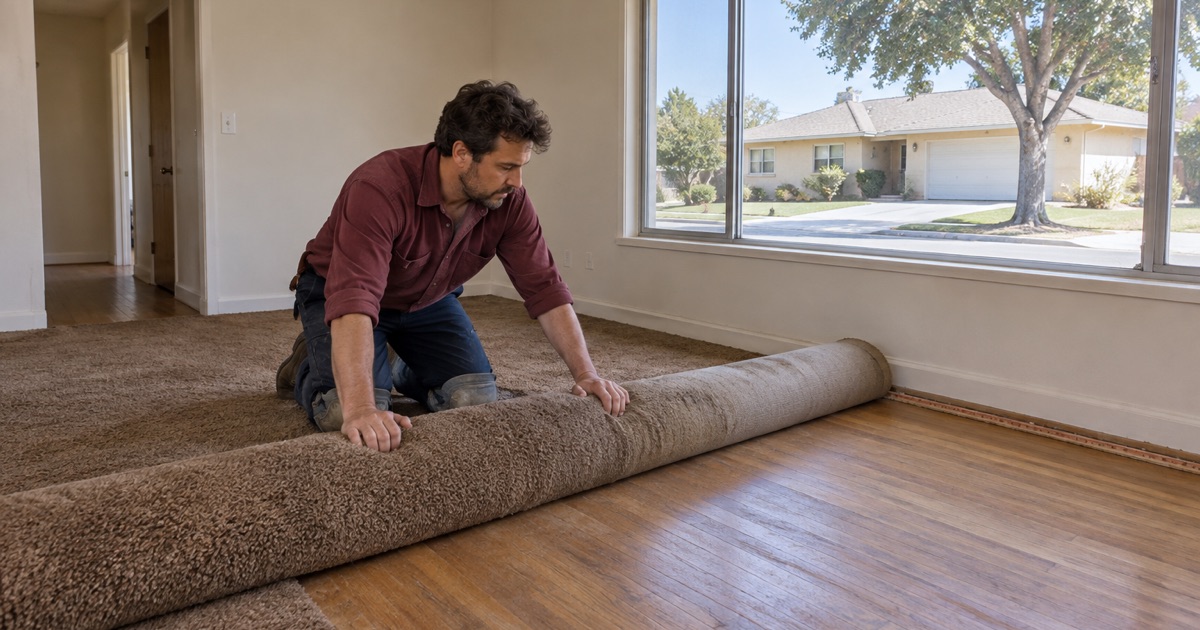
In practice, a typical El Segundo owner job is a 1940s or 1950s house in the western residential area. A floor that old has usually been refinished before, sometimes more than once, and each sanding took some wood off the top. Before we promise a full sand, we look at the tongue and groove edges at a floor vent or threshold to see how much wear surface is left.
Lead and older finish layers
Age matters for health rules as well as board thickness. By the Census counts, 73.4 percent of El Segundo’s housing units were built before 1980, and houses built before 1978 fall under the federal EPA Renovation, Repair and Painting Rule when painted surfaces are disturbed. We confirm the build year before any sanding is scheduled so the containment plan matches the house.
That check covers more than the floor surface. Painted baseboards, shoe molding and quarter round are often removed during a refinish, and stair risers in older houses are frequently painted too. When those pieces carry older paint layers, we plan the removal and cleanup around them rather than finding out halfway through the job.
What decades of use leave behind
Older floors carry their own history. We regularly find finish peeling where a newer coat was laid over an incompatible old one, white haze from years of the wrong cleaner, chatter marks and drum marks from a past sanding, and patches where a heating register or a wall was moved. None of that is unusual, and most of it sands out.
Some of it does not. A sand-through spot where an earlier crew went too deep, or a board with black water stain running through its full thickness, has to come out. We mark those boards during the first visit so the quote already includes the replacement rather than surprising you with a change order once the floor is open.
Refinishing versus replacing in an older detached house
When a refinish is enough
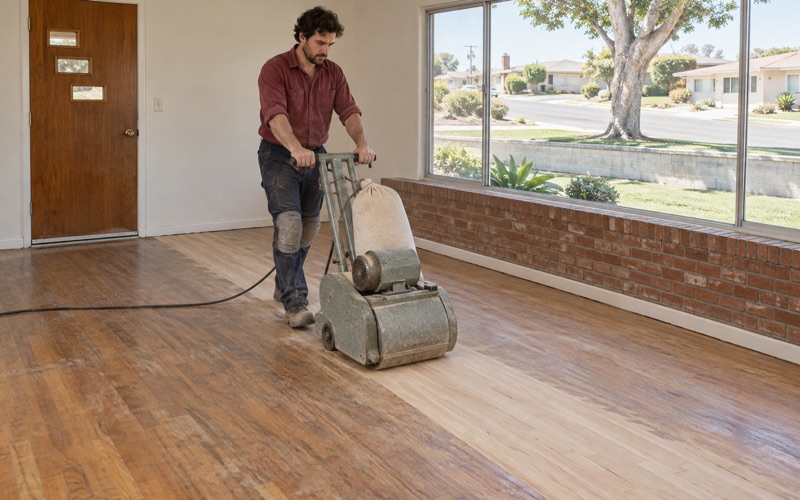
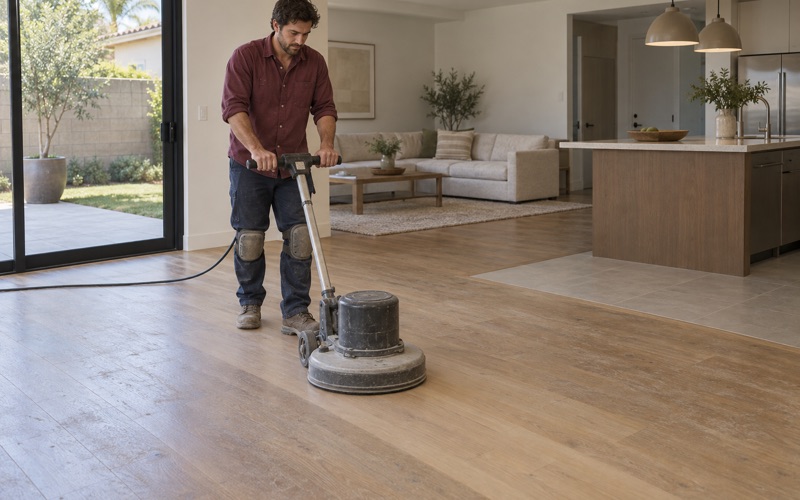
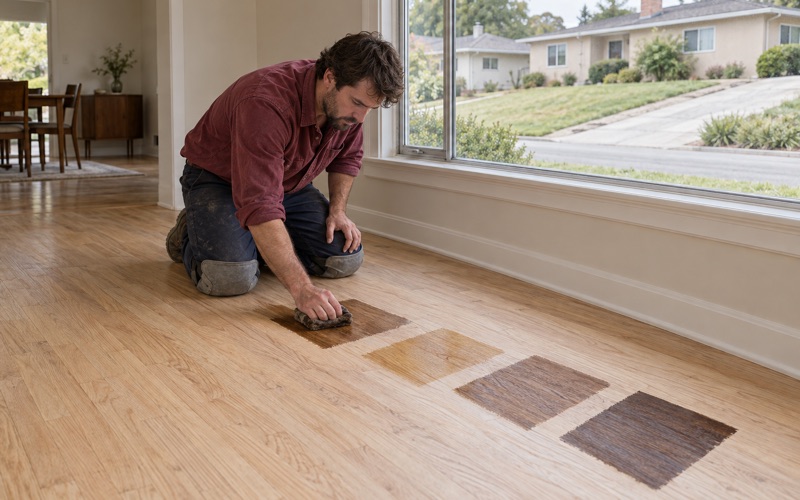
If the boards are sound and there is wood left above the tongue, sanding and refinishing is almost always the better value. We run a drum sander and edger through a full abrasive grit sequence, finish with an orbital sander to remove swirl, and use dustless sanding equipment so the house stays livable. Stain color is tested on sanded boards in the room’s own light before we commit the whole floor.
Finish choice follows air district rules, not a national catalog. El Segundo sits under the South Coast Air Quality Management District, where SCAQMD Rule 1113 sets the wood coatings limit at 275 grams per liter. We pick waterborne polyurethane, oil-modified polyurethane or a hardwax oil from products legal to apply here, then match the sheen level to how the room is used.
When boards or structure need attention
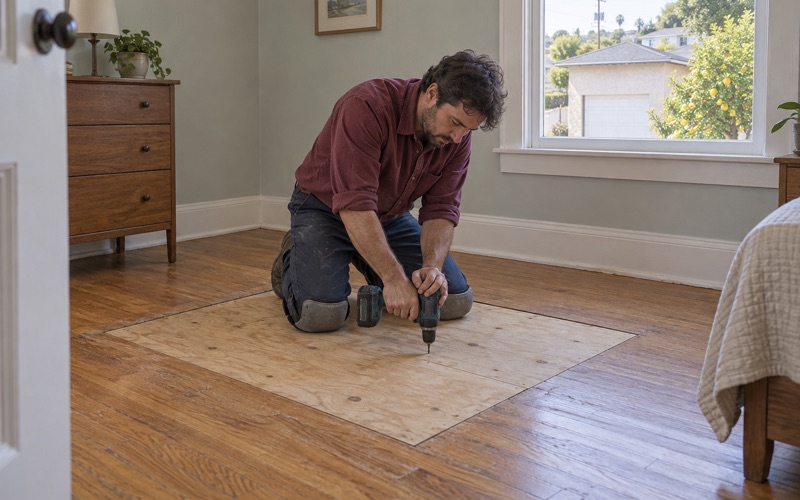
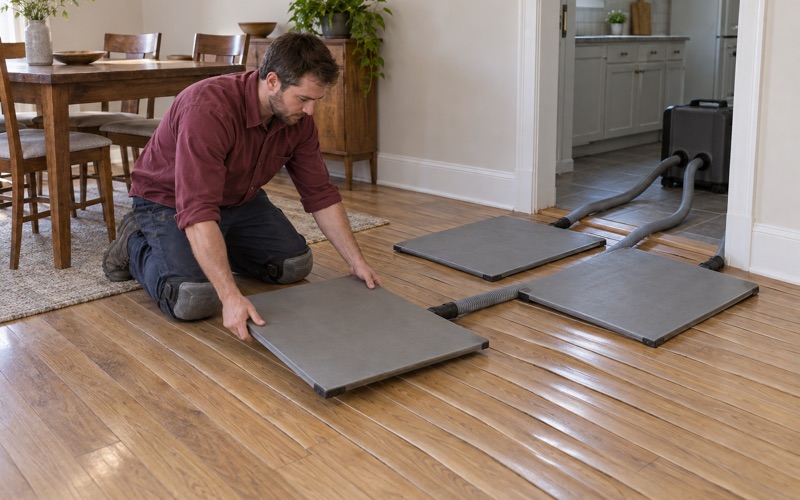
Replacement starts with finding the cause. Small round kick-out holes and piles of pellet-like termite frass can point to drywood termites, so we identify that evidence or rule it out before any board is pulled. If a house sits over a crawl space and the floor slopes, sags or bounces, we check from underneath first, since a floor joist, post or subfloor problem is something sanding would only hide.
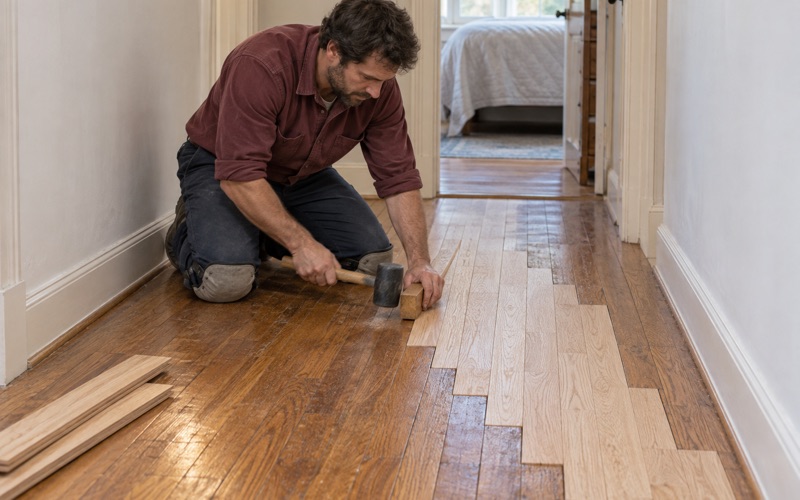
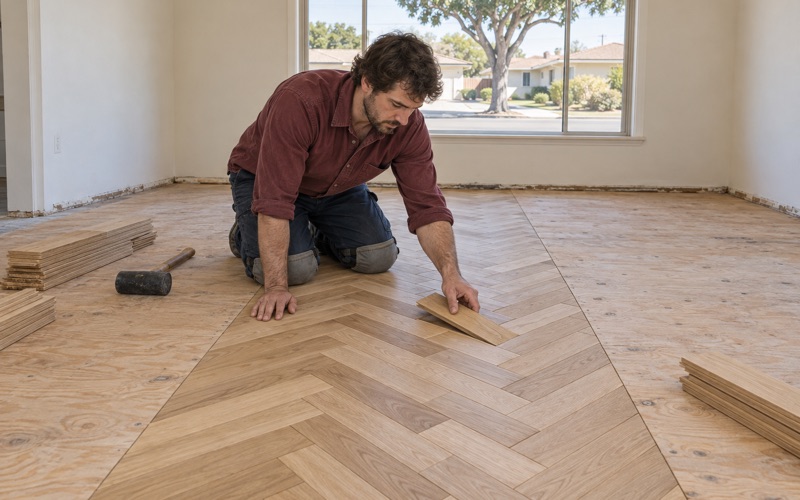
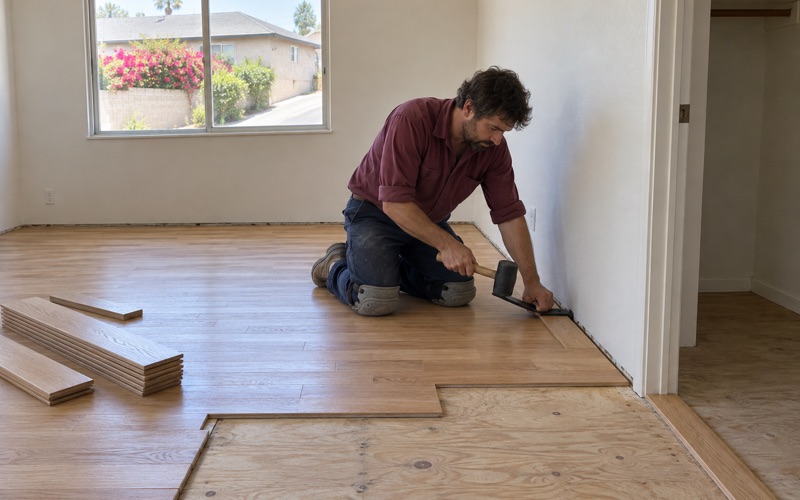
Where damage is limited, a weave-in repair with matching boards keeps the floor continuous. Where a room is past saving, we install new solid hardwood or engineered hardwood, with acclimation, an expansion gap at the walls and the right fastening for the subfloor. On an engineered floor, we measure the wear layer thickness before promising a sanding, because a thin veneer can take a screen and recoat but not a full sand.
Planning around a household that stays home
Most owners here live in the house while we work, so we hand over a written room-by-room schedule showing when furniture, rugs, pets and family can come back. Cure time varies with the finish system, and the schedule accounts for each recoat window so nobody walks on a coat before it is ready.
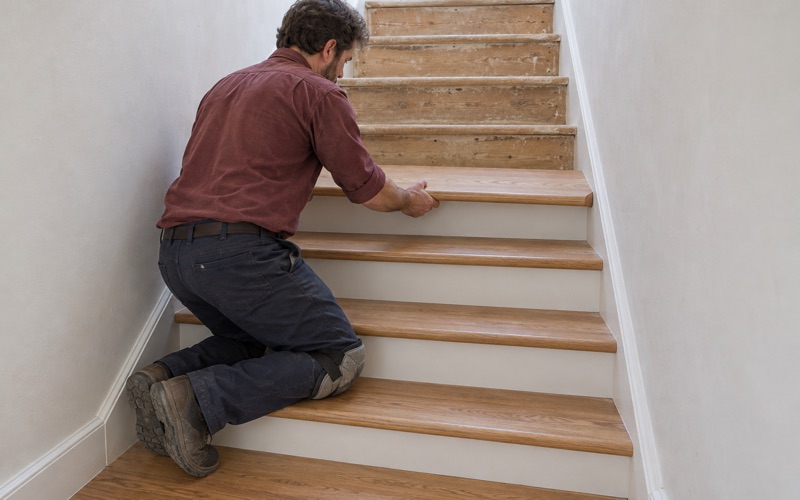
Stairs are quoted separately, by the stair tread, riser and stair nosing rather than folded into a square-foot price, since each piece takes hand work. When a water loss is behind the call, we document it with photos and moisture readings an adjuster can use, and we write the repair scope as matching board and finish rather than a patch.
- 20+ Years on Wood Floors
- Itemized Written Quotes
- Lead-Safe Checks on Pre-1978 Homes