Monterey Park Wood Flooring has spent more than 20 years on wood flooring in Hawaiian Gardens and the surrounding area, sanding, repairing and installing floors for owners who plan to stay in their homes. Our work covers refinishing worn oak, replacing damaged boards, quieting squeaks and hollow spots, and laying new solid or engineered hardwood when an old floor has truly run out of life.
Most calls we get start with a practical problem rather than a design question. A hallway has a worn-through finish, a bedroom floor has cupped near an exterior wall, or a pet urine stain has gone dark at the edges of two boards. We look at the floor, find the cause, and write a scope that says what we would do and what it would cost, room by room.
This page is written for owners weighing floor work against other repairs on the same house. Some of that work is a private project an owner simply commissions and pays for. Some of it may sit close to a safety problem the city has its own program for, and keeping the two apart from the first visit makes both conversations easier and more honest.
Floor Work in Hawaiian Gardens’ Owner-Occupied Homes
Who We Usually Work For
Hawaiian Gardens has 1,730 owner-occupied households, 43.8 percent of the city’s occupied homes, according to the Census Bureau’s 2024 five-year American Community Survey. Those owners live with a floor’s condition every day and pay for any work on it, so most of our quotes here are written for them directly, in plain language, with every line item explained.
Detached houses make up 44.8 percent of the city’s housing units, with the rest split across attached homes, small multi-unit buildings and larger complexes. A floor in a detached house and a floor in a small building each come with their own access, parking and neighbor considerations, and we ask about those before we set a start date or bring in a drum sander.
What a First Visit Covers
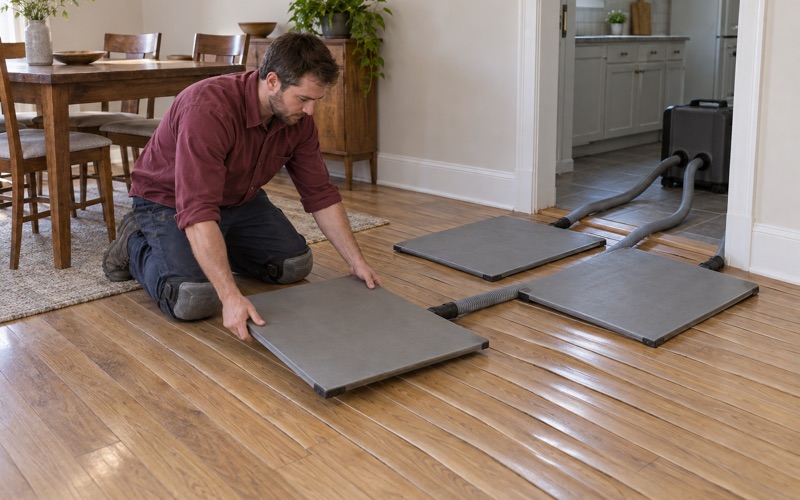
We start by walking the rooms with the owner and noting every problem, not only the one that prompted the call. Cupping, crowning, seasonal gapping, loose boards and finish peeling each point to a different cause, and a moisture meter reading at the worst spot tells us whether the wood is still reacting to a source of water.
Where a house has a crawl space, we check the floor from underneath before quoting, since a sloping floor or a soft spot is often a joist, post or subfloor problem that sanding would only hide. Where there is no access below, we check flatness and moisture from above and write down plainly what we could and could not see.
A Written Schedule for an Occupied Home
Owners here usually stay in the house while we work, so we hand over a written schedule showing which rooms close on which day, when furniture and rugs can come back, and how long each coat of finish needs before family members walk on it in socks and then in shoes. Nobody has to guess from a verbal estimate at the door.
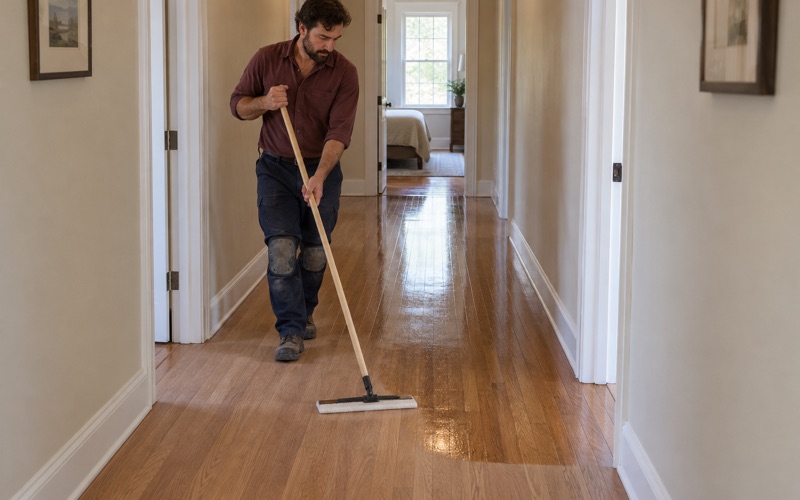
Cure time is the part most people underestimate. A waterborne polyurethane can feel dry within hours, yet it keeps hardening for days, and a rug laid too soon can leave a pattern pressed into the sheen. We build that window into the schedule, along with the recoat window between coats, so the finish reaches full hardness before daily life resumes on it.
Looking for wood-flooring closer to Signal Hill? See Signal Hill Wood-Flooring.
The City’s Beautification Program and Where Floor Work Stands
What the Program Is For
The City of Hawaiian Gardens Public Housing Authority runs a Beautification Program that offers rehabilitation and repair assistance to income-eligible applicants living within city limits. According to the city’s own description, the program provides interior and exterior enhancements that bring properties into compliance with the Hawaiian Gardens Municipal Code.
The program is aimed at owner-occupied properties with conditions that threaten life, safety or health, and the city describes a qualifying condition as one that poses a serious and immediate threat to the occupants. That is a much narrower purpose than general home improvement, and it is worth understanding before an owner assumes a particular repair belongs inside it.
How the 70 and 30 Percent Split Works
Under the program, grants cover up to 70 percent of total project cost. The property owner is responsible for the remaining 30 percent, plus any amount above the grant. An owner looking at a longer repair list therefore still carries a real share of the cost, and planning for that share early avoids an unpleasant surprise partway through the process.
The city’s Housing Division also administers a separate Residential Rehabilitation Program and the Section 8 Housing Choice Voucher Program. Which program suits a particular household, and which items any of them will include, are questions for city staff. We have not established whether floor work is an eligible item under the Beautification Program, and we never suggest to an owner that it is.
Our Place Next to the Program
We are a private flooring company with no role in the program, and we do not decide what the city funds. What we can do is give an owner a clear, itemized description of the floor’s condition and the work we would propose, so any conversation the owner has with the city starts from accurate information rather than a guess.
If an owner is already talking with the Housing Division about a repair elsewhere in the house, we are glad to schedule our visit around that work so trades are not working over each other. Refinishing done after other repairs are finished usually comes out cleaner, because nobody is carrying ladders, tools or debris across a fresh coat of finish.
Safety Repairs Versus Cosmetic Refinishing
When a Floor Problem Becomes a Safety Question
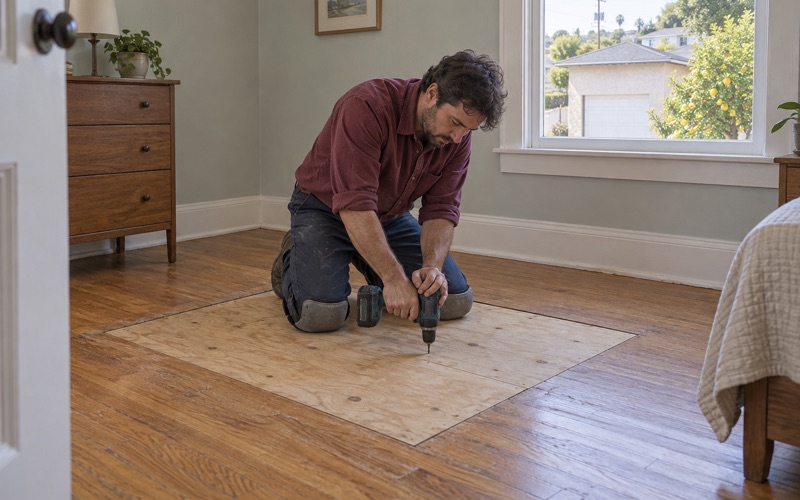
Most floor work is cosmetic in the ordinary sense: the wood is sound and the finish is tired. A different category starts when a floor has a soft spot underfoot, a sagging section, boards lifted into a trip edge by buckling, or damage from a leak that has not been stopped. Those conditions can involve structure or water, not only appearance.
When we find something like that, we say so in writing and describe it plainly. We do not label a condition as a code violation or a program-eligible hazard, because those judgments belong to the city. What we document is what we saw, where it is, how far it extends and what a lasting floor repair would involve once the cause is addressed.
Refinishing and Replacement an Owner Commissions
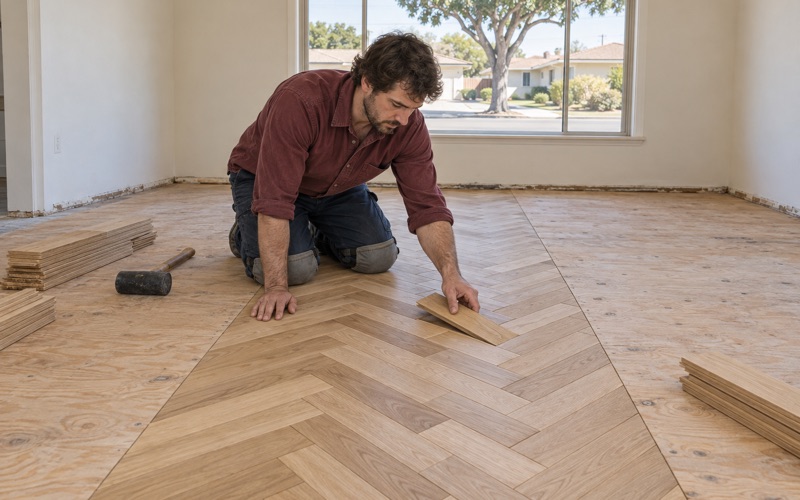
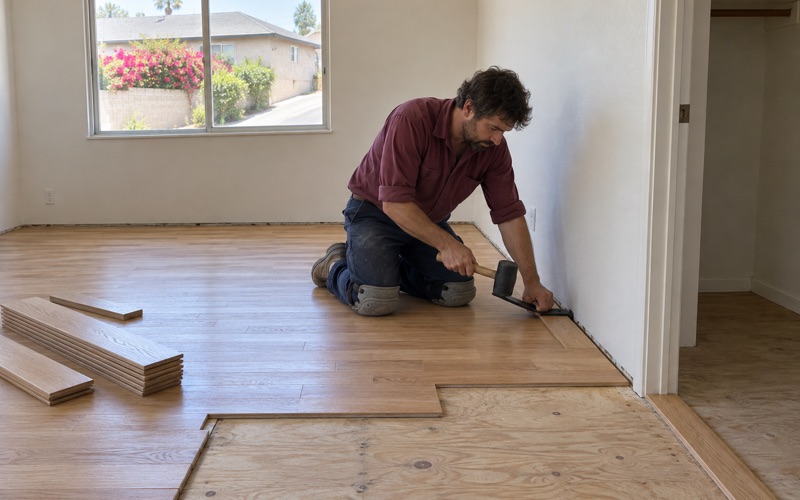
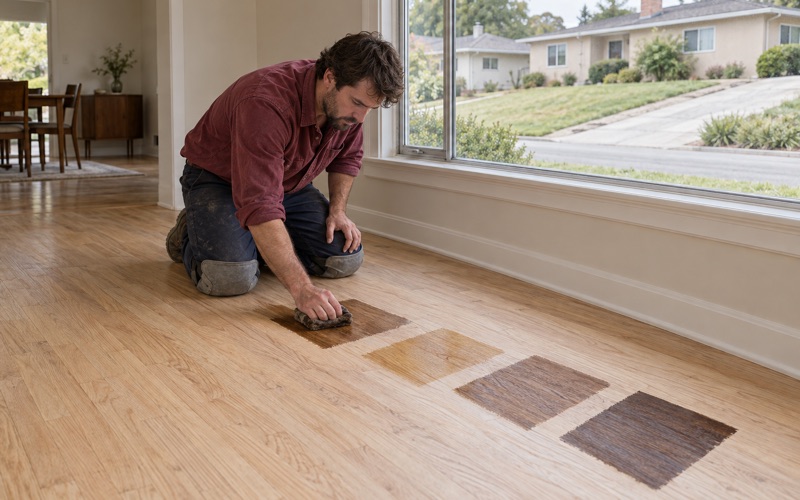
Sanding and recoating a sound oak floor, changing its stain color, or replacing worn carpet with new hardwood are private projects, planned and paid for by the owner. On those jobs we test stain color on sanded boards in the room’s own light before committing the whole floor, because a small sample chip rarely matches what a given species and room actually produce.
Engineered floors need one more check. We measure the wear layer before promising a full sand, since a thin veneer can take a screen and recoat but not a complete sanding. A floor that cannot be sanded again may still look far better after a recoat, and the written quote says clearly which of the two treatments it is getting.
Water, Termites and Board Replacement
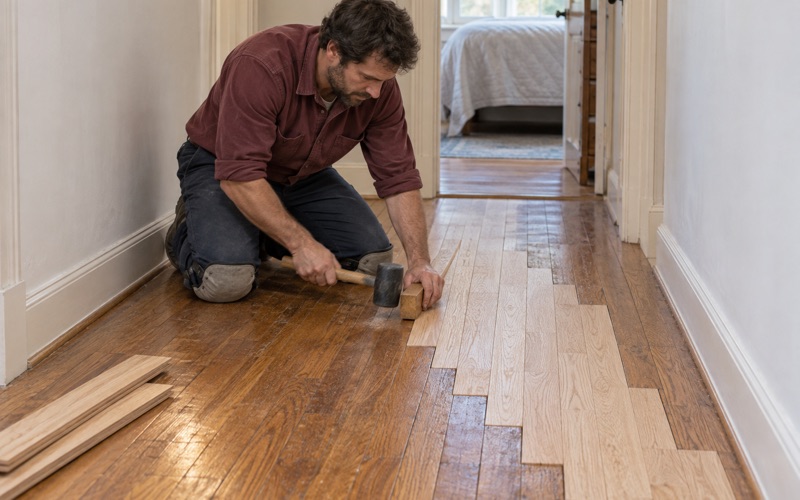
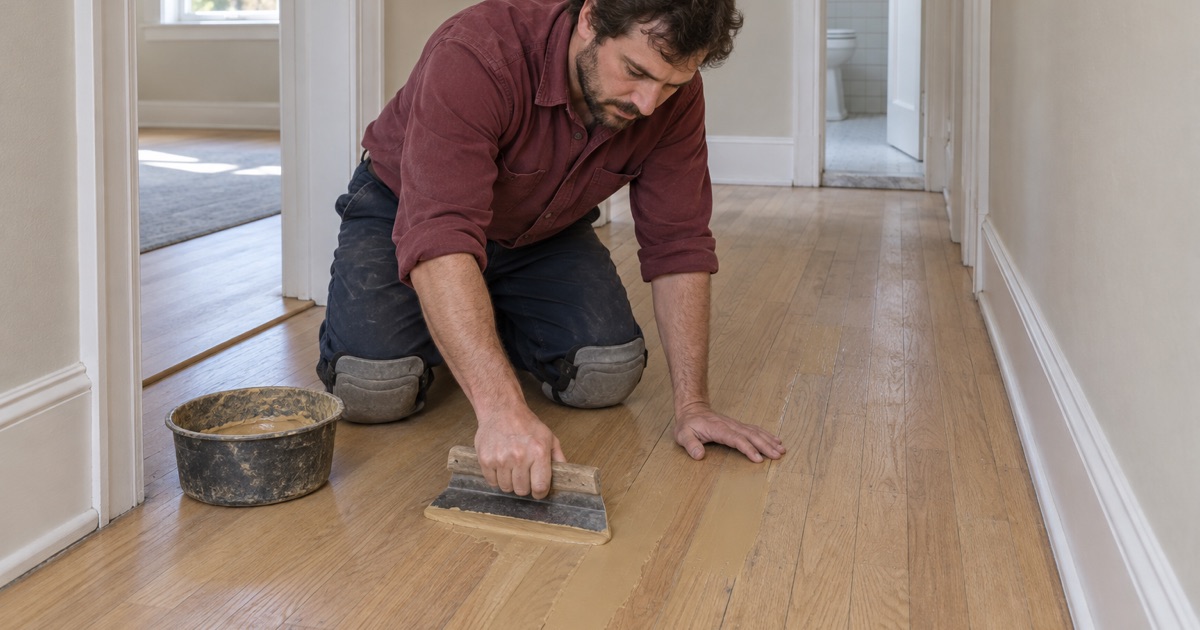
Water losses and insect damage sit between the two categories. For a water loss we document conditions with photos and moisture readings an adjuster can use, and we write the repair as matching board and finish rather than a patch. A black water stain that has soaked deep into the wood usually calls for board replacement or a weave-in repair.
Small round kick-out holes and little piles of pellets near a baseboard can be drywood termite evidence, and we identify or rule that out before replacing a single board. Swapping damaged wood while insects are still active only moves the problem somewhere else, so the order of the work matters as much as the repair itself.
Older Houses and Getting an Estimate
What an Older Housing Stock Means for the Work
About 73.7 percent of Hawaiian Gardens housing units were built before 1980, according to the same Census survey, and 34.0 percent date from before 1960. The city itself was incorporated on April 9, 1964, and covers just 0.945 square miles of land, so a good share of its homes are older than the city government that now oversees them.
Age changes the job in specific ways. An older floor may carry several layers of finish, past repairs in a mismatched species, or patches where a wall or heater once stood. We confirm the build year before scheduling any sanding, because pre-1978 paint and finish layers fall under the EPA Renovation, Repair and Painting Rule and change how dust is contained and cleaned up.
Finishes, Air Rules and Dust
Hawaiian Gardens sits within the South Coast Air Quality Management District, so we choose finishes from products legal to apply there rather than from a national catalog. The district’s limit for wood coatings is 275 grams per liter under SCAQMD Rule 1113, which rules out some solvent-heavy products that are still sold in other parts of the country.
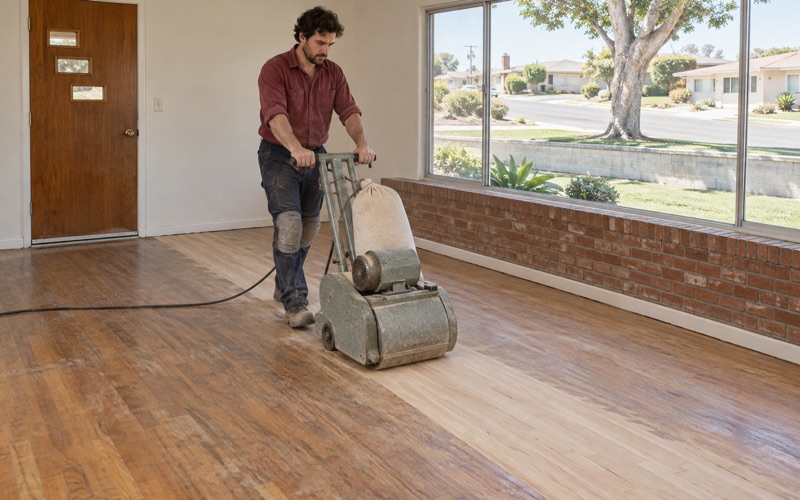
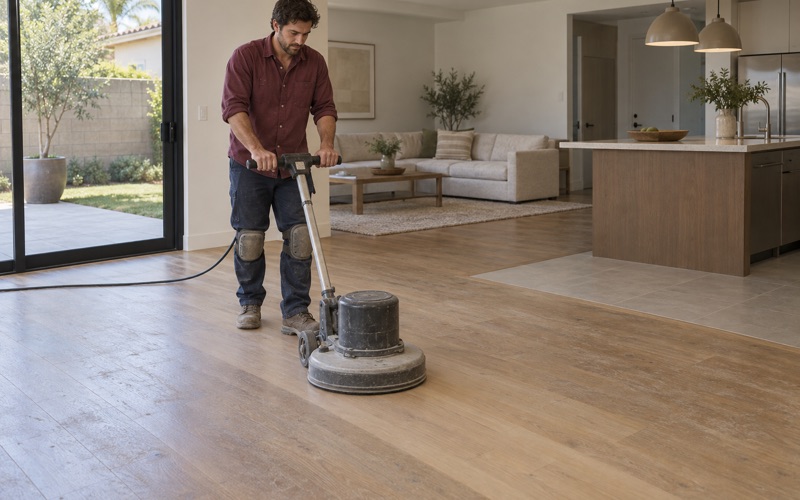
We sand with dust extraction attached to the drum sander and edger, then work through an abrasive grit sequence that removes drum marks and chatter marks before any stain goes down. The choice between waterborne polyurethane, oil-modified polyurethane and hardwax oil comes down to sheen level, odor tolerance, cure time and how the household uses each room.
Getting an Estimate Alongside a Program Application
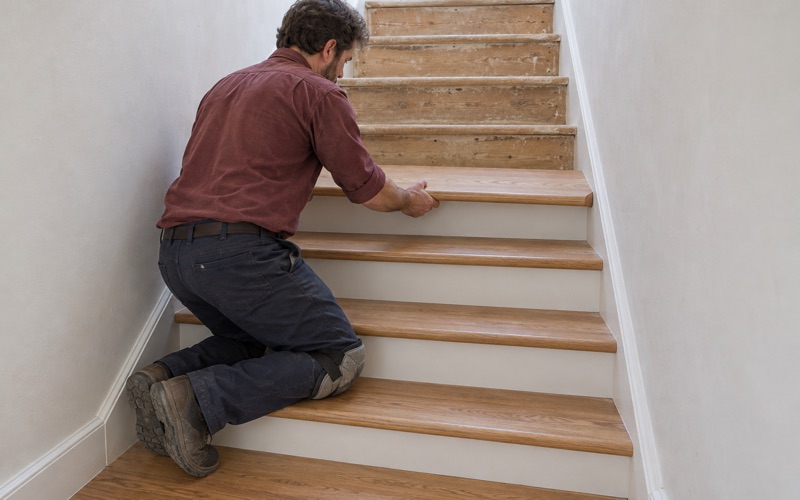
An owner applying to the city and hiring us privately can run both tracks at once. We visit, measure and write an itemized scope that separates any structural or water-related floor repair from cosmetic refinishing, so the owner can show each piece to whoever needs to see it. Stairs are priced by the tread, riser and nosing rather than folded into a square-foot figure.
Our estimate does not depend on the program’s decision, and the city’s decision does not depend on ours. We tell owners what we found, what we recommend and what it costs, and we leave application and eligibility questions with the Housing Division, where they belong. When the owner is ready, we set a start date and deliver the room-by-room schedule.
- 20+ Years on Wood Floors
- Itemized Written Quotes
- Lead-Safe Checks on Pre-1978 Homes