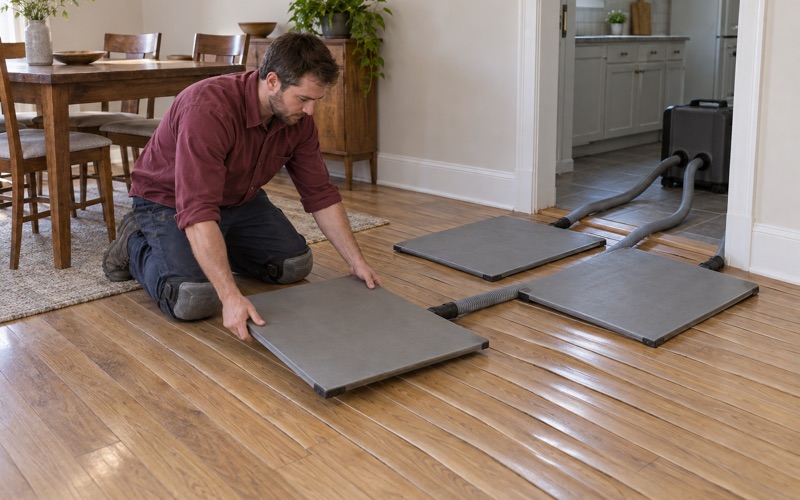
Monterey Park Wood Flooring has spent more than 20 years on wood flooring in La Palma and across our service area, and most of the work we are asked to do here is maintenance rather than rescue. A floor that was sanded and finished well years ago usually needs its finish renewed, a few boards repaired, or one worn room brought back in line with the rest of the house.
That difference shapes how we quote. Before we recommend sanding, we look at how much finish is left, how much wood remains above the tongue, and whether the wear sits in the coating or in the boards themselves. Plenty of floors that look tired only need a fresh coat, and we would rather tell you that than sell a full restoration you do not yet need.
We also plan around the people who live in the house. You get a written schedule showing which rooms close on which days, when furniture and rugs can return, and when the family can walk on the new finish. The sections below cover how we judge a floor, what maintenance refinishing involves, when replacement makes sense, and how we keep the job orderly while you live there.
Keeping Floors Up to La Palma’s Standard of Upkeep
Housing Described as Aging but of High Quality
La Palma’s own housing element, in its 2021 draft, describes the city’s housing stock as aging but of high quality and calls it a source of pride in the community. The same chapter notes that the majority of homes were built by the late 1970s, and Census figures agree: 81.1 percent of housing units in La Palma predate 1980, according to the ACS 2024 five-year estimates.
For floor work, that combination matters. A house cared for over several decades has often had its floors refinished, patched or replaced at some point, and the job now is keeping them to the standard the rest of the home already meets. We start by learning what is actually down, how it was finished last time, and what the owners want the floor to look like for the next ten years.
A Bedroom Community of Kept Homes
The housing element states that La Palma’s foundation was as a bedroom community, and its neighborhoods still read that way: mostly single-family streets in northern Orange County, where 67.6 percent of households own their homes. Owners who plan to stay tend to think in maintenance cycles rather than one-time fixes, and that is how we approach a floor here.
In practice, we write down what we find on the first visit, including finish condition, gaps, squeaks, hollow spots, soft spots and any water staining, so the next decision has a record to start from. A floor that is recoated on a sensible schedule can go many years between full sandings, and each sanding it avoids is wood it keeps for later.
What the Home Spotlight Program Rewards
The city also has a Home Spotlight Award program, which the housing element describes as recognition for homes in the community and an incentive for home maintenance and upkeep. The draft names exterior upkeep and landscaping as its focus, lists the timeframe as ongoing as funds allow, and assigns it to the Community Activities and Beautification Committee. It is not a floor program, and we do not present it as one.
What it does show is how the city talks about upkeep. Policy 2.1 of the same chapter commits to enforcing Municipal Code regulations that promote the maintenance of residential properties. The interior work we do follows the same idea from the other side of the front door: small, regular care that keeps a well-kept house from slipping behind.
Looking for wood-flooring closer to Hawaiian Gardens? See Wood-Flooring Services in Hawaiian Gardens.
Maintenance Refinishing Versus Full Restoration
Screen and Recoat Between Full Sandings
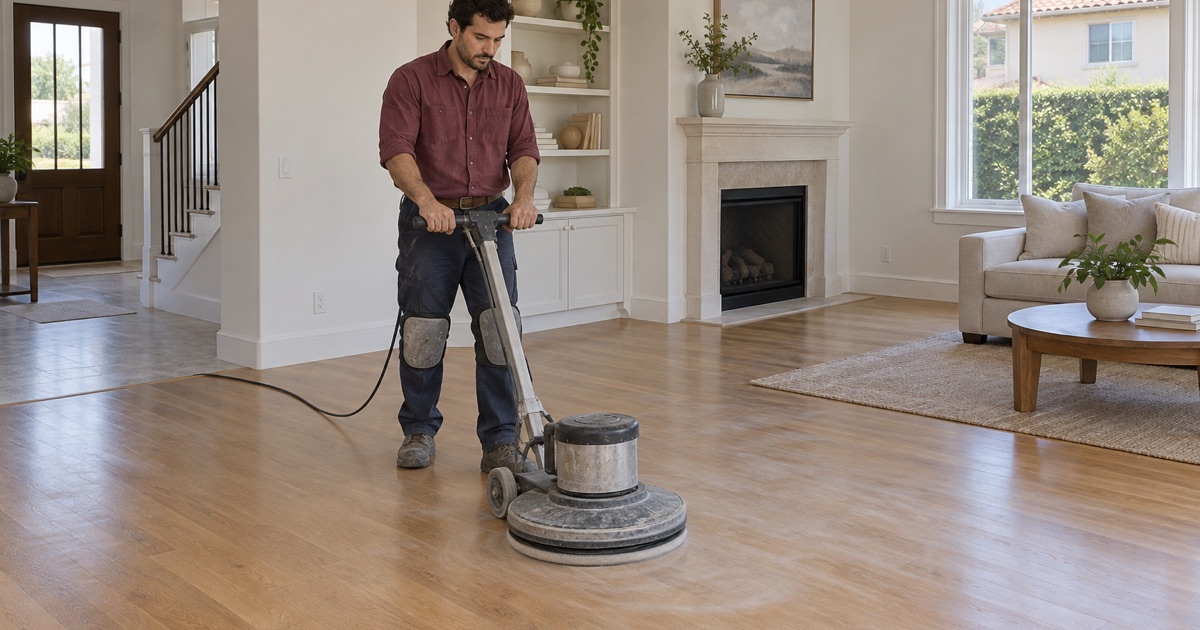
A screen and recoat is the lightest real refinishing job we do. We clean the floor, abrade the existing finish with a buffer and screen so the new coat can bond, then apply fresh waterborne polyurethane or oil-modified polyurethane. The wood itself is not sanded, so the stain color stays as it is and almost no material is removed.
It works when the finish is dull, scratched or showing traffic lanes but has not worn through to bare wood. It does not work over a floor that was waxed or treated with certain polish products, because the new coat will not grip. We test a small area first, and if the bond fails we say so before the rest of the room is touched.
When a Full Sand Is the Right Call
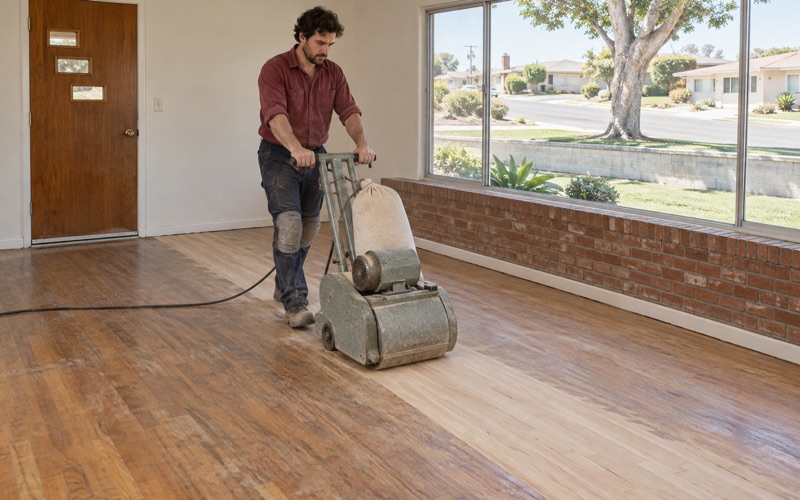
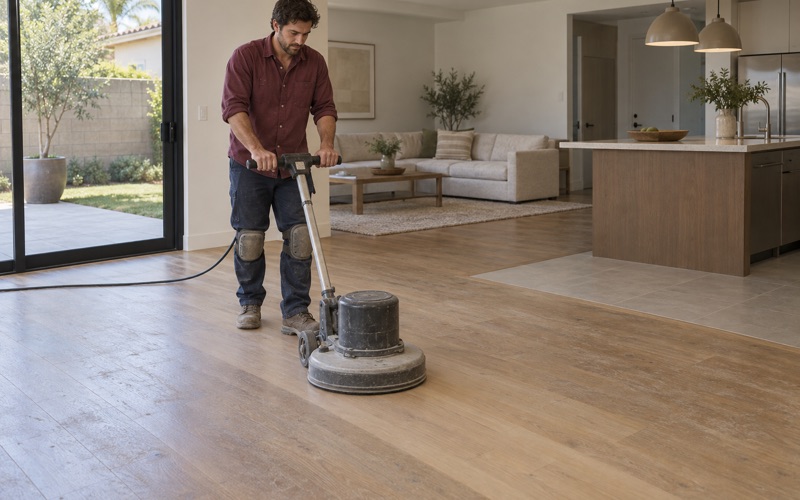
Some floors are past recoating. Worn-through finish in hallways, grayed wood at doorways, pet urine stain, cupping or crowning from an old leak, and deep scratches all need the boards themselves opened up. A full sand runs the drum sander or orbital sander through an abrasive grit sequence, with an edger along the walls, and we check for chatter marks and drum marks before any finish goes down.
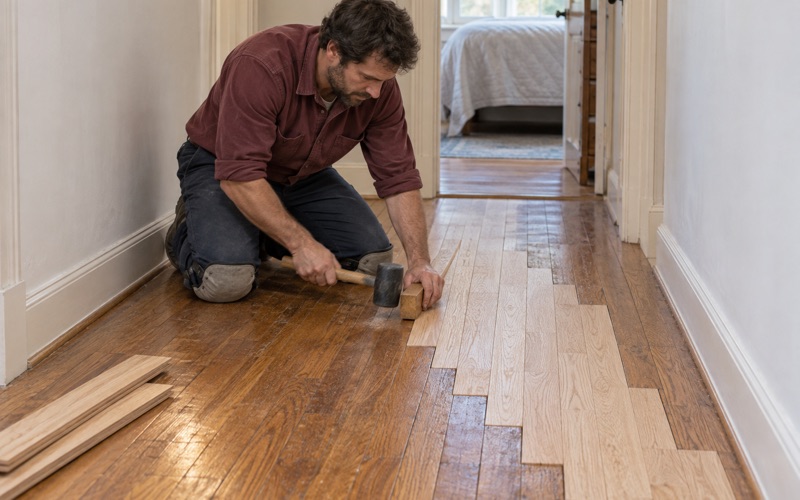
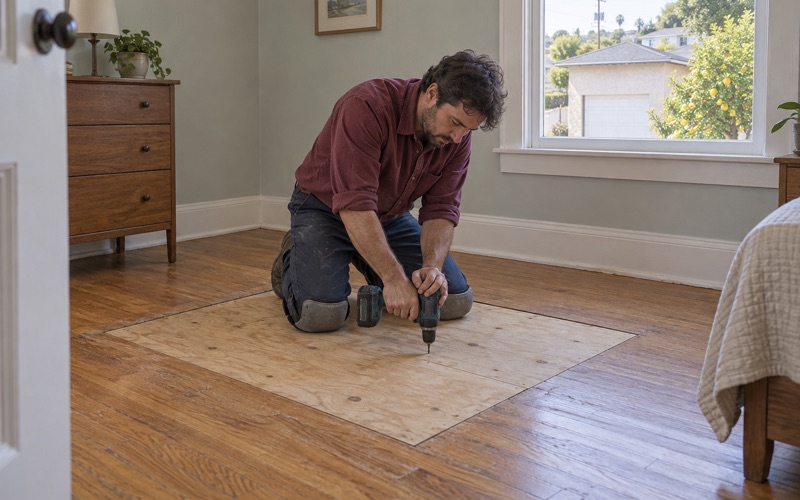
Where damaged boards need replacing first, we do a weave-in repair so new boards stagger into the old ones instead of leaving a square patch. Before we pull a board with small round holes or a pile of pellets beneath it, we identify that as drywood termite evidence or rule it out, because a board replacement over active termites only moves the problem.
Engineered Floors and the Wear Layer
Engineered hardwood is common in homes updated in later decades, and it needs a different conversation. The top veneer, or wear layer, is the only sandable wood on the board. We measure wear layer thickness before we promise anything, usually at a floor vent or threshold where the board edge is visible.
A thin veneer can take a screen and recoat safely but may not survive a full sand, while a thicker one may allow one or more. If the measurement says a sand-through is likely, we recommend a recoat or, where the finish is too far gone, replacement. That keeps a routine maintenance visit from turning into an expensive repair.
Replacing Worn Later Flooring in La Palma Homes
Choosing a Floor That Suits the House
Over several decades, many houses collect a mix of floors: carpet in the bedrooms, tile in the kitchen, and a laminate or luxury vinyl plank that went in during a remodel. When owners decide to bring those rooms together under one wood floor, we talk through solid hardwood against engineered hardwood, species such as white oak, red oak or hickory, and how each Janka hardness rating holds up to pets and traffic.
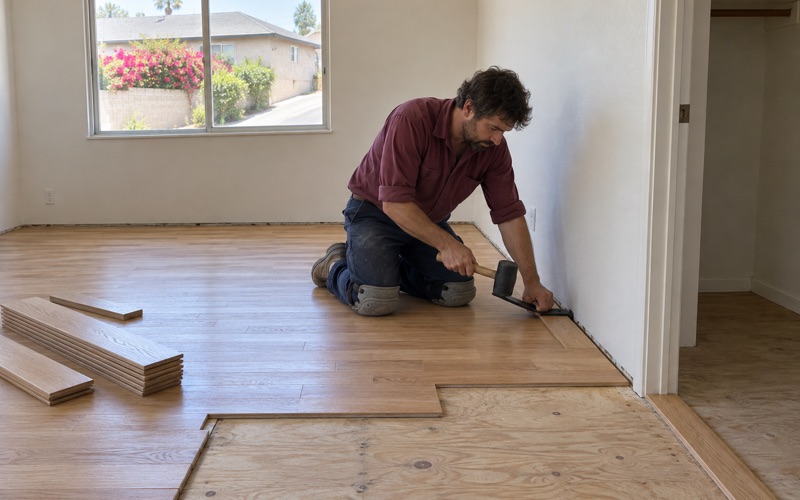
We also decide how the floor will be installed, whether nail-down with flooring cleats or staples, glue-down, or a floating floor over underlayment, based on what the subfloor actually is once the old material comes up. Boards acclimate in the house before installation, and we leave an expansion gap at the walls so seasonal gapping and swelling have somewhere to go.
Stain Samples and Layout Before Commitment
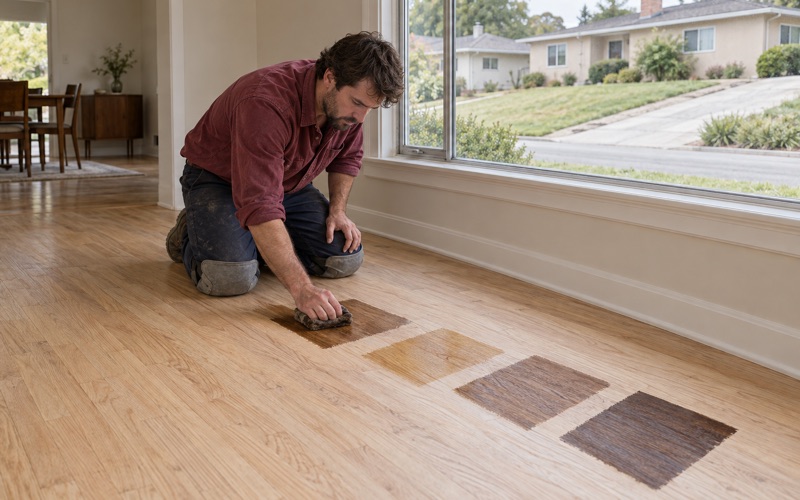
Color is the choice owners most often regret when it is rushed. We sand small areas, apply stain sample boards in the actual room, and let you look at them in morning and evening light before the whole floor is committed. Water popping can deepen a color on oak, and we show that side by side so the difference is seen rather than described.
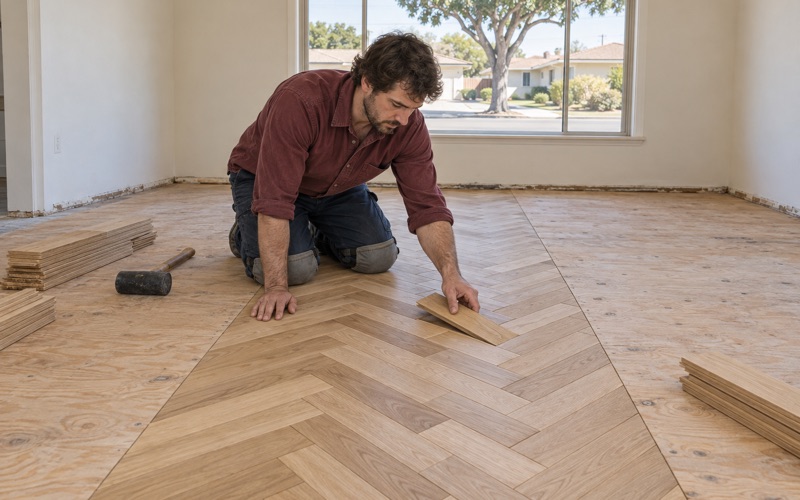
For herringbone or chevron, we dry-lay the pattern and set a layout centerline on the room before the first slat is fastened. A pattern that is off center by an inch at the entry becomes obvious across a long living room, and it cannot be corrected later without pulling boards and starting that section again.
Stairs, Transitions and Finishes Legal Here
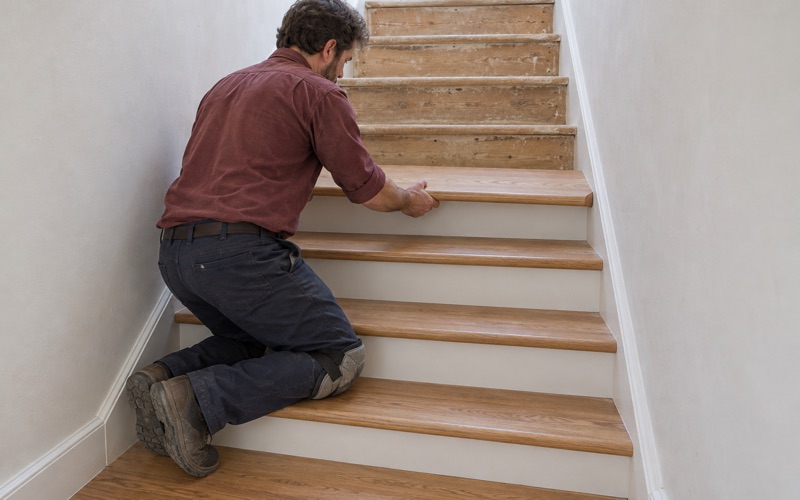
Stairs are quoted by the tread, riser and stair nosing rather than folded into a square-foot price, since each step is its own piece of work. Where a new floor meets tile or carpet, we fit a reducer or T-molding so the change in height is finished, and quarter round covers the expansion gap along the base where it is needed.
Each stain and finish we apply is chosen from products legal in the South Coast air district, which covers all of Orange County and holds wood coatings to a VOC limit of 275 grams per liter under SCAQMD Rule 1113. We select from that list rather than from a national catalog, so the product going onto your floor is one that is allowed to be used here.
Scheduling Floor Work in an Occupied Home
Build Year Before Any Sanding
Because most La Palma housing went up before 1980, we confirm the build year before any sanding is scheduled. Pre-1978 housing can carry paint and finish layers that fall under the EPA Renovation Repair and Painting Rule, and we handle those layers under that federal rule’s work practices rather than sanding them off as ordinary dust.
The same caution applies to what might sit under an older floor covering. If tile or sheet flooring over black mastic has to come up to reach the subfloor, we treat it as a question for an asbestos survey under SCAQMD Rule 1403 before anyone scrapes it. Getting that answer first keeps the schedule honest and keeps the household out of a problem.
A Written Room-by-Room Schedule
Most homes we work in here stay lived in during the job. We give you a written, room-by-room schedule showing the order in which rooms close, when you can walk on the new finish in socks, when furniture and rugs can come back, and when the finish reaches full cure time. Pets and children are part of that plan from the start, not an afterthought.
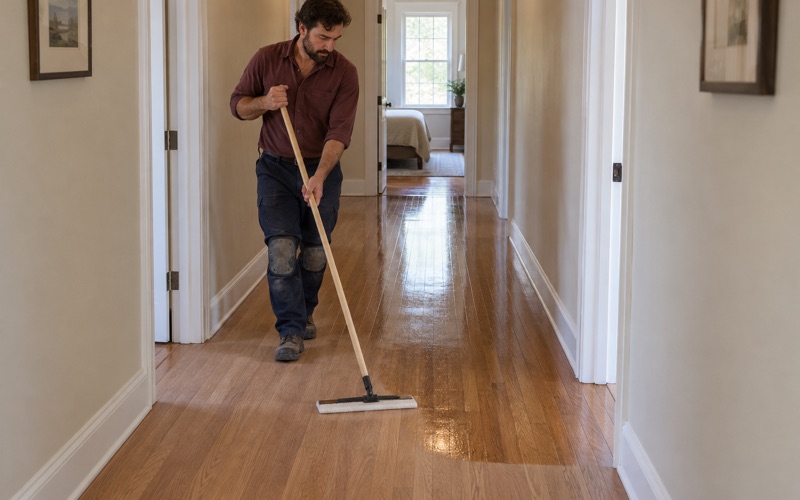
We use dustless sanding with vacuum-connected machines to keep dust out of the rest of the house, and we plan coats around each product’s recoat window rather than rushing a second coat over a soft first one. White haze, finish peeling and bubbling are usually the result of rushed coats, and a realistic schedule is the simplest way to prevent them.
Rental Turnovers and Water Losses
For landlords, turnover work has its own timing and its own paperwork. We write itemized invoices a landlord can attach to a security deposit itemized statement, separating normal wear from damage room by room, so the documents match the work that was done and the tenant can see how each charge was reached.
If a leak or water loss is part of the reason for the job, we document it with photos and moisture meter readings an adjuster can use. The repair scope is written as matching board and finish, aimed at a reasonably uniform appearance, rather than a patch that leaves a visible square in an otherwise well-kept room.
- 20+ Years on Wood Floors
- Itemized Written Quotes
- Lead-Safe Checks on Pre-1978 Homes