Monterey Park Wood Flooring has handled wood flooring in Maywood for more than 20 years, and a large share of that work lands in the weeks before a house goes on the market. Sellers call us to refinish worn oak, replace damaged boards and repair tired stairs so the rooms photograph well and the floor stops being a buyer’s bargaining point.
A pre-listing floor job runs on a calendar as much as a budget. We start by confirming the build year, measuring how much wood the floor has left to give, and writing a schedule that shows which room is finished on which day. An agent can then book photos and showings against real dates instead of estimates.
This page covers what changes about that work here: the way a sale is sequenced in this city, the age of the houses, and how many homes are rented when an owner decides to sell. It is written for owners, heirs and landlords who want the floor done before the listing goes live, not squeezed in during escrow.
How Maywood’s Pre-Sale Inspection Shapes a Floor Project
What the city requires before a sale
The City of Maywood requires a Pre-Sale Property Inspection before the sale of any property. The application carries a $110 fee that is not refundable, and it sets up a visit from the Building Inspector and the City Planner, whose stated purpose is to identify any violations or unpermitted work. Their findings are shared with the Planner and the Code Enforcement Officer.
The seller or the agent must be present for that visit, which matters when a house is in the middle of a floor project. If our crew is working, we plan around the appointment so every room is passable, the drum sander and edger are out of the hallway, and nobody is waiting on a coat of finish before the inspectors can walk through.
The report and the six-month window
The report typically arrives two to three weeks after the inspection, and the application stays valid for six months from the date it was submitted. That gives a seller a defined window, and we treat it as the frame for the floor work: the refinish, any board replacement and the stair repairs all fit inside it with room left for a listing date.
Six months sounds generous until a sale slips. Tenants move out late, estates take time to settle, and a listing gets pushed back a season. We write our schedule against the submission date, so a seller can see how much of the window the floor uses and how much remains for everything else between the report and the close.
What the inspection does not tell you about floors
The city describes the inspection in terms of violations and unpermitted work. It says nothing about flooring, so we never tell a seller that a refinish changes the outcome, and we do not read the report as a floor assessment. Questions about permits or findings on a specific property belong with the Building and Planning Department at City Hall, 4319 E. Slauson Avenue.
What the report will not show is the surface a buyer actually walks on: cupping near an old leak, a worn-through finish down the hallway, squeaks at the doorways, or a soft spot in front of the kitchen sink. Those are the items we look for on our own walkthrough, and they are the ones a buyer’s own inspector tends to write up later.
Looking for wood-flooring closer to San Marino? See Wood-Flooring in San Marino.
Timing the Refinish Around the Report and the Listing
Before or after the inspection visit
Some sellers want the floors finished before the city’s visit so the house is ready to list the day the report comes back. Others wait for the report first, because it may point to work elsewhere in the house that has to be done before anyone sands. We can work either way, and the right order depends on what else is going on in the house.
Our general preference is to let the dusty, messy trades go first, then sand and coat the floor last. A fresh finish that gets walked on by drywall crews and painters for a week loses the look the seller paid for. When more work is likely after the report, we set the floor dates behind it rather than guessing and redoing a coat.
Cure time and the photo date
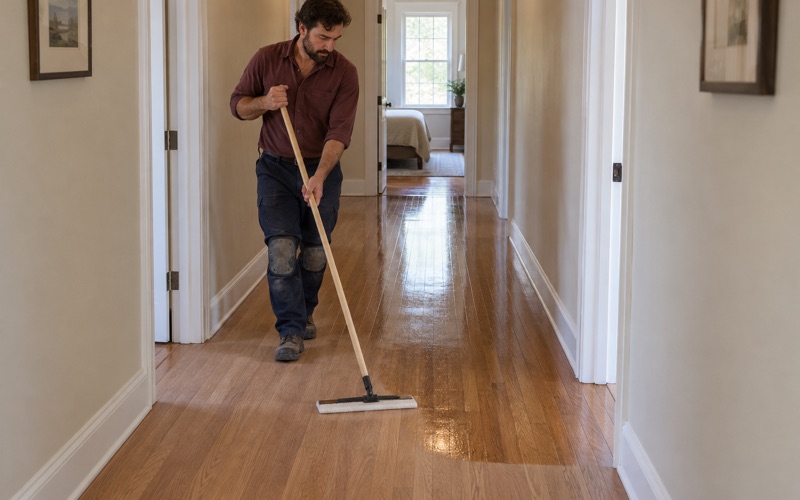
Waterborne polyurethane can usually take light foot traffic within a day, but furniture, rugs and staging pieces need longer, and the full cure time runs past that. We write the recoat window and the move-back date for each room, so the stager and the photographer are booked for a day when the finish can actually hold a sofa without marking.
Every finish we recommend comes from products legal to apply under the South Coast air district’s rules, where the wood coatings limit in SCAQMD Rule 1113 is 275 grams per liter, not from a national catalog. For a pre-sale job, that usually points toward a waterborne product that dries fast and stays clear, which keeps a light oak floor from ambering in the listing photos.
Stain choices that read well to buyers
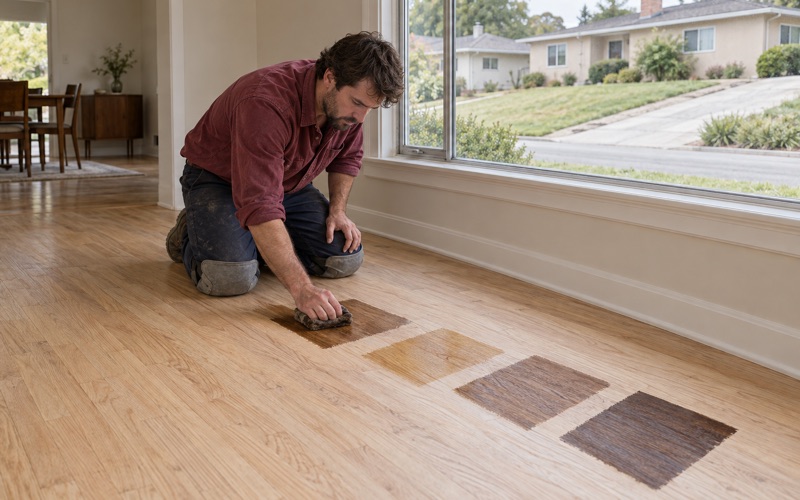
Sellers often ask for a stain that matches current taste, and we test it on stain sample boards sanded into the floor itself, in the room’s own light, before the whole floor is committed. A color that looks right on a store chip can turn muddy under afternoon sun through a front window, and a sample on the actual boards settles the question in minutes.
For a sale, we usually steer toward a natural or lightly toned floor at a satin or matte sheen level. It hides everyday dust and scuffs during showings better than gloss does, and it leaves the next owner free to change the color later without fighting a dark stain that would have to be sanded all the way out.
Older Strip Floors in Maywood’s Early Tract Houses
What the build dates tell us
The houses here are old as a group. By the 2024 five-year American Community Survey, 66.6 percent of Maywood’s homes were built before 1960, and 23.1 percent, or 1,546 units, were built in 1939 or earlier. The city’s draft housing element names the 1940s and 1950s as its biggest construction booms, so narrow oak strip is what we find under most carpet.
The oldest tracts go back to 1919, when a 2,300-acre ranch was developed into home lots; May Wood, who worked for the real estate corporation doing the developing, lent her name to it, and the city incorporated on September 2, 1924. A house from those first decades has often been refinished several times, and each sanding took wood the floor cannot grow back.
Measuring what is left before sanding
Before we promise a full sand on an older solid hardwood floor, we pull a floor register or check a threshold to see how much wood remains above the tongue and groove. Where it is thin, a screen and recoat restores the sheen without cutting deeper, and it is often enough for a listing. On engineered hardwood, we measure the wear layer thickness first.
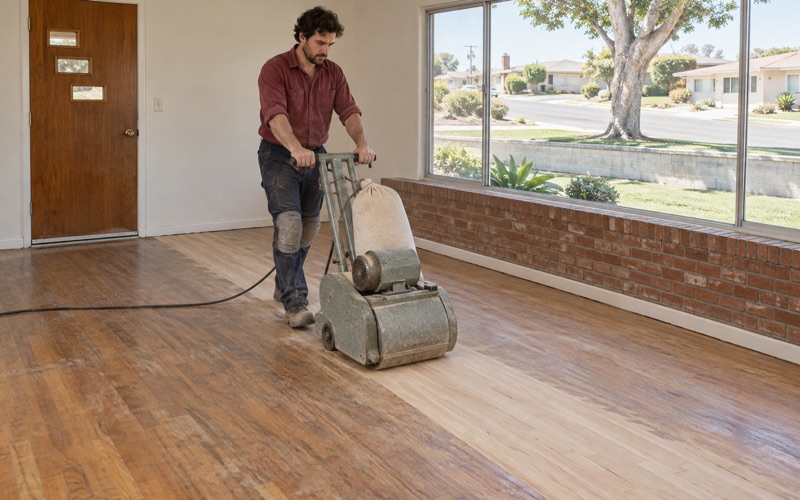
A floor sanded too hard shows its nails, exposes the tongue, or develops sand-through at the edges. Chatter marks and drum marks left by an earlier job are also common in older houses, and we plan the abrasive grit sequence to take them out without removing more wood than the boards can spare, finishing the perimeter with an orbital sander.
Lead-era finishes and termite evidence
Because most of these homes predate 1978, we confirm the build year before any sanding is scheduled. Older paint and finish layers are handled under the EPA Renovation, Repair and Painting Rule, which covers pre-1978 housing, and that shapes containment, dustless sanding setup and cleanup from the first day of the job rather than as an afterthought.
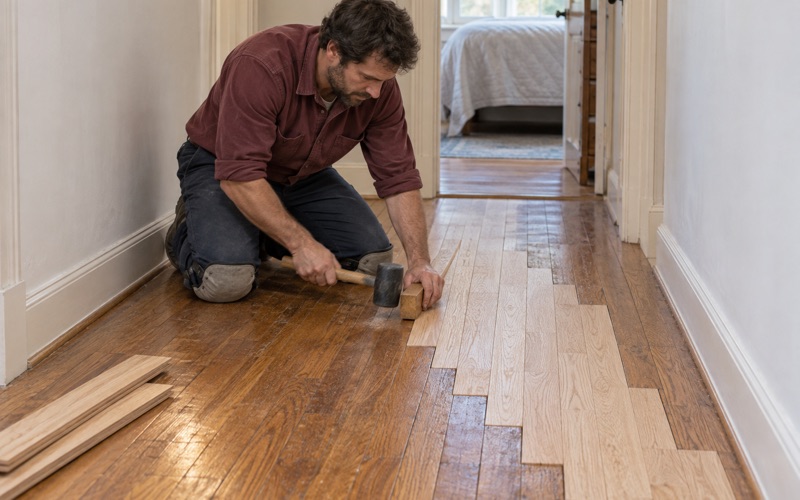
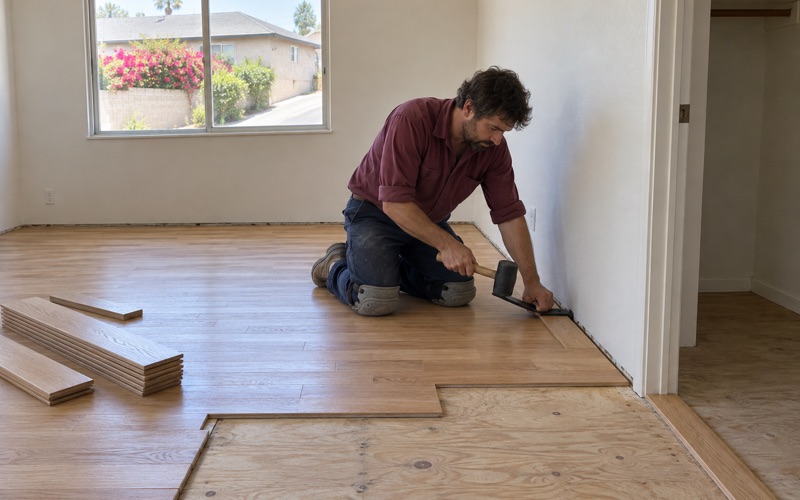
Small round kick-out holes and little piles of pellets along baseboards can be drywood termite evidence. We identify that termite frass or rule it out before any board is replaced, because patching over active damage only hands the problem to the next owner. Board replacement and a weave-in repair then blend the new strips into the old field so the patch does not read in photos.
Selling a Rented House or Small Plex in Maywood
Floors between tenants
Most homes here are rented: 69.5 percent of occupied units, according to the ACS tenure table. That means many sales begin with a tenant moving out, and the floor is the first thing an owner sees clearly in years. Pet urine stains, black water stains near kitchens and bathrooms, and finish peeling in the main traffic paths all show up once the furniture leaves.
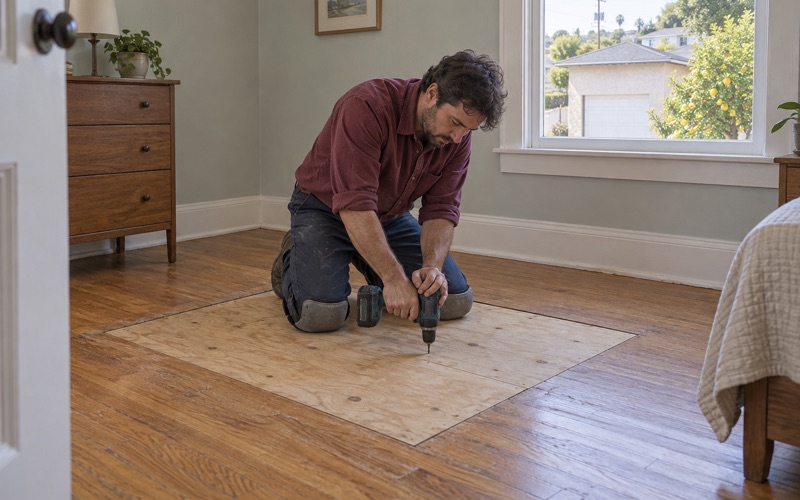
We price those items separately. A deep pet urine stain or black water stain usually means board replacement rather than sanding, while white haze and a worn-through finish often respond to a refinish. Our itemized invoices spell out each line, so a landlord can attach them to a security deposit statement where the damage goes beyond ordinary wear and tear.
Small plexes and shared stairs
Renters in three- and four-unit buildings account for 725 households in Maywood, and a small plex often goes to market one vacancy at a time. We work the empty units first and hand the owner a written schedule for each, so the listing agent can show finished units while the rest wait for their tenants to leave.
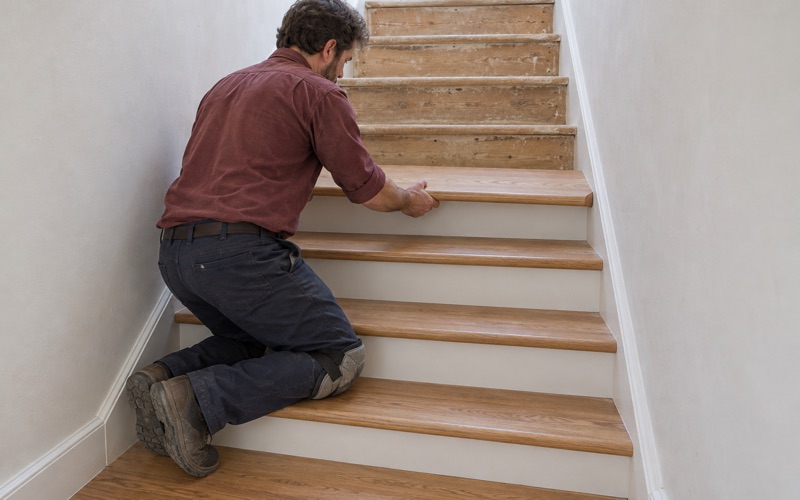
Stairs in these buildings are quoted by the tread, riser and nosing rather than folded into a square-foot price. Shared stairs and landings take the hardest wear on the property, and a buyer walking a plex notices a split stair nosing or a loose landing tread well before they notice anything about the flooring in the units.
Checking the structure under the floor
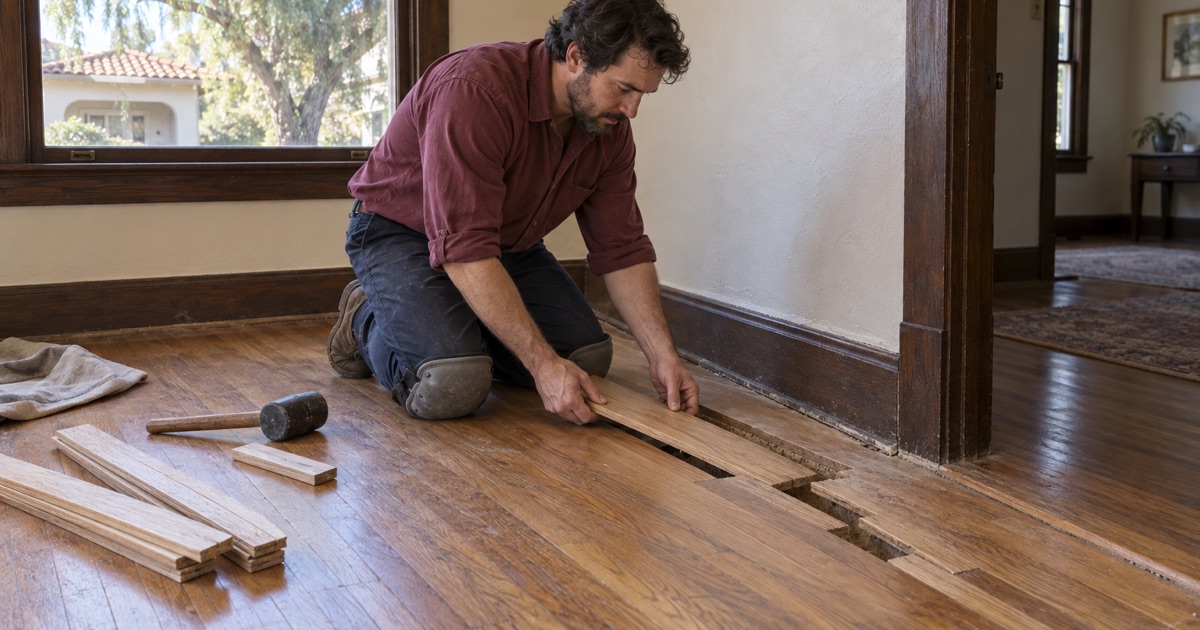
When a house sits on a raised foundation, we check the floor from underneath before quoting. A sloping floor, a sagging floor or a bouncy room over a crawl space often points to a floor joist, post or subfloor problem that sanding would only hide, and a problem like that is better found by the seller than raised by a buyer in escrow.
Whatever the order of the sale, sellers get one written plan from us: what the floor needs, what it does not, when each room is finished, and how that fits the rest of the calendar. If you are preparing a Maywood house or plex for the market, we can walk it with you and put the dates on paper.
- 20+ Years on Wood Floors
- Itemized Written Quotes
- Lead-Safe Checks on Pre-1978 Homes