Monterey Park Wood Flooring has spent more than 20 years on wood flooring in Rosemead and the surrounding valley, and a good share of that work happens in older houses where the floor has already been sanded, patched or covered at least once. We repair, refinish and install solid and engineered hardwood, and every job starts with finding out what the floor actually is before anyone talks about stain color or price.
That first look is practical rather than ceremonial. We confirm the build year before a sander is scheduled, measure the wear layer on engineered boards before promising a full sand, and look at the framing from below when a floor slopes, bounces or feels soft underfoot. A quote built on those answers holds up once the old finish comes off, which is when a guessed quote usually falls apart.
We also keep the finishing side local. The polyurethanes, oils and sealers we use are chosen from products legal to apply in the South Coast air district, and every project comes with a written room-by-room schedule. You know which rooms are off limits, for how long, and when the furniture, rugs and family can come back.
Rosemead Houses Built Before the City Existed
Older than the 1959 incorporation
Rosemead incorporated on August 4, 1959, yet 52.9 percent of its homes were built before 1960, according to the Census Bureau’s 2024 five-year American Community Survey. The oldest slice is larger than many owners expect: 1,757 homes, or 11.4 percent of the housing stock, went up in 1939 or earlier, and another 2,328 were built during the 1940s. More than half the houses here are older than the city itself.
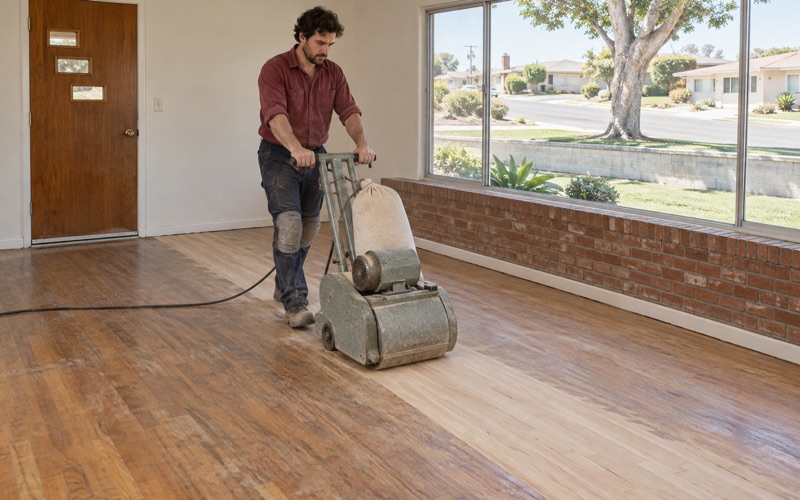
For a floor, that age means history more than anything else. A board laid before the war has usually been through several refinishes, a carpet era, a rental stretch and a patch or two where a wall or heater once stood. Each sanding took some wood off the top, so the first thing we check on a prewar floor is how much usable thickness remains above the tongue before a drum sander goes anywhere near it.
From Savannah and Rose’s Meadow onward
The land has a longer record than the houses. The Savannah settlement was founded by John and Harriet Guess in the 1850s, the Savannah Pioneer Cemetery was established before 1846, and the city’s name comes from Leonard John Rose’s ranch, Rose’s Meadow. Those dates describe the settlement, not the buildings; the older floors we are asked about come from much later, prewar construction.
The Dinsmoor Heritage House museum, which occupies a late-1920s residence, is a useful picture of the era that produced Rosemead’s oldest standing homes. Floors from that period and the 1940s building that followed tend to be narrow solid strips, face-nailed or blind-nailed over boards, often with several generations of repairs in them. Reading those repairs correctly is most of the job.
Looking for wood-flooring closer to Commerce? See Commerce Wood-Flooring.
Prewar and 1940s Floors: What We Check First
Build year and old finish layers
The federal EPA Renovation, Repair and Painting Rule applies to pre-1978 housing, and 77.4 percent of Rosemead’s units were built before 1980. So we confirm the build year before any sanding is booked, and on older houses we treat painted baseboard edges, shoe molding and old finish layers as material to be handled under that rule rather than simply ground away.
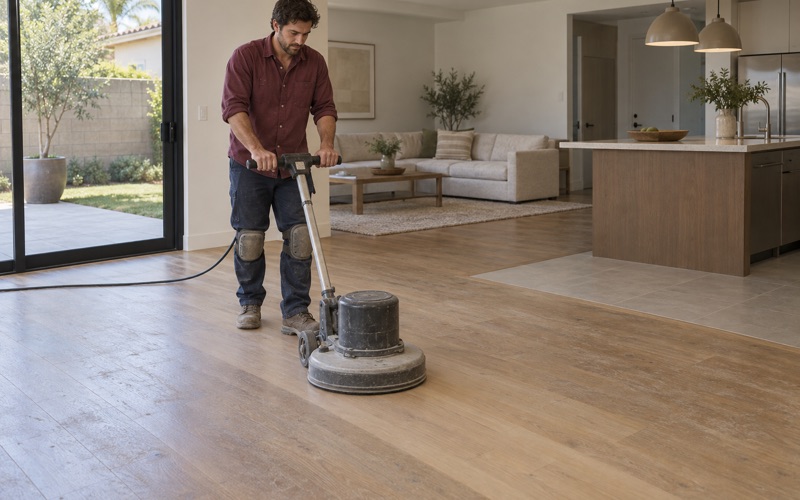
In practice that shapes the whole day. We set up containment, run dustless sanding equipment with collection at the drum sander, edger and orbital sander, and clean to a standard instead of by eye. It adds setup time, and we would rather say so in the quote than surprise you with it on the second morning.
Under the boards and in them
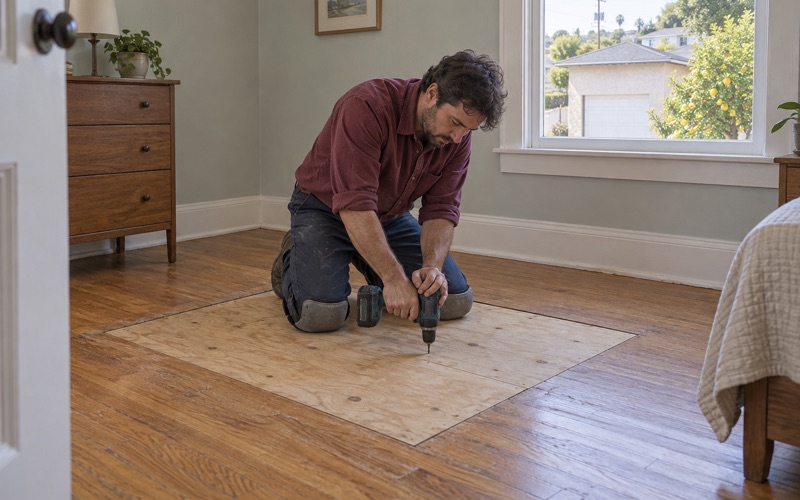
Where a house sits on a raised foundation, we look from the crawl space before we price the job. A sloping floor, a sagging floor or a soft spot near a doorway is often a floor joist, post or cripple wall problem, and sanding the surface flat would only hide it. Sometimes the right answer is a sister joist or new blocking first, then the floor work.
Boards themselves get the same scrutiny. Small round kick-out holes and little piles of pellets can be drywood termite frass, and we identify that evidence or rule it out before a single board is replaced. Powderpost beetle damage looks different and calls for a different response, so we name what we find instead of patching around it and hoping.
Seasonal movement and moisture
Rosemead sits in the National Weather Service forecast zone for the Los Angeles County San Gabriel Valley, and older floors here show the usual swing between drier and damper months. Seasonal gapping that opens in dry weather and closes again later is normal wood behavior, not a defect, and we explain which gaps to fill and which to leave alone.
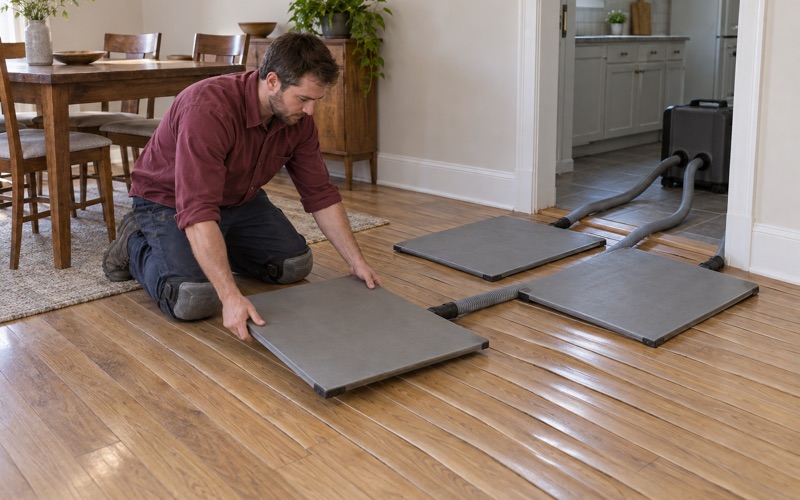
Cupping, crowning and buckling are different stories, usually pointing to a moisture source. We take moisture meter readings in the boards and the subfloor, check the relative humidity in the room, and let any replacement stock acclimate before it goes down. Weaving new boards into a floor that has not settled is how a clean repair turns into a visible one.
Restore or Replace: An Older Floor With No Local Historic Layer
What the preservation record shows
The Los Angeles Conservancy’s preservation report card scores Rosemead zero for a historic preservation ordinance, zero for a Mills Act incentive program and zero for historic resource surveys, with an overall grade of F. The Conservancy adds that it knows of no community-specific resources for local preservation here. For owners, that means no local historic review is known to attach to restoring or replacing an older floor.
That is a record of what the city has not adopted, not a legal ruling, and it does not mean other rules fall away. The federal lead rule still governs sanding in older homes, the South Coast air district’s SCAQMD Rule 1113 sets a wood coatings limit of 275 grams per liter, and questions about scope belong with the City of Rosemead Building and Safety Division at City Hall, 8838 E. Valley Blvd.
When restoring is the better call
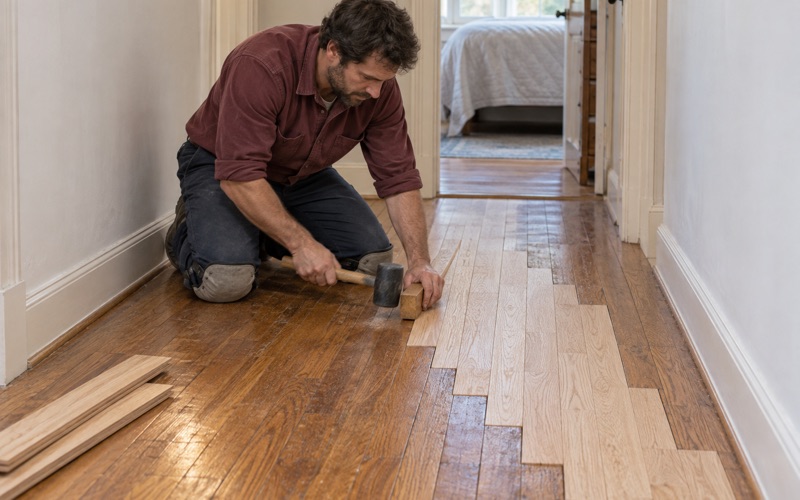
If enough wood remains above the tongue, the original floor is usually worth keeping. Cupping from an old leak can often be dried and sanded flat, a damaged area can take a weave-in repair with matching species and width, and a floor with a sound but tired finish may only need a screen and recoat instead of a full sand.
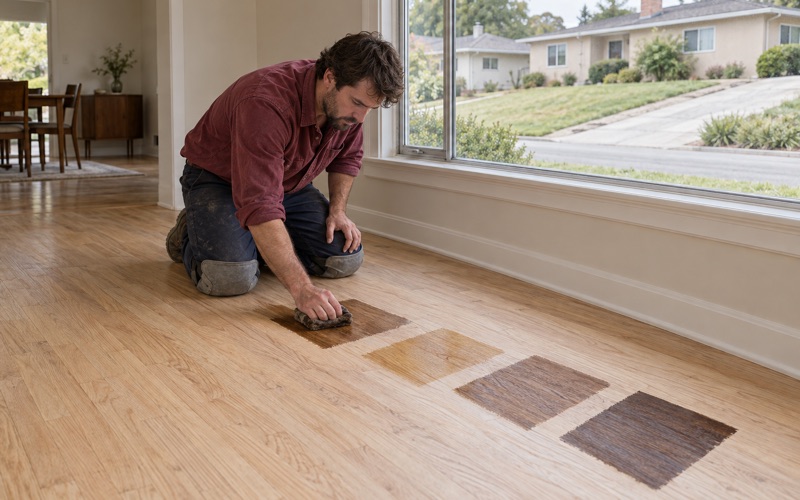
Without a local design review, the look is entirely your decision. Some owners want the floor returned to a warm period tone; others want a lighter, modern color on the same boards. Either way, we test stain on sanded sample boards in the room’s own light before committing the whole floor, because a color chosen from a showroom card rarely matches what prewar boards actually do.
When replacement makes more sense
Some floors have simply run out. Repeated sand-through, exposed tongues and nail heads, black pet urine stains soaked deep into the grain, and a patchwork of mismatched repairs can add up to a floor that no refinish will make reasonably uniform. At that point we price board replacement against a new solid or engineered floor and show you both numbers.
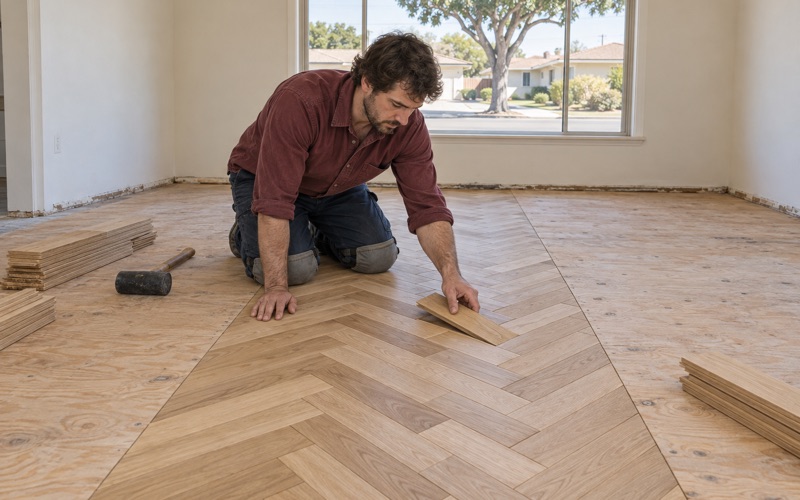
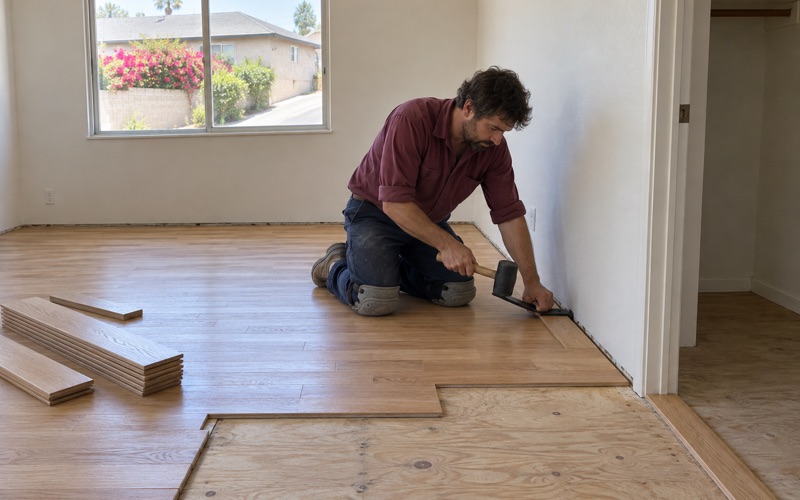
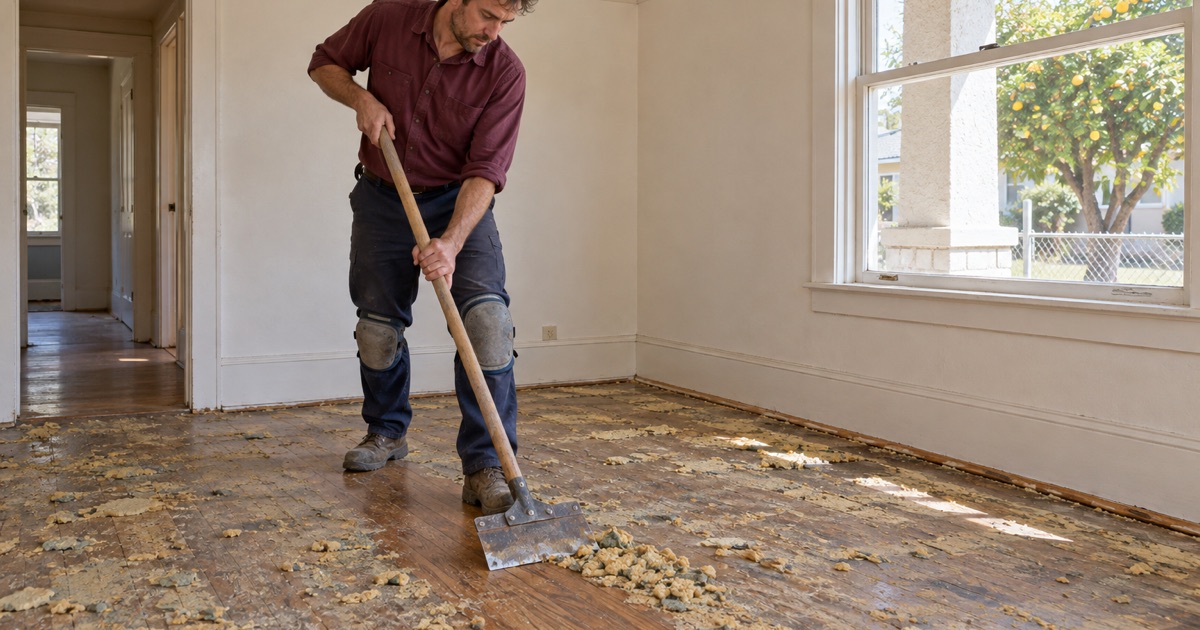
Old coverings deserve care before they come up. Black mastic under vinyl tile or carpet in an older house can contain asbestos, so we treat it as a reason to arrange an asbestos survey before anything is scraped, in line with SCAQMD Rule 1403. Only once that is settled do we talk about nail-down or glue-down installation, underlayment and new reducers or T-molding at the doorways.
Rented Houses, Attached Homes and Planning the Work
Rentals and shared walls
Renters occupy 52.7 percent of Rosemead’s households, and 4,717 renter households, 62.0 percent of all renters, live in detached houses. For landlords turning over one of those older homes, we write itemized invoices that can be attached to a security deposit statement, separating normal wear from damage such as pet stains, deep gouges or water marks.
One-unit attached homes make up 14.0 percent of the city’s units, and those floors come with neighbors on the other side of the wall. Where an association has its own rules on flooring or acoustic underlayment, those rules decide the assembly, and we build the quote around them rather than around whatever product is easiest to install.
Scheduling around an occupied home
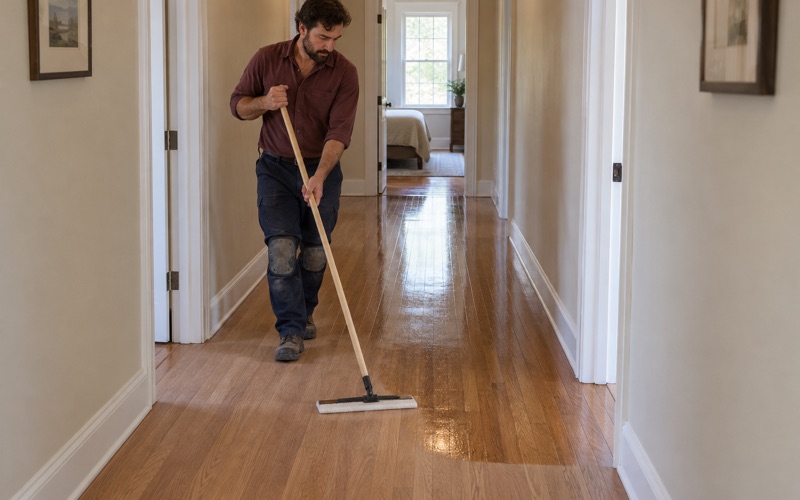
Most of our Rosemead jobs happen with people still living in the house. The written schedule shows which rooms are sanded on which day, when each coat of waterborne or oil-modified polyurethane goes down, the recoat window between coats, and the cure time before rugs and heavy furniture return. Families can plan meals, pets and work around it instead of guessing.
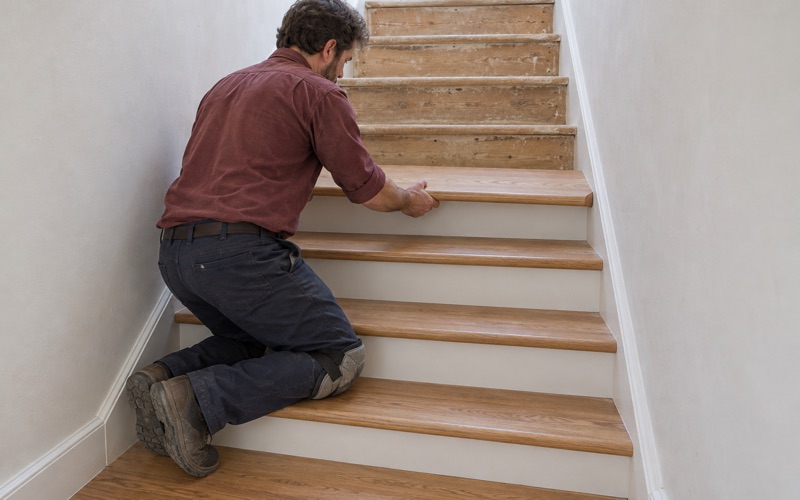
Stairs are quoted separately, by the tread, riser and nosing, because a staircase is detail work that a square-foot price never captures honestly. Worn prewar treads can often be sanded and refinished; badly split ones may need retrofit treads or a new landing tread, and we price each piece so you can see where the money goes.
Getting a quote that holds
It helps to know your build year, any past leaks or termite work, and what is under existing carpet or tile, but we confirm all of it on site anyway. If the job follows a water loss, we document it with photos and moisture readings an adjuster can use, and we write the repair scope as matching board and finish rather than a patch.
From there, you get a written quote that names the species, the repair method, the finish system and the schedule. Whether your Rosemead floor is a prewar strip floor worth saving or a tired 1940s floor ready to be replaced, we want the decision made on what the boards and framing actually show, not on what the surface suggests.
- 20+ Years on Wood Floors
- Itemized Written Quotes
- Lead-Safe Checks on Pre-1978 Homes