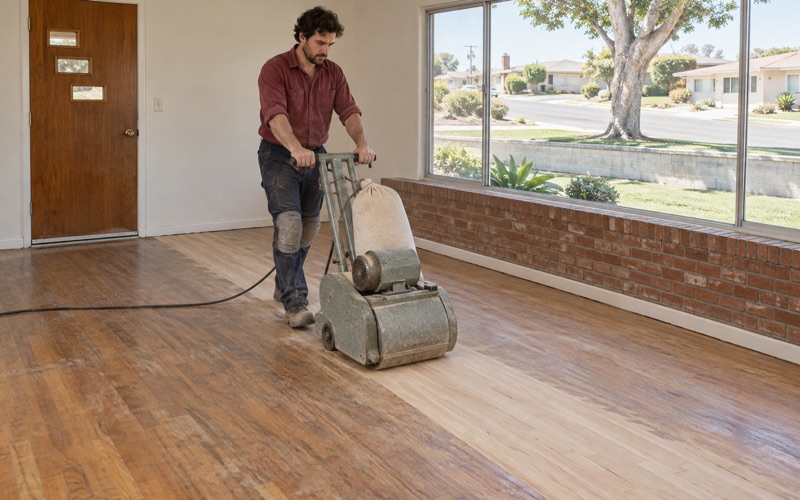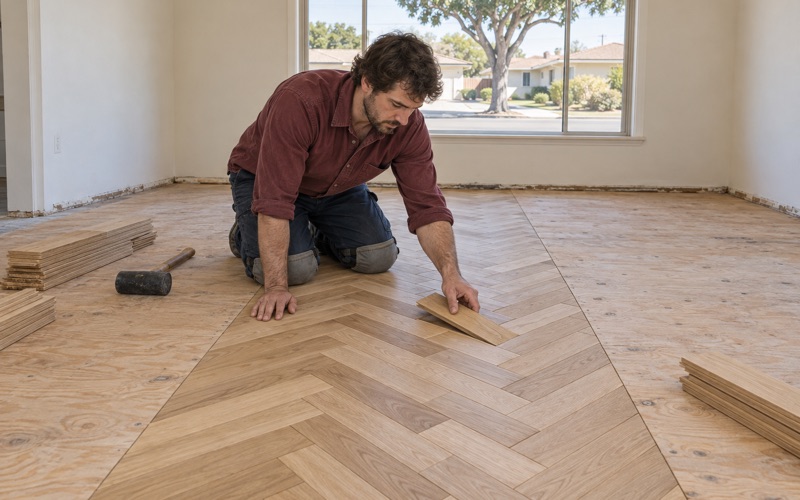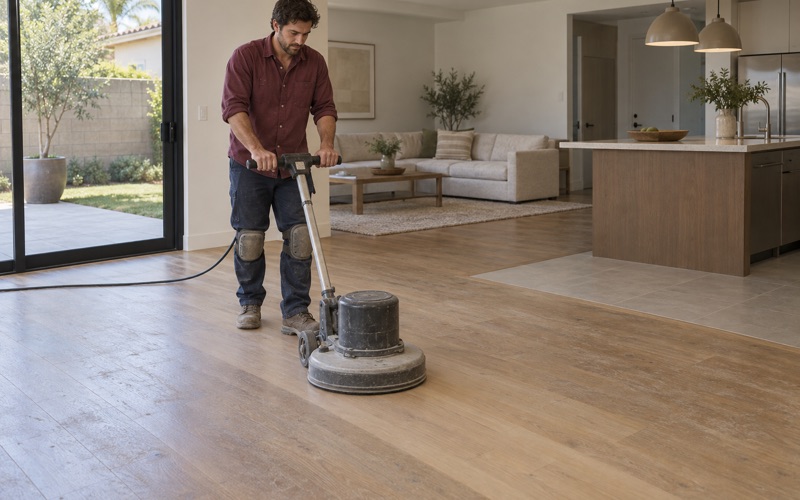
Monterey Park Wood Flooring has spent more than 20 years on wood flooring in San Gabriel, refinishing worn oak, repairing damaged boards and installing new solid and engineered floors. A large share of that work happens in older houses, where the floor under the living room rug may be the one laid when the house was built, carrying several generations of finish on top of it.
Older houses bring a second question alongside the floor itself. Some homes here are designated historic properties or sit inside areas the city has studied for preservation, and their owners reasonably want to know how a floor project relates to that status. We do not answer that question on the city’s behalf. What we do is set out what the preservation program is documented to cover, and point you to the city for the rest.
Every estimate starts with the same groundwork. We confirm the build year before any sanding is booked, look at the floor from below where there is access, and measure what is left of the wear layer on engineered boards. The result is a written scope, a room-by-room schedule and an itemized price, so you know what the job involves before a single machine comes through the door.
San Gabriel’s Preservation Tradition Since 1965
An Early Ordinance in Los Angeles County
San Gabriel adopted a historic preservation ordinance in 1965, which the Los Angeles Conservancy records as the second in Los Angeles County after the City of Los Angeles itself. That long history matters for anyone living in an older house here, because preservation has been part of how the city looks at its building stock for close to sixty years rather than a recent addition to the rules.
The Conservancy also records that the city has completed historic resource surveys for four portions of San Gabriel, running from the Mission District to the commercial architecture along Valley Boulevard. A survey identifies and documents buildings, which is a different step from designation. If you are unsure whether your house was surveyed, designated or neither, the city’s own records are where that answer lives.
The 2017 Update: Districts and Conservation Overlay Zones
On August 15, 2017, San Gabriel passed an updated Historic Preservation and Cultural Resource Ordinance, now Chapter 153 of the municipal code. It set out designation procedures, created the Historic Preservation and Cultural Resource Commission, and provides for local historic districts and Conservation Overlay Zones. The Los Angeles Conservancy recognized the city with a 2018 award for that update.
For a homeowner, the practical effect is that a house can be tied to the program in more than one way: as an individual landmark, as a contributor within a district, or through an overlay zone. Each of those is a status the city records, not something a contractor decides. We ask about it at the first visit, simply so the scope we write reflects the house you actually own.
What We Confirm Before Work on a Designated House
We have not seen anything that settles how Chapter 153 review relates to interior floor work, and we will not guess at it. When an owner tells us the house is designated or sits in a district, we suggest checking with the city before the schedule is set. The Building and Safety Division at 425 S. Mission Drive is a sensible first call for questions about the work.
In the meantime, we write the scope so it is easy to share: which rooms, whether boards are being sanded, repaired or replaced, the finish system, and the stain color if one is chosen. Having that description on paper tends to make a conversation with city staff shorter, and it means nothing irreversible happens to original boards until the owner has the answer they need.
Looking for wood-flooring closer to Boyle Heights? See Wood-Flooring Services in Boyle Heights.
What the Mills Act Guidelines Say the Savings Are For
Exterior Rehabilitation and Maintenance
San Gabriel’s Mills Act Property Tax Program guidelines, dated December 3, 2021, are direct about purpose: the funds saved in property taxes are to be used for the exterior rehabilitation and maintenance of the historic property. The program is written for owners rehabilitating under the Secretary of the Interior’s Standards and the California Historical Building Code.
That wording deserves a close read before anyone assumes anything about a floor project. The guidelines point the savings at the outside of the building. We do not tell owners that a Mills Act contract will lower the cost of refinishing, and we would steer anyone away from budgeting interior floor work on that assumption. Plan the floor as its own line in the household budget.
Designation Comes First
Eligibility depends on status. The guidelines limit participation to properties designated as a City of San Gabriel Historic Landmark or Historic District Contributor, or listed on the National or California Register. The initial contract term is ten years and renews annually, cancellation carries a 12.5 percent penalty, and applications are due June 30.
Those terms describe a long commitment between an owner and the city, which is one reason we keep our own role narrow. We can supply a written description of the interior work and dated photos of the floor’s condition if an owner wants them for their records. The contract itself, and what counts toward it, stays between the owner and San Gabriel.
Planning Floor Work Alongside an Exterior Program
Owners in the middle of exterior rehabilitation often want the interior done in the same season. That can work well, provided the order is right. Floor finishing should follow any dusty or wet trades inside the house, and we write a room-by-room schedule showing when furniture, rugs and family can come back, so the two projects do not trip over each other.
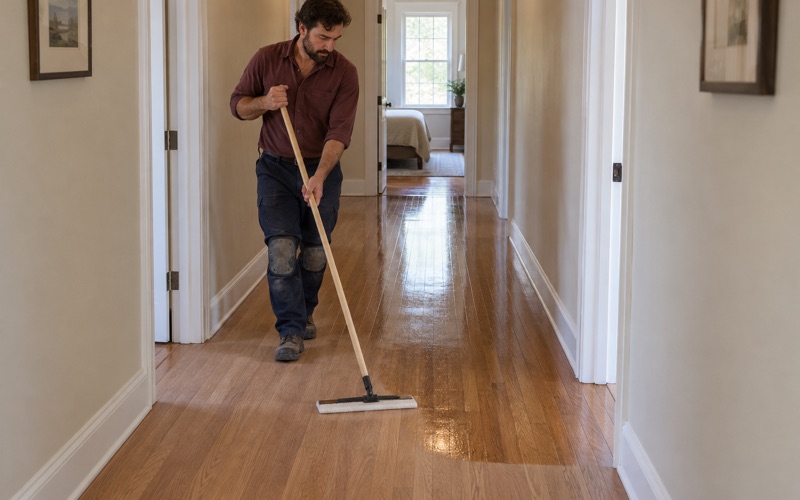
Finish choice is part of that plan. We select coatings that are legal to apply in the South Coast air district, where the wood coatings VOC limit under SCAQMD Rule 1113 is 275 grams per liter. Waterborne polyurethane, oil-modified polyurethane and hardwax oil each carry their own cure time and recoat window, and the schedule is built around whichever one you pick.
Floors in San Gabriel Houses From Before 1950
What the Build-Year Numbers Show
According to the 2024 American Community Survey five-year estimates, 38.5 percent of San Gabriel’s housing units were built before 1950, and 17.7 percent before 1940. That is a large pool of houses whose original floors have had seventy-five years or more to wear, shrink, take several refinishes and, in many cases, disappear under carpet or sheet vinyl.
Houses of that age often reveal solid hardwood, commonly red oak or white oak strip flooring fastened through the tongue and groove. Many have been sanded more than once already, so we check how much wood remains above the tongue before promising another full sand. Where a floor has been sanded thin, a screen and recoat or targeted board replacement may be the better answer.
Lead, Old Finishes and Hidden Layers
Every house built before 1950 falls well inside the pre-1978 housing that the EPA Renovation, Repair and Painting Rule addresses, which is why the build year is confirmed before any sanding goes on the calendar. Old finish layers and paint on baseboards, thresholds and stair skirts are handled under that rule instead of being sanded into the room’s air.
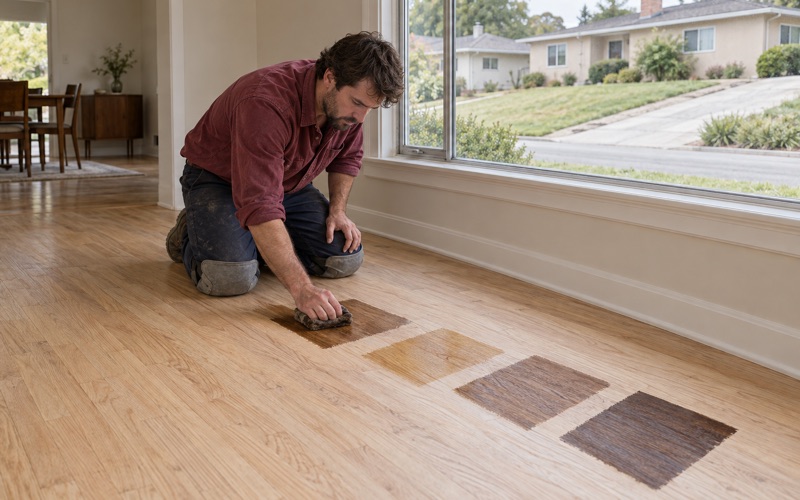
Covered floors raise their own questions. Black mastic under old tile or sheet goods may call for an asbestos survey under SCAQMD Rule 1403 before removal, and we would rather pause for that test than disturb a material nobody has identified. Once the wood is exposed, stain sample boards tested in the room’s own light show what the old oak will really look like.
Looking Underneath Before Quoting
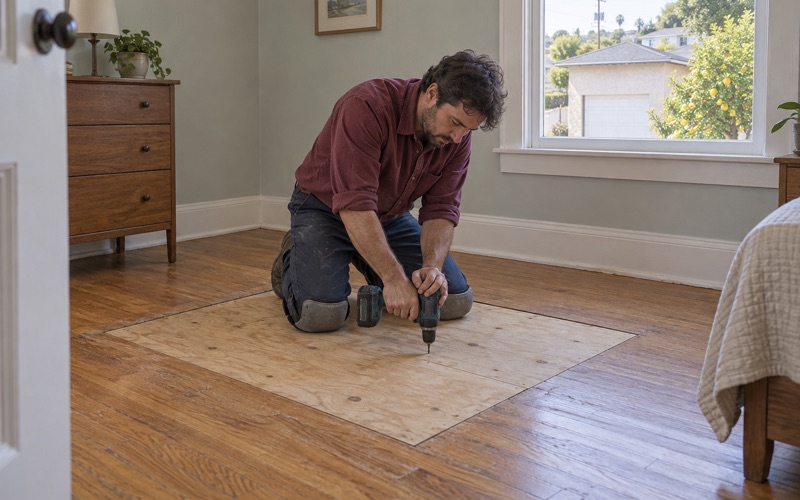
A sloping floor, a soft spot or a run of squeaks in an older house is often a structural matter rather than a surface one. Where a house has a crawl space, we look at the floor from underneath before quoting, because a joist, post or subfloor problem is something sanding would only hide. A sister joist or added support can come before any finish work.
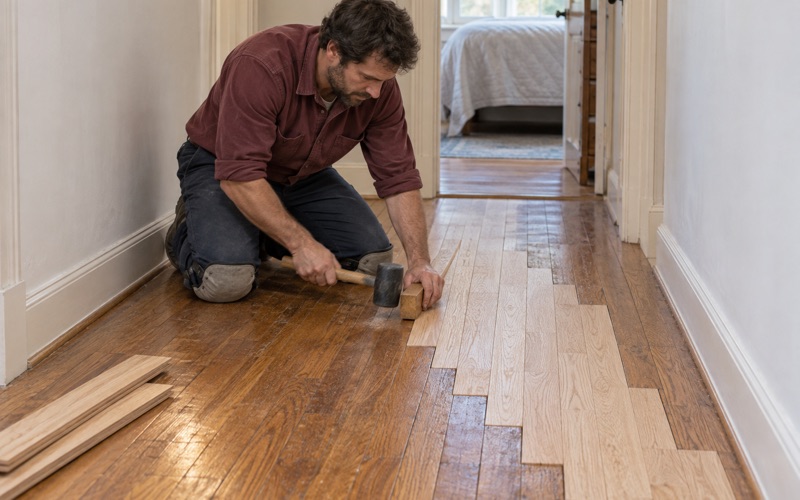
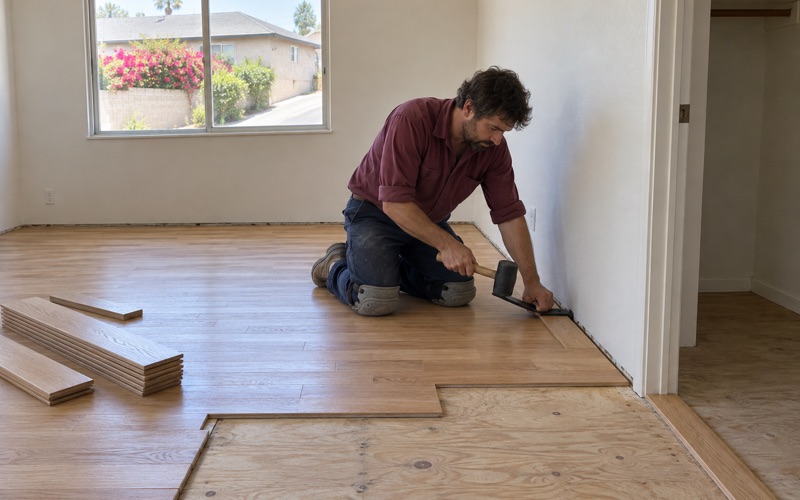
We also look for drywood termite evidence before replacing boards: small round kick-out holes and little piles of termite frass. Identifying or ruling that out first keeps a board replacement from being undone a year later. Where boards do need replacing, we weave in matching stock so the repair reads as part of the original floor rather than an obvious patch.
Townhomes and Apartments in San Gabriel
Attached Homes and Engineered Floors
Not every San Gabriel floor sits in an older detached house. One-unit attached homes make up about 12.1 percent of the city’s housing, and many of those carry engineered hardwood or a floating floor rather than site-finished solid wood. Before a sanding is promised on an engineered floor, we measure the wear layer thickness, since a thin veneer can take a screen and recoat but not a full sand.
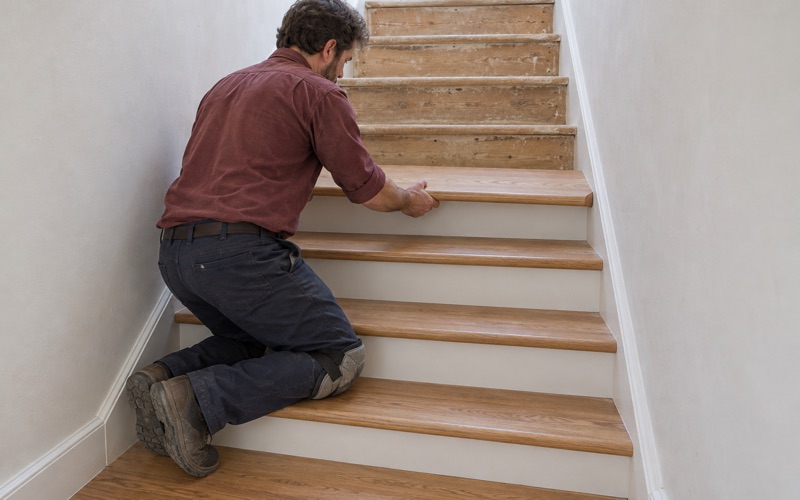
Stairs in multi-level homes are quoted by the tread, riser and nosing rather than folded into a square-foot price. That lets an owner see exactly what the staircase costs, whether the job is refinishing existing stair treads, fitting retrofit treads over worn carpet-grade stairs, or replacing a landing tread so it matches a new floor at the top.
Rental Units and Owner Paperwork
The city’s occupied housing splits almost evenly, with 50.4 percent owner-occupied and 49.6 percent renter-occupied. For landlords turning over a unit, we write itemized invoices that can be attached to a security deposit itemized statement, separating normal wear from damage such as a pet urine stain, deep gouges or a black water stain beside a sink or refrigerator.
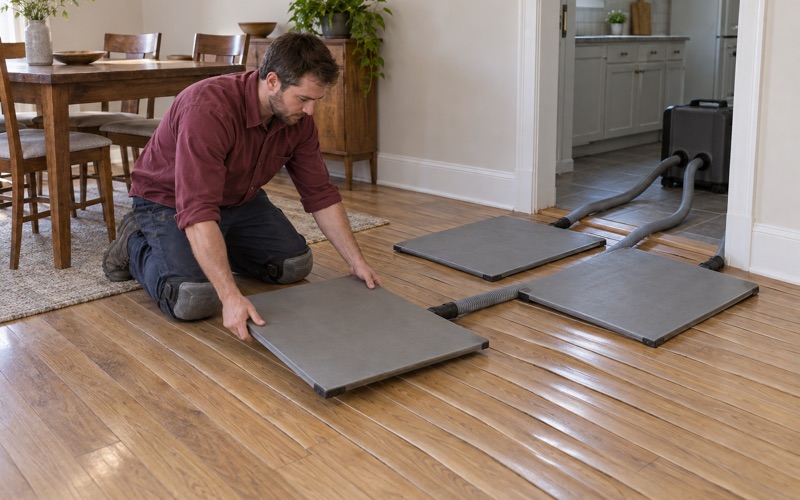
When a leak causes cupping, crowning or buckling, we document the loss with photos and moisture meter readings an adjuster can use. The repair scope is written as matching board and finish rather than a patch, which matters when an owner is aiming for a reasonably uniform appearance across the room instead of a visible square of newer wood.
- 20+ Years on Wood Floors
- Itemized Written Quotes
- Lead-Safe Checks on Pre-1978 Homes