Monterey Park Wood Flooring has spent more than 20 years on wood flooring in South Pasadena and the surrounding valley, and a good share of that work happens behind a unit number rather than a front porch. We sand, refinish, repair and install solid and engineered hardwood, and we build each job around who lives on the floor and who pays for it. A tenant, an owner and a property manager each need something different from the same schedule.
Before any sanding is booked, we confirm the build year, because finish and paint layers applied before 1978 fall under the EPA Renovation, Repair and Painting Rule and change how dust has to be contained. We also measure the wear layer on any engineered floor first. A thin veneer can take a screen and recoat, but promising a full sand on it would mean promising a sand-through.
For rental owners, our invoices are itemized by room and task so they can be attached to a security deposit itemized statement without being rewritten. For the people living in the unit, we hand over a written room-by-room schedule showing when furniture, rugs and pets can come back, since cure time, not sanding, is what decides when a home is usable again.
Old Floors in South Pasadena Apartment Buildings
A city where most homes are rented
The old floor we are called to here is as likely to be in an apartment as in a house. The 2024 five-year American Community Survey counts 10,220 occupied homes in South Pasadena, and renters hold 5,723 of them, or 56.0 percent. That share shapes nearly every conversation we have about timing, access and who signs off on the scope of work.
Of those renter households, 51.8 percent live in buildings of five or more units. The buildings are mostly modest in size: the survey counts 1,235 units in five-to-nine-unit buildings, 1,215 in ten-to-nineteen, 980 in twenty-to-forty-nine and only 207 in buildings of fifty or more. In practice that means many mid-sized buildings with shared halls and stacked units rather than large complexes.
Fourplexes and small walk-ups
Another 1,115 renter households live in three-or-four-unit buildings, out of 1,191 such units in the city. A fourplex sits between a house and an apartment building: often one owner, sometimes living on site, with every unit sharing walls and sometimes a floor-ceiling assembly with a neighbor. Noise, dust and odor travel further in these buildings than most owners expect.
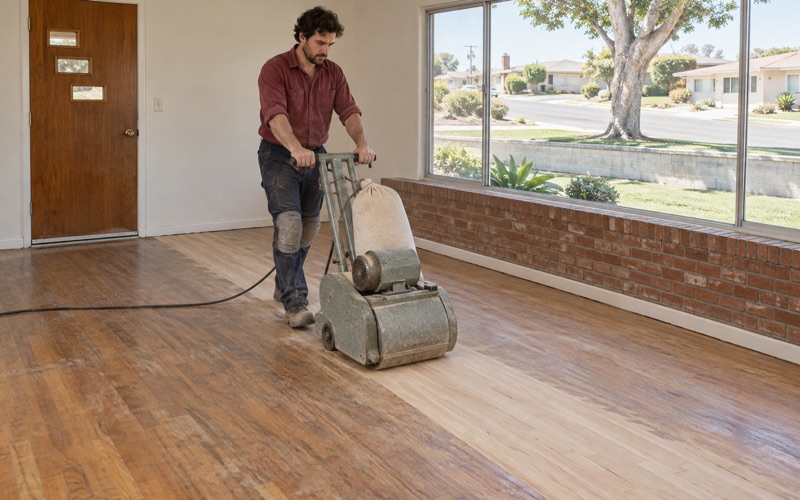
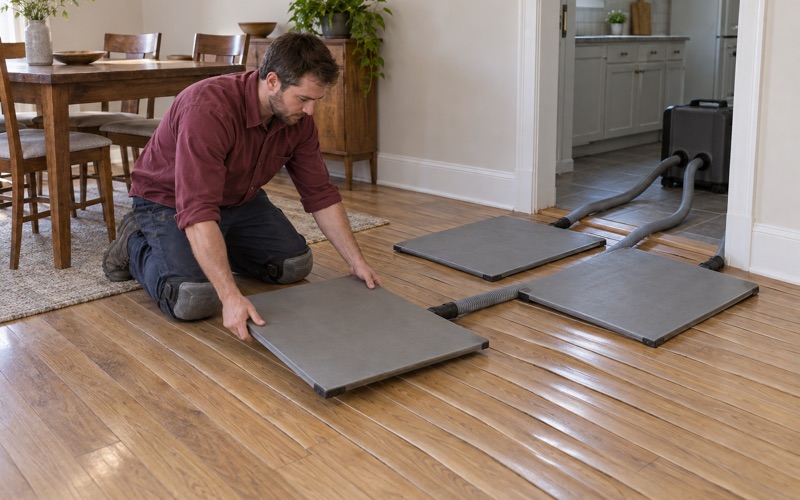
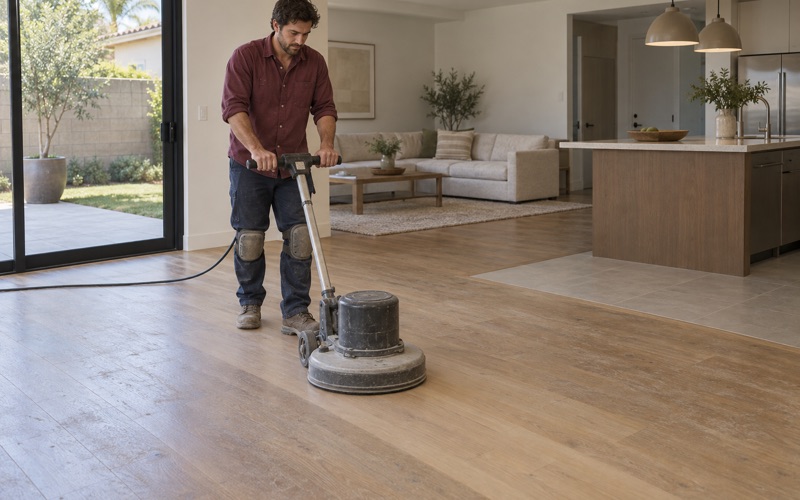
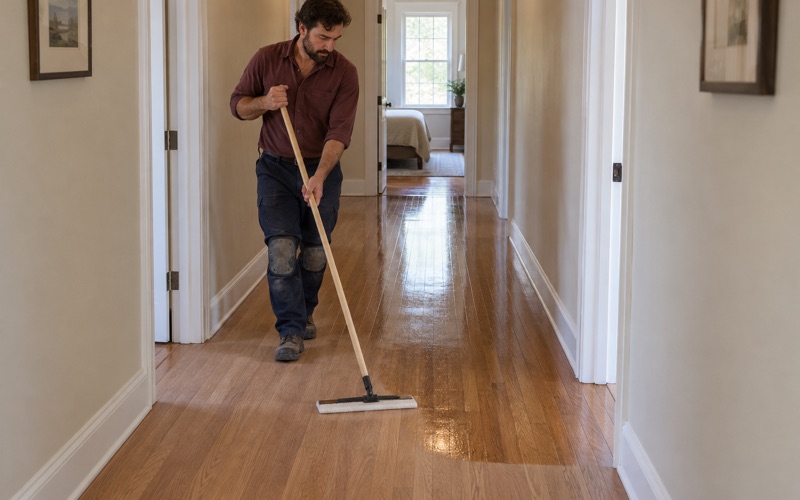
In a small building we plan the sanding sequence unit by unit so the tenants next door are not living with a drum sander overhead for a week. Dustless sanding with vacuum-connected machines keeps most of the fines out of shared stairways, and a waterborne polyurethane keeps the smell from drifting into the unit that is still occupied while we work.
What rental floors usually show
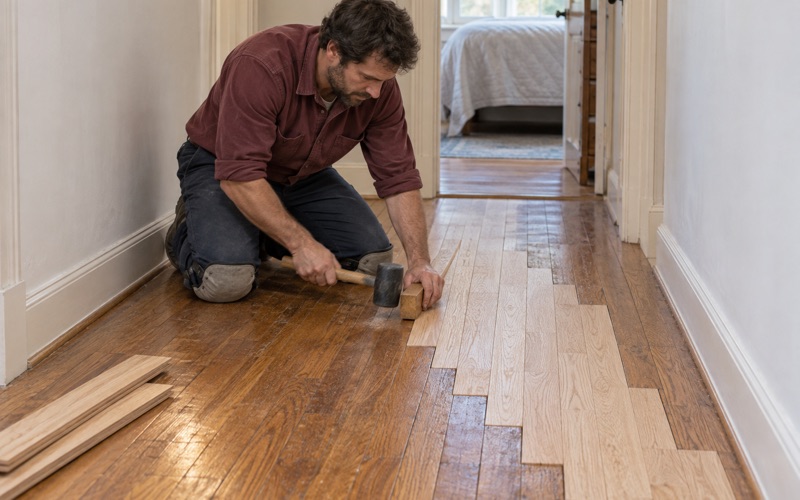
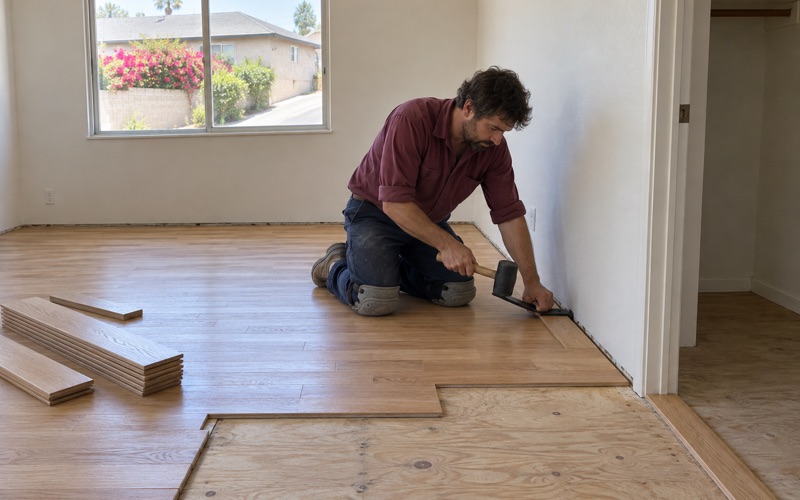
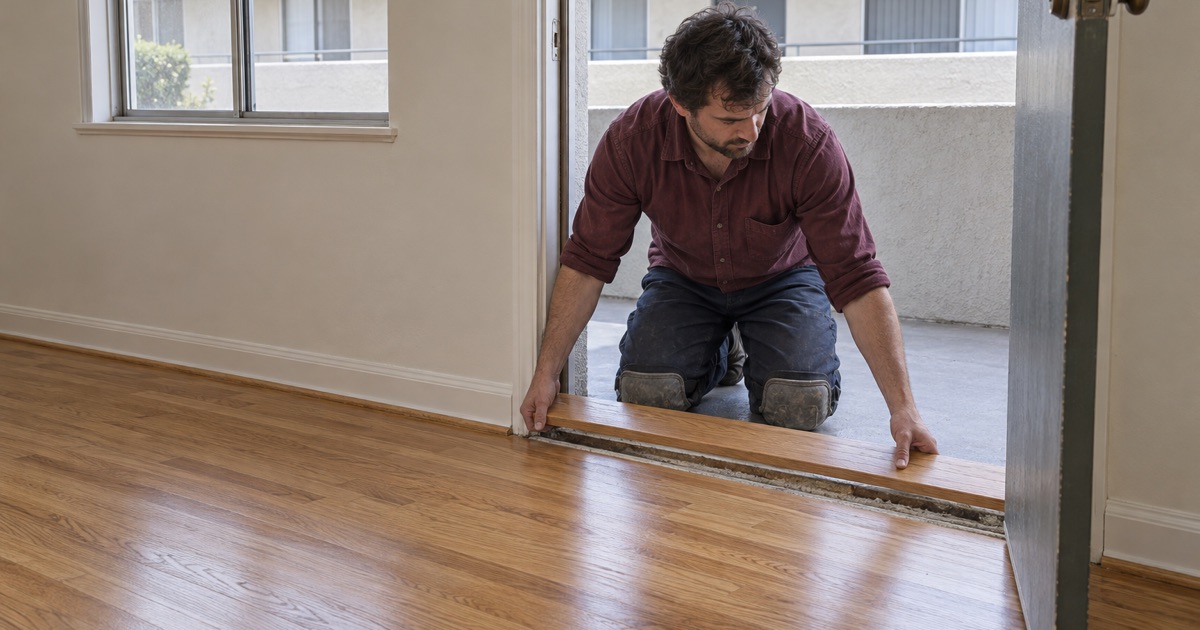
Rental floors wear differently from owner floors. We see worn-through finish in the traffic lanes, pet urine stains near doors, black water stains around refrigerators and kitchen sinks, and a white haze where the wrong cleaner was used for years. Each has its own fix: some sand out, and some need board replacement with a weave-in repair so the new boards stagger into the old.
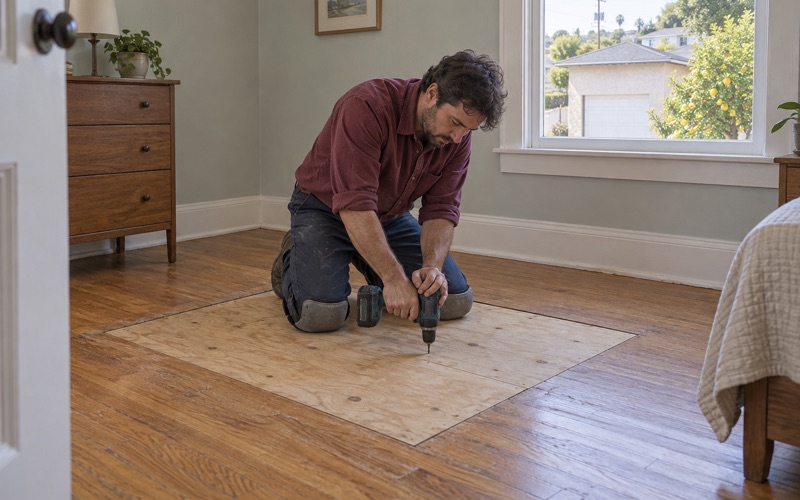
On upper floors, squeaks and hollow spots are common where fasteners have loosened between turnovers. Before we promise a refinish we walk the unit, mark soft spots and look for termite frass or kick-out holes, because a board that drywood termites have hollowed will not survive a drum sander, and replacing it without identifying the cause only moves the problem.
Looking for wood-flooring closer to South El Monte? See Wood-Flooring in South El Monte.
Floor Work in an Occupied Rental and the 2023 Just-Cause Amendments
What changed in December 2023
South Pasadena adopted an amended Just Cause for Eviction ordinance on November 15, 2023, and it took effect December 15, 2023. The amendment adds relocation requirements when a tenant has to leave a unit for a substantial remodel, including temporary relocation payments, and it gives tenants a five-day right to rescind a buyout agreement. The state Tenant Protection Act also applies to covered units.
Whether a particular floor job falls under those requirements is a legal question for the owner and their advisor, and we do not answer it. What we can do is describe the work precisely: which rooms, how many days, what has to be moved and when each room is usable again. That written scope is exactly what an owner needs to take the question to someone qualified to answer it.
Scheduling around the people living there
Most rental refinishing we do in the city is planned so tenants can stay wherever the layout allows it. We split the unit into zones, finish the bedrooms while the living room stays furnished, then swap. The written schedule goes to both the owner and the tenant, so nobody learns about the move-back time from the smell in the hallway.
Cure time drives the plan more than sanding does. A waterborne polyurethane can usually take socks within a day, but rugs stay off much longer, and the recoat window between coats decides whether a three-room job takes three days or five. We write those windows down room by room, including the day a dog can walk on the new finish.
Paperwork a landlord can use
Between tenancies the question is often what belongs on a security deposit statement. Our invoices list each task by room with its own price and the condition we found, so an owner can attach them to the itemized statement rather than retyping them. We photograph pet stains, gouges and water marks before any work starts, so the record exists independently of our opinion.
When a leak from an upstairs unit is the cause, we document it the way an adjuster reads it: moisture meter readings, photos of the cupping or buckling, and a repair scope written as matching board and matching finish rather than a patch. Matching matters in a multi-unit building, because the next tenant sees a mismatched patch long after the claim is closed.
A City That Has Almost Stopped Building
Older stock, older finishes
Of the 10,817 housing units the survey counts in South Pasadena, 87.4 percent were built before 1980 and none were reported built in 2020 or later. A full 33.0 percent date to 1939 or earlier. With so little new construction, almost every floor we look at has been sanded, stained or covered at least once, and some carry several generations of finish.
That history is why the build year comes first. Pre-1978 housing can hold lead in old paint on baseboards and trim, and sanding it without containment spreads dust through a shared building. We confirm the year, follow the RRP rule’s work practices where they apply, and plan edger work along painted trim with that in mind rather than discovering it halfway through a room.
What is under old carpet and vinyl
Many older units have carpet or vinyl laid over the original wood, and some have tile or sheet flooring glued down with black mastic. Before we pull an older resilient floor, we arrange an asbestos survey when the material and era call for one, because SCAQMD Rule 1403 governs how asbestos-containing material is removed in this air district.
When the wood underneath is sound, the payoff is real: red oak or white oak tongue and groove that can often take another full sand. When it has been sanded several times, we check the remaining thickness above the tongue at a register or threshold before promising anything, and we tell the owner plainly if a screen and recoat is the honest limit.
Finishes that fit the air district
South Pasadena sits in the South Coast Air Quality Management District, where Rule 1113 limits wood coatings to 275 grams per liter of VOC. We choose stains and topcoats from products that are legal to apply here rather than from a national catalog, which rules out some finishes a customer may have seen online and points most jobs toward waterborne polyurethane.
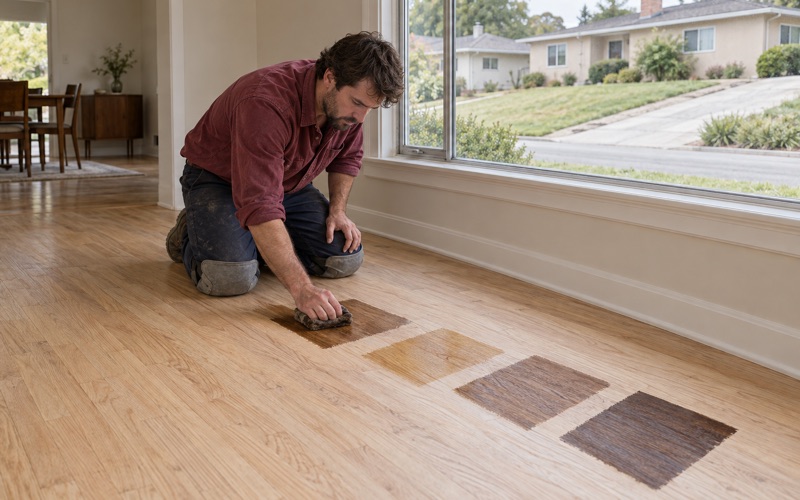
Stain is tested on sanded boards in the room’s own light before we commit the whole floor. Old red oak takes stain differently from white oak in a later addition, and water popping changes how dark a color reads once it dries. A sample by the window and another in the hallway settle the color faster than any swatch card.
Caltrans Corridor Houses and Older Bungalows
The SR-710 surplus properties
Caltrans acquired hundreds of properties along the proposed SR-710 right of way in the 1960s, and the city says 68 residential properties in South Pasadena are still Caltrans-owned, many in a state of extreme disrepair. On February 7, 2024 the City Council approved purchase agreements for six unoccupied historic properties, which the city intends to market for private sale.
We make no assumptions about the floors in these houses until we have seen them. A house that stood empty or lightly maintained can hide anything from sound old boards to water damage or pest activity, so the first visit is a survey rather than a quote: moisture readings, a search for termite evidence and a clear note of what can be saved.
Detached houses and raised floors
The survey counts 4,801 detached houses in the city, a minority of its housing but the source of many of our larger jobs. Where a house sits on a raised foundation, we check the floor from underneath before quoting, because a sloping or bouncy floor over a crawl space is usually a joist, post or subfloor problem that a sanding would only hide.
When a floor joist needs a sister or a post needs resetting, we say so and scope it before any finish work is priced. Sanding a floor flat over a sagging joist just moves the dip into next season; fixing the structure first means the new finish goes down on boards that stay where they are.
Stairs and patterned floors
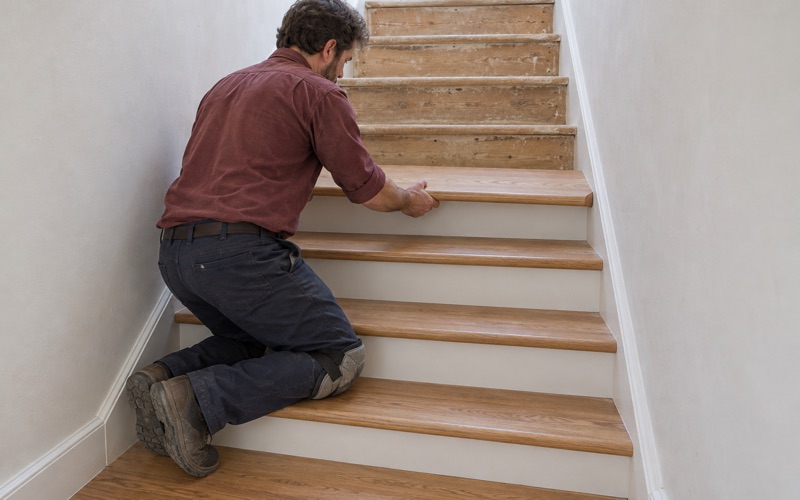
Older two-story houses and townhome-style units often carry wood stairs, and we price those by the tread, riser and nosing rather than folding them into a square-foot rate. A worn stair nosing or a split landing tread gets its own line, which keeps the quote readable and lets an owner decide stair by stair.
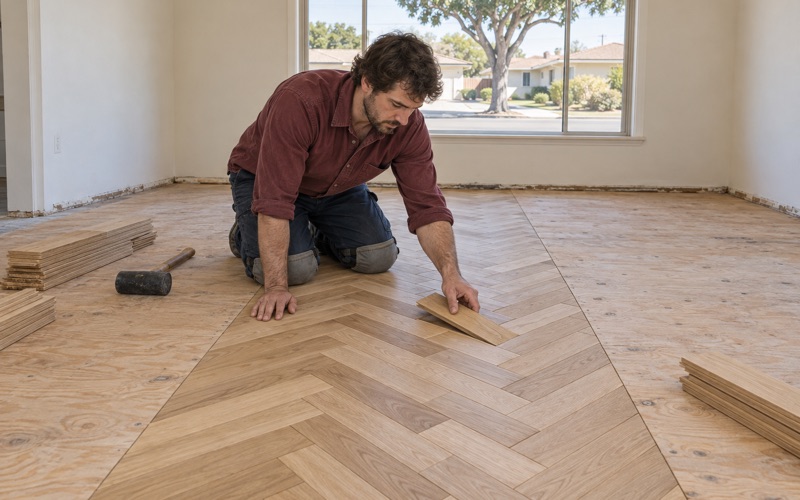
Where an owner wants herringbone or chevron in a remodeled room, we dry-lay the pattern and center it on the room before the first slat is fastened. In an older house with walls that are not quite square, finding the layout centerline first is what keeps the pattern from running visibly off line at the doorway.
- 20+ Years on Wood Floors
- Itemized Written Quotes
- Lead-Safe Checks on Pre-1978 Homes