Monterey Park Wood Flooring has handled wood flooring in South San Gabriel for more than 20 years, and the work here follows one pattern more than any other: a hardwood floor inside a detached house that has been walked on for decades. We refinish, repair and install solid and engineered floors, and we treat each job as a single-house project whether the person calling owns the home or rents it out.
Before we quote, we want the build year, a close look at the floor from every angle available, and a clear sense of who will be living in the rooms during the work. Those three answers decide nearly everything else: how the old finish comes off, which products can go down, how long each room stays closed and what paperwork the owner needs afterward.
The sections below walk through how that plays out on local streets, from a landlord turning over a house between tenants to a family refinishing the oak their parents lived on. They also cover the county side of the work, since the community has no city government of its own, and what a first visit from our crew actually looks like.
Owned and Rented Houses on the Same South San Gabriel Streets
A Community Built of Detached Houses
South San Gabriel is a census-designated place in the San Gabriel Valley of Los Angeles County, and its housing is overwhelmingly single-family. Census Bureau survey data (ACS 2024 five-year, table B25024) counts 2,067 of the community’s 2,384 housing units as one-unit detached houses, or 86.7 percent. For a flooring crew, that means nearly every call is for a whole house rather than a unit in a larger building.
What sets the community apart is that the pattern holds for renters too. The same survey (table B25032) places 93.4 percent of owner households and 76.8 percent of renter households in detached houses: 749 of the 975 renting households live in a stand-alone home rather than an apartment. A rental floor job here usually looks like an owner’s job, with a full set of bedrooms, hallways and sometimes stairs.
Why the Same House Brings Two Kinds of Calls
Because owners and landlords hold the same kind of property, we field two very different requests for nearly identical floors. An owner living in the house usually wants a color change, a new sheen level or a repair that finally quiets the squeaks by the kitchen. A landlord wants the floor returned to a clean, durable condition before the next lease starts, and wants it done on a tight clock.
Neither request is wrong, and we plan both the same way underneath. The boards get inspected, the build year gets confirmed, and the finish system gets matched to how the house will be used. Where the two differ is scheduling and records, which is where most of the extra planning for a rented house goes.
Looking for wood-flooring closer to East Los Angeles? See Wood-Flooring Services in East Los Angeles.
Turning Over a Rented House’s Floors Between Tenants
Working Inside the Vacancy Window
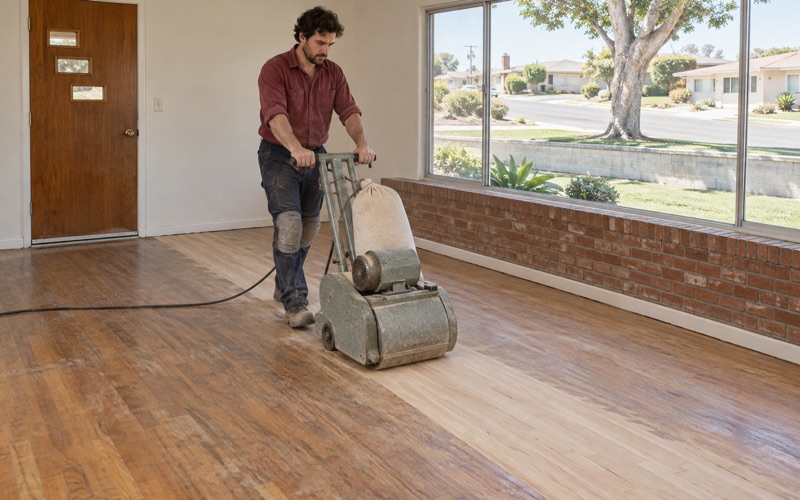
Turnover work in a detached rental is a race against the calendar. The house is empty for a few weeks at most, and the floor has to be sanded, finished and cured before movers carry in appliances and furniture. We write a room-by-room schedule with the quote that shows when each space is sanded, coated and safe to walk on, so a landlord can book cleaners and a painter around it.
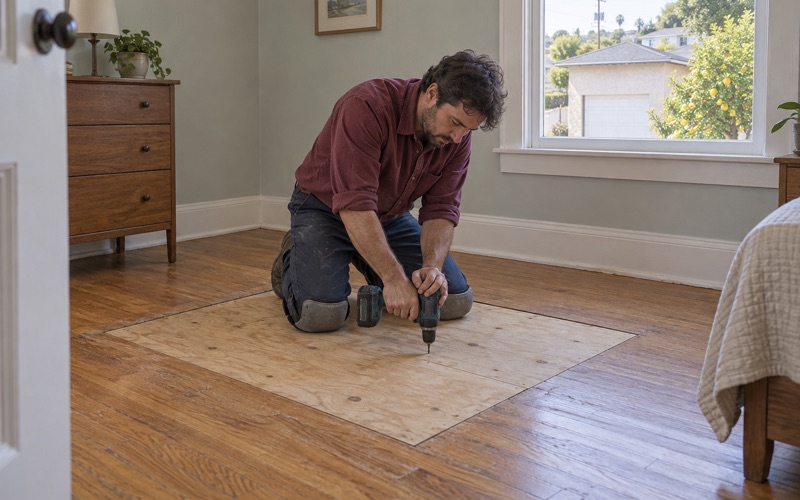
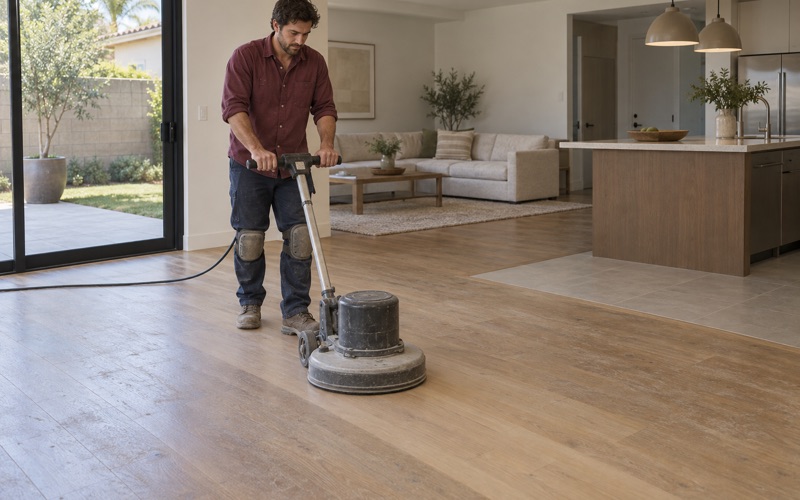
Where the finish is dull but intact, a screen and recoat can freshen the surface in a day or two instead of the longer cycle a full sanding needs. Where the finish has worn through to bare wood at the entry, a pet urine stain has set into the boards, or a leak has left a black water stain near the sink, the floor needs sanding or board replacement, and we say so before the calendar is booked.
Records a Landlord Can Actually Use
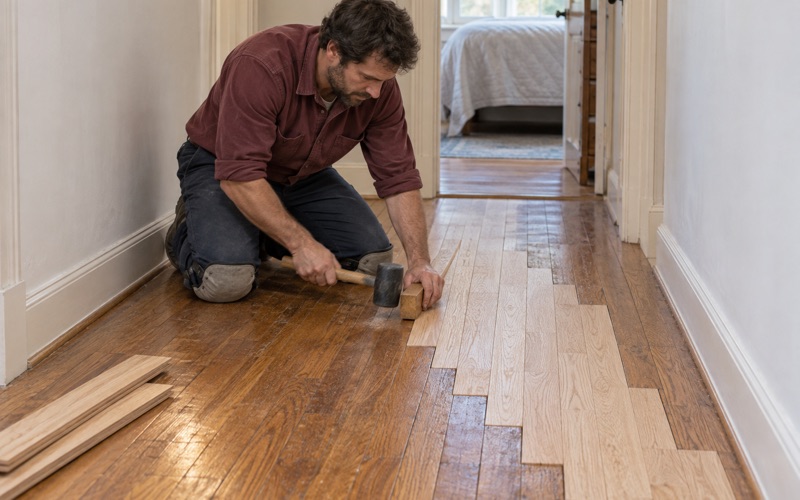
Damage found at move-out often ends up on a security deposit itemized statement, so our invoices are written to be attached to one. Each line names the room, the defect, the repair and the cost separately, so a weave-in repair in one bedroom is not buried inside a whole-house refinishing price. That separation also helps when a former tenant asks what a particular charge actually covered.
We keep questions about rent rules separate from the floor. Los Angeles County’s Rent Stabilization and Tenant Protections Ordinance applies in unincorporated areas, and its rent-ceiling provisions reach properties with two or more units and a certificate of occupancy issued on or before February 1, 1995. How any part of it bears on a particular rented house is a question for the county, not for a flooring crew.
Finishes That Survive a Series of Tenants
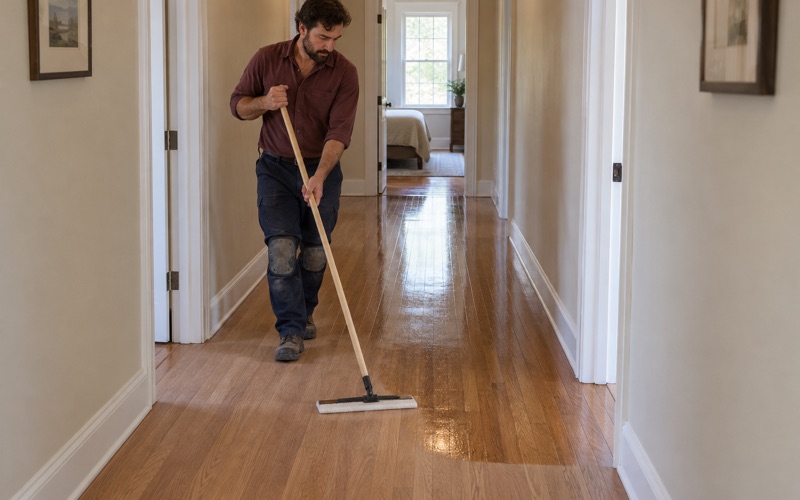
For a house that will see a new household every few years, finish choice matters as much as the sanding. We usually steer landlords toward a waterborne polyurethane in a satin or matte sheen, which cures quickly, stays clear on light oak and hides everyday scuffs better than gloss. Every product we apply is legal in the South Coast air district, whose wood coatings limit is 275 grams per liter.
Oil-modified polyurethane and hardwax oil each have a place, but both need a longer cure time and a stricter recoat window than most turnover schedules allow. We lay out that tradeoff in writing, so a landlord choosing between a faster waterborne system and the amber look of an oil-based finish is deciding with the move-in date in front of them.
Wood Floors in South San Gabriel’s 1940s-1960s Houses
What a Mid-Century Floor Usually Is
More than half of the community’s housing comes from the middle of the last century. Table B25034 counts 1,262 units, or 52.9 percent, built between 1940 and 1969, with the 1950s the largest single decade. Houses of that period commonly carry narrow-strip red oak or white oak, nailed tongue and groove over a board subfloor or plywood subfloor, and many have been sanded more than once already.
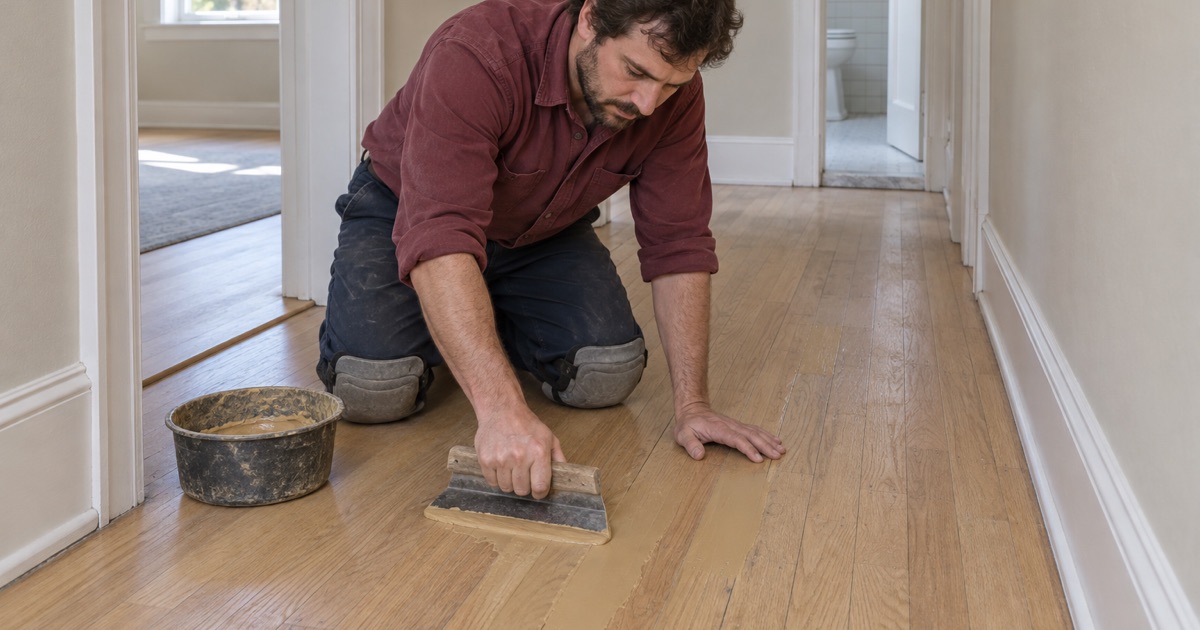
Each earlier sanding removed some wood above the tongue, so we check board thickness at a floor vent or threshold before promising another full sand. Where carpet has covered the oak for decades, we expect tack strip holes, staples and pad residue to clean up, along with seasonal gapping that opened as the boards dried and never closed again.
Lead-Era Finishes and the Build Year
Nearly every house from that period is pre-1978 housing, which brings the federal EPA Renovation, Repair and Painting Rule into play when painted surfaces are disturbed. We confirm the build year before any sanding is scheduled, because baseboards, thresholds and old finish layers in homes of that age can carry lead-based paint. The answer shapes containment, dust control and cleanup before the first drum sander pass.
Dustless sanding helps, but it does not replace the steps the rule sets out. In a mid-century house we plan the edger work along painted baseboards, the removal and reinstallation of shoe molding and quarter round, and the final cleaning as part of the quote, not as extras discovered halfway through the job.
Checking the Structure Before Sanding
When a house of this age sits on a raised foundation over a crawl space, a sagging floor or a sloping floor in the hallway is rarely a surface problem. Before we quote a raised-foundation job, we check the framing from underneath, looking at floor joists, posts and the subfloor, because sanding would only hide a dip that a sister joist or a new post could correct.
The same inspection catches pests. Small round kick-out holes in a board and pellet piles on the floor below are classic drywood termite evidence, and we identify or rule out termite frass before any board replacement is planned. Laying new oak beside wood that is still being eaten only moves the problem a few inches over.
County Jurisdiction and Getting Started on Your Floor
An Unincorporated Community Under County Authority
South San Gabriel has no city government; it is unincorporated Los Angeles County, and the county provides the services a city would. Los Angeles County Public Works, Building and Safety serves unincorporated communities through its headquarters and district offices, and it is the office to ask about any work that goes beyond the floor surface, such as repairs to the framing underneath.
Planning runs through the county as well. The Board of Supervisors adopted the West San Gabriel Valley Area Plan on March 11, 2025, and it covers South San Gabriel along with eight other unincorporated communities. A floor project is interior work, and we leave any question about the plan and a particular lot to county planning staff rather than guessing.
Moisture, Acclimation and the Local Seasons
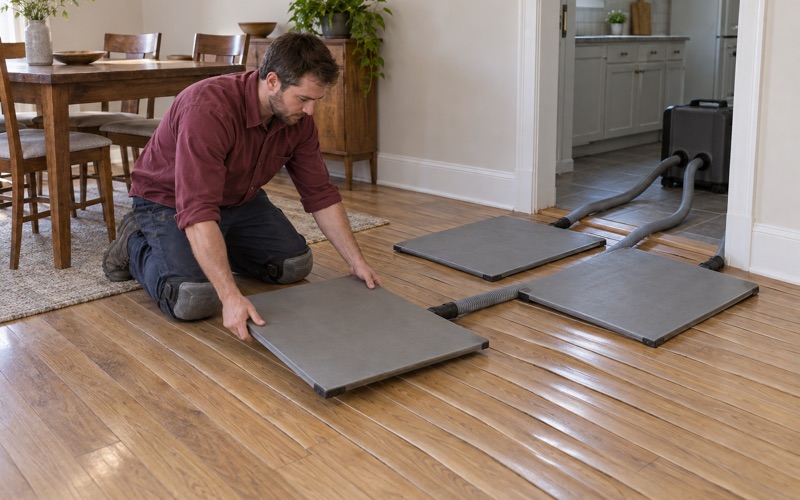
The community sits in the National Weather Service forecast zone for the San Gabriel Valley, and wood here moves with the shift between dry, warm stretches and cooler, damper months. Boards answer those swings with gaps in the dry season and, where moisture reaches the underside, cupping, crowning or buckling. We take moisture meter readings on the existing floor and on new stock, and we let delivered boards finish acclimation before installation.
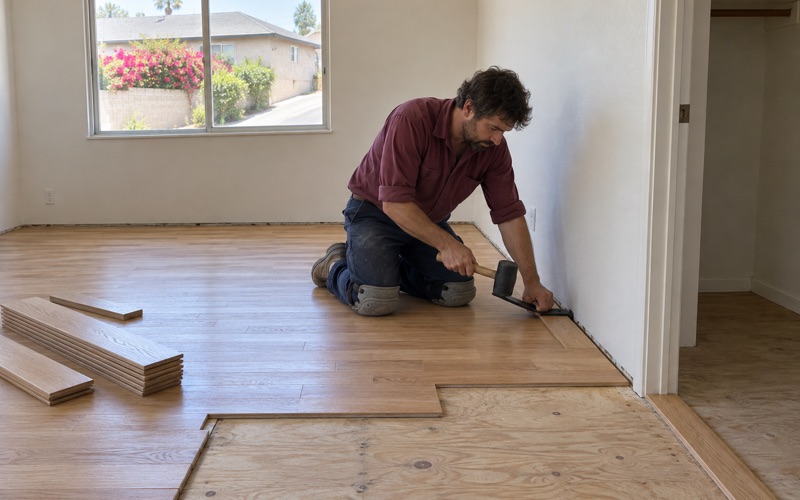
New installations get an expansion gap at every wall, hidden under base or quarter round, and a reducer or T-molding where hardwood meets tile. Where a floor is going over concrete in an addition or converted garage, we test the slab with an ASTM F2170 in-situ relative humidity test before choosing a glue-down installation or a floating floor over a vapor retarder.
What the First Visit Looks Like
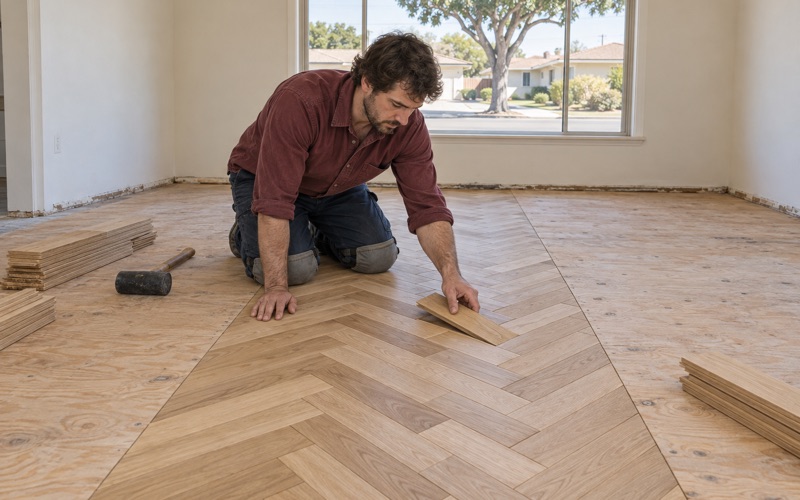
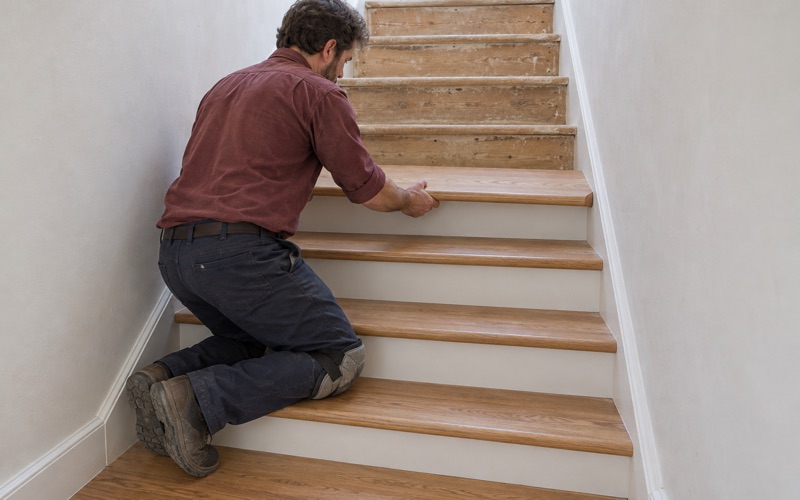
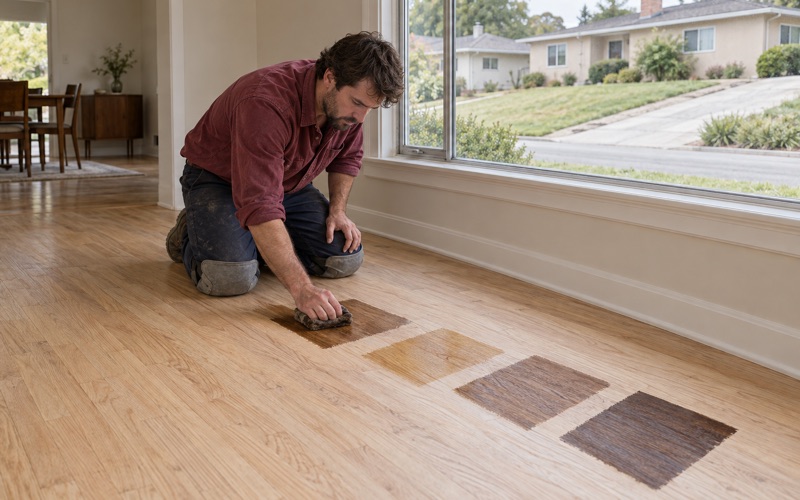
A first visit starts with a walk through every room in the scope. We measure the wear layer on any engineered hardwood, test stain sample boards on sanded wood in the room’s own light, and look at stairs separately, pricing each stair tread, riser and stair nosing rather than folding them into a square-foot rate. If a herringbone or chevron layout is planned, we dry-lay it on the room’s centerline first.
For a water loss, we photograph the damage and record moisture readings in a form an adjuster can use, writing the repair scope as matching board and finish rather than a patch. Whether the house is lived in or between leases, you leave the visit with a written scope, a room-by-room schedule and a clear date for when the floor goes back into service.
- 20+ Years on Wood Floors
- Itemized Written Quotes
- Lead-Safe Checks on Pre-1978 Homes