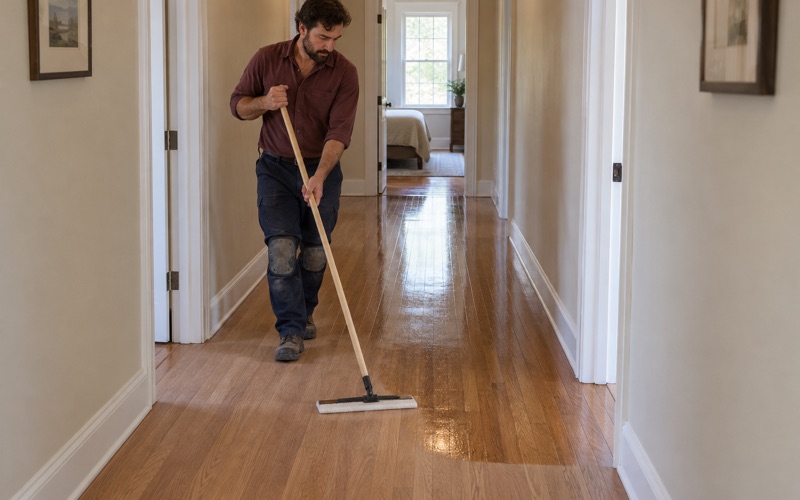
Monterey Park Wood Flooring has spent more than 20 years on wood flooring in Temple City and the rest of the valley, and many of the jobs we see here start with a question that has nothing to do with oak or stain color: what is under the old covering, and has anyone tested it? We refinish, repair and install solid and engineered hardwood, and we plan each project around the age of the house before a board is touched.
That order matters because a floor project in an older home is rarely one step. Carpet may sit over hardwood, sheet vinyl may sit over a layer of tile and adhesive, and an original finish may carry paint drips from decades of repainting. Before we schedule any sanding, we confirm the build year, since finish and paint layers in older homes can change how the work has to be set up.
This page walks through the city’s own home-repair programs, the testing that usually comes before an old covering is lifted, what we find in the area’s midcentury houses, and the sequence we suggest for putting a project together. Eligibility questions belong to the city, but we can help you see where a flooring job fits among the decisions that come before it.
Temple City’s Home-Repair Programs and What They List
The rehabilitation loan and the Handyworker Grant
The City of Temple City runs a Housing Rehabilitation Loan Program funded with federal Community Development Block Grant money. According to the city’s Housing Programs page, eligible participants may apply for zero-interest loans of up to $35,000 toward home repairs, including heating, plumbing, electrical or structural items. No payments come due until the home is sold, the title changes, the loan is refinanced or occupancy changes.
The loan is limited to owner-occupied single-family properties, with household-size and income limits. Alongside it, the city’s Handyworker Grant Program uses city funds for grants of up to $10,000 toward heating, plumbing, electrical and energy-efficiency improvements for income-qualified owners of the same kind of property. Both programs are written around the systems that keep a house safe and running, and that framing matters when a floor is part of the picture.
The Asbestos Testing and Removal Program
The third program on the same page is the one most closely tied to flooring work. Under the Asbestos Testing and Removal Program, homeowners can apply for financial assistance for required asbestos and lead-based paint testing, as well as abatement work. The city presents it together with the rehabilitation loan, so an owner reading about one is likely to find the other on the same page.
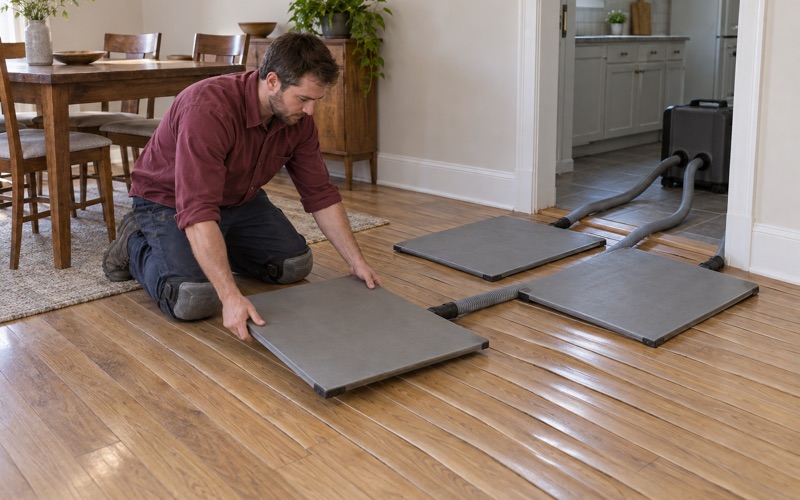
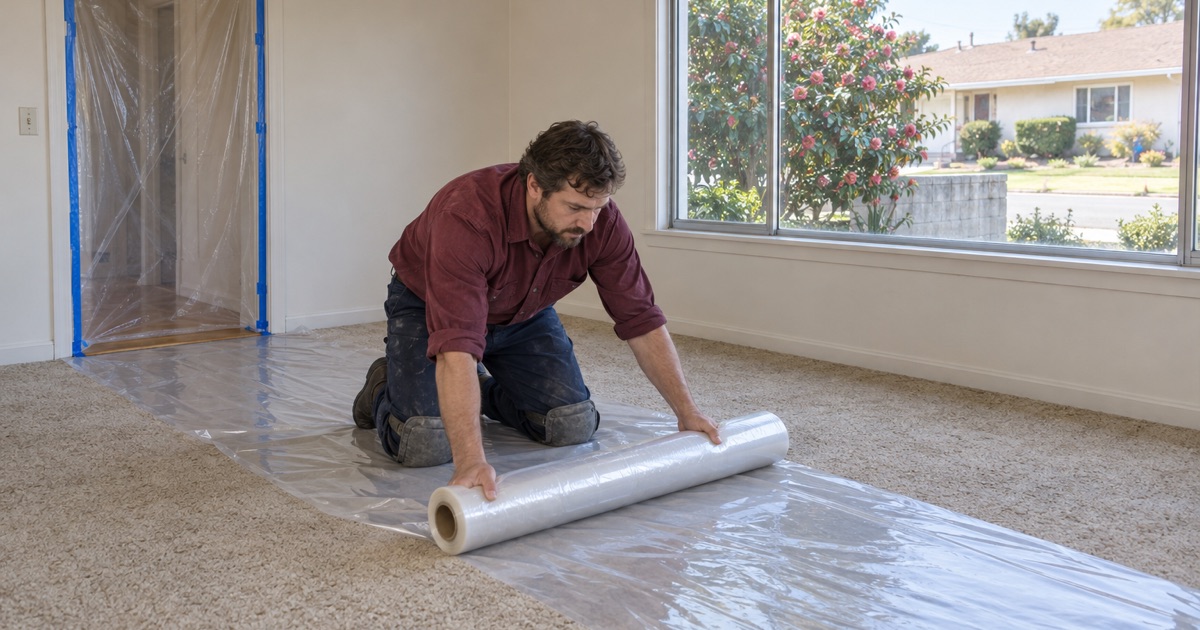
For a homeowner planning to pull up old sheet goods, tile or carpet, that testing step is often the first real decision. Knowing whether a covering, its adhesive or the paint along the baseboards needs special handling tells you, and us, what kind of job you actually have. It is far better to learn that before a quote is written than halfway through a demolition day.
What the programs do not say
The Housing Programs page does not name flooring anywhere, and we will not tell you that a city loan or grant covers new floors or a refinish. Whether a floor repair tied to a structural item qualifies is a question only the city can answer. The page also shows no last-updated date, funding status or waitlist, so availability is something to confirm directly with city staff before you plan around it.
What we can do is give you a written, itemized scope that separates the floor work from anything underneath it. If our inspection turns up a cracked joist or a failed section of subfloor, that line stands on its own in the estimate. A scope broken out that way is easier to discuss with city staff than a single lump-sum price for the whole room.
Looking for wood-flooring closer to Highland Park? See Wood-Flooring Services in Highland Park.
Testing Before an Old Floor Covering Comes Up
Why testing comes first in pre-1980 houses
Census figures show why this matters here. Of Temple City’s 11,992 housing units, 74.6 percent were built before 1980, according to the American Community Survey 2024 five-year estimates. That is a large share of homes old enough that original or early replacement coverings, their adhesives and the paint on nearby trim deserve a question before anyone cuts, scrapes or sands them.
We do not assume what a particular floor contains, and no source measures how many local floors hold asbestos. The point of testing is to stop guessing. A lab result on a sample of tile, sheet vinyl or black mastic turns an unknown into a plan, and the city’s program exists to help eligible owners with the cost of getting that result.
The federal lead-safe renovation rule
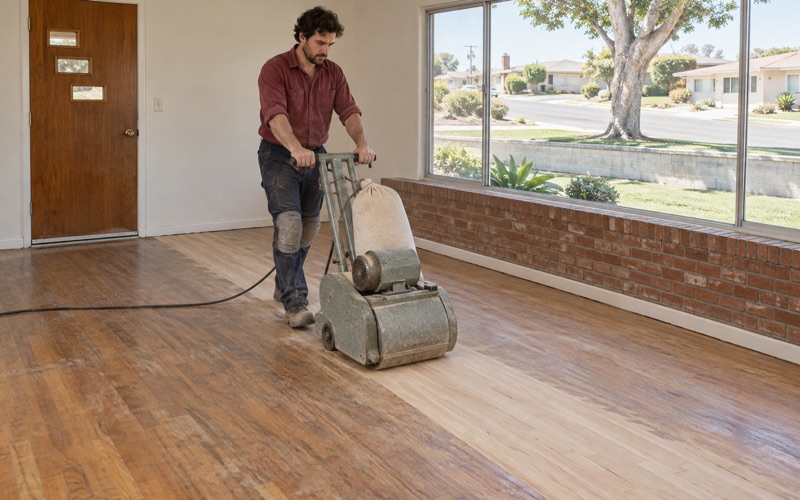
Lead is a separate question from asbestos, and it follows a firmer date. The EPA Renovation, Repair and Painting Rule applies to renovation work in pre-1978 housing, and sanding a finished floor or pulling painted shoe molding can disturb old paint. That is why we confirm the build year before sanding is scheduled, rather than after the drum sander is already sitting in the room.
In practice, containment, dust control and cleanup are planned before the job starts, and the schedule reflects them. Dustless sanding equipment helps with ordinary wood dust, but it does not replace the setup the rule calls for when older paint layers are involved. We explain which rooms are affected, which trim is painted, and how that changes the timeline you should expect.
Who handles abatement
We are floor people, not an abatement company, and asbestos removal is not work we perform. When a test comes back positive, abatement is handled by a qualified firm under the rules that govern it, including South Coast AQMD Rule 1403, before our crew returns to the room. Once the old covering and adhesive are gone and the area is cleared, we inspect what is underneath and price the real work.
Floors in Temple City’s 1940s and 1950s Houses
What the build years point to
Temple City’s housing stock is weighted heavily toward the middle of the last century. The same census table counts 2,082 units built in the 1940s and 3,530 in the 1950s, so 46.8 percent of homes date from those two decades, and the 1950s alone account for 29.4 percent. Owners mostly live in detached houses, with 92.1 percent of owner households in one.
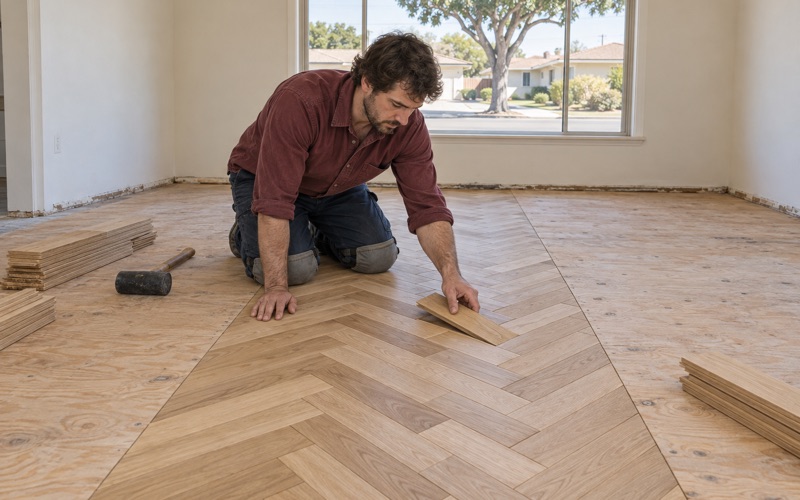
Houses from those decades were often finished with solid hardwood, commonly red oak or white oak strip, that later disappeared under carpet or vinyl. We never promise that a particular house has hardwood waiting underneath. Once the testing questions are settled, we lift a corner with the owner’s permission before recommending anything, because restoring an original floor can cost far less than replacing it.
Reading an old floor before sanding
An original floor that has been covered for decades tells its own story. We look for worn-through finish, pet urine stain, black water stain, old nail holes and boards that were face-nailed or patched. We also check how much wood remains above the tongue, because a solid floor that has been sanded several times can run short of material, and a sand-through is not something a new finish can hide.
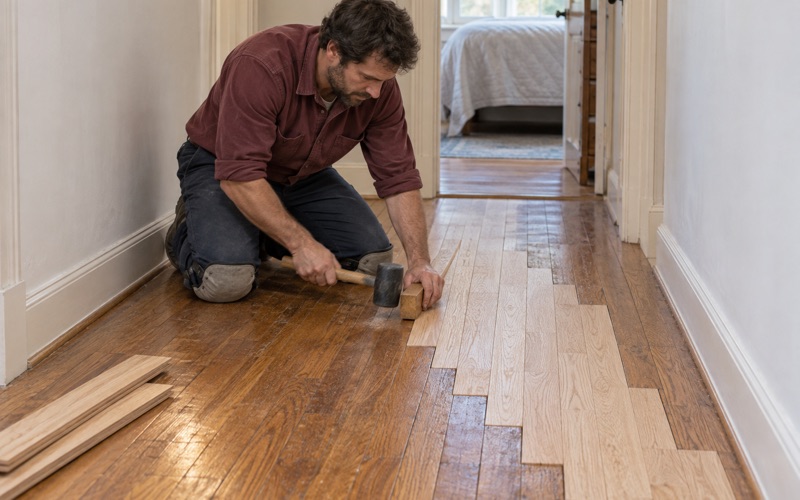
Where a floor was replaced with engineered hardwood at some point, we measure the wear layer before promising a full sand. A thin veneer may accept a screen and recoat but not a drum sander. Small round holes and piles of pellets get a closer look too, since drywood termite frass and kick-out holes need to be identified or ruled out before any board replacement.
Movement, squeaks and what lies underneath
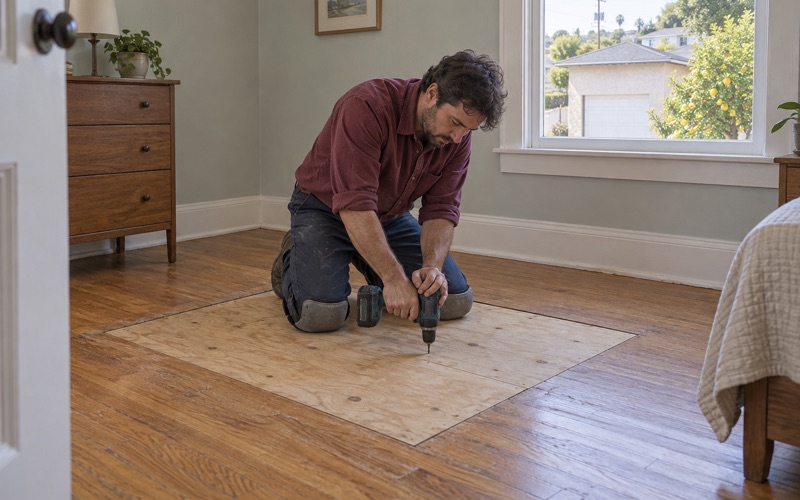
A sloping floor, a sagging floor or a soft spot near a bathroom is often a structural question rather than a finish question. When a house sits on a raised foundation, we check the crawl space before quoting, looking at the floor joists, posts and the plywood or board subfloor. Sanding a floor over a failing joist only makes the problem look better for a while.
We do not assume a foundation type for any house; we look. If a sister joist or a subfloor repair is needed, it becomes its own line in the estimate, and it is the kind of structural item an owner may want to raise with the city’s rehabilitation program staff. Squeaks and hollow spots are usually addressed at the same visit, while that part of the floor is open.
Putting a Temple City Floor Project in the Right Order
Step one: eligibility and testing
For owners who may qualify, we suggest contacting the city first. City staff can tell you whether the rehabilitation loan, the Handyworker Grant or the Asbestos Testing and Removal Program is accepting applications, and what documentation each needs. Testing results, not our guesses, should decide whether an old covering can be lifted by a flooring crew or needs abatement first.
If you are not pursuing a city program, the sequence is the same. Test suspect coverings and adhesives, confirm the build year for the lead rule, and only then book demolition or sanding. Questions about which work needs city sign-off go to the Building and Safety Division of the Community Development Department, which applies the Los Angeles County building code titles the city adopts by reference.
Step two: inspection and a written scope
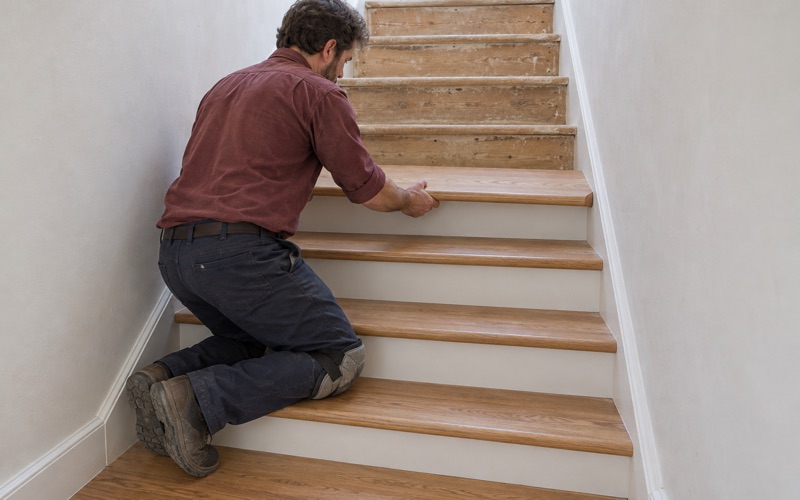
Once the covering question is settled, we inspect the floor and whatever supports it, then write a scope room by room. Floor repairs, board replacement, weave-in repair, stair work and refinishing each appear as separate items. Stairs are priced by the tread, riser and nosing, because a staircase takes far more handwork than the same area of open floor.
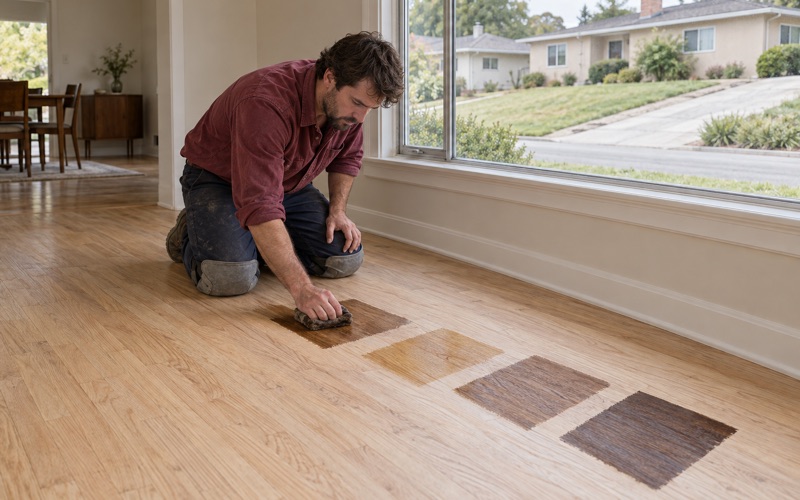
The estimate names the finish too. We choose from waterborne polyurethane, oil-modified polyurethane and hardwax oil products that are legal to apply in the South Coast air district, where the wood coatings limit is 275 grams per liter. Stain colors are tested on sanded boards in the room’s own light, since a showroom sample rarely matches a midcentury living room with its original windows.
Step three: scheduling around an occupied home
Most of these projects happen while people live in the house. We give each household a written schedule showing when each room is sanded, when the sealer and finish coats go down, and when furniture, rugs and family can return based on the cure time. Owners who rent a house out get itemized invoices written so they can be attached to a security deposit statement.
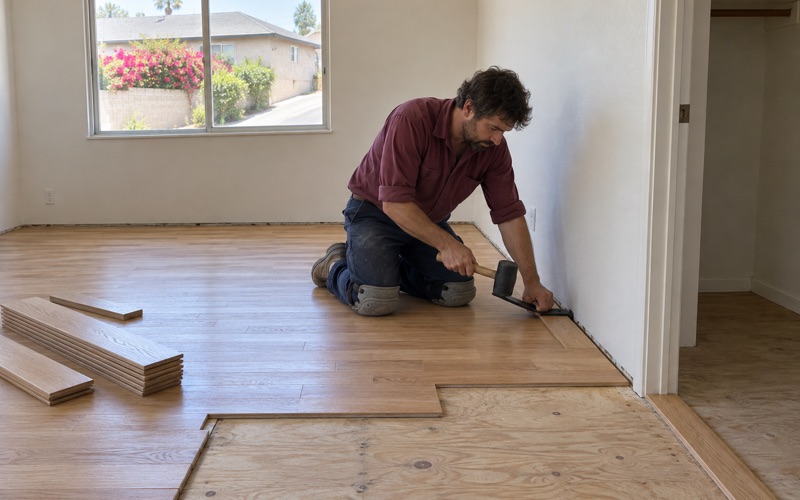
Seasonal humidity in the San Gabriel Valley also affects timing. New boards need acclimation before installation, and we take moisture meter readings before and after, so seasonal gapping stays within what solid hardwood normally shows. The goal is a floor that goes down once, in the right order, after the questions that belong to the city and the lab have been answered.
- 20+ Years on Wood Floors
- Itemized Written Quotes
- Lead-Safe Checks on Pre-1978 Homes